
Image
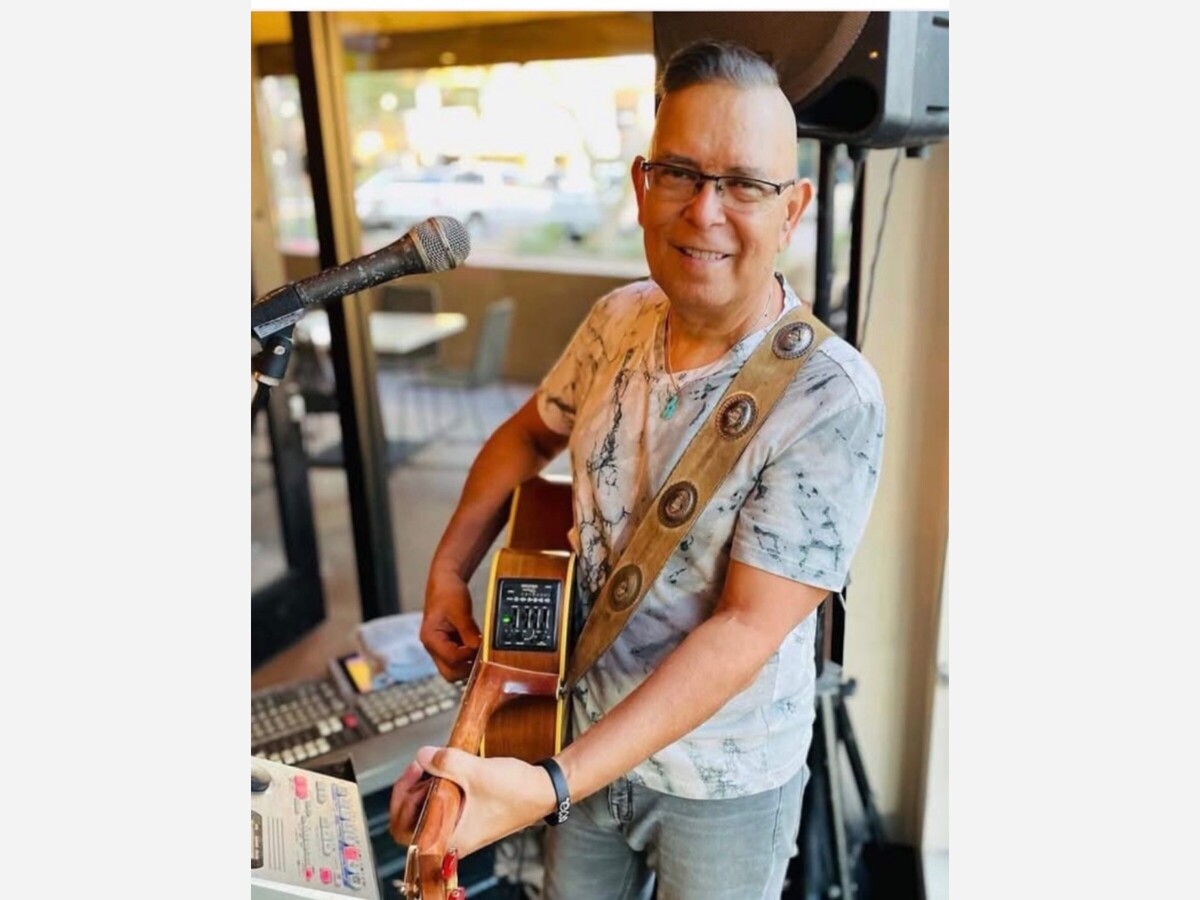



Freddie Duran, the Alamogordo-born singer, songwriter, and guitarist known across the desert Southwest for his “Adobe Rock” sound and his decades-long devotion to his hometown, died June 2, 2026, at approximately 68 years old, following a six-year battle with cancer. His passing was announced by family, who wrote that he was “now resting pain free” after a fight that had touched fans and friends across two states.
Early Life and Roots in Alamogordo
Duran grew up in Alamogordo, New Mexico, and graduated from Alamogordo High School in 1975. He went on to study music education at New Mexico State University, laying the groundwork for a life spent almost entirely on stage. Not long after finishing school, he headed west to California, where he spent a few years writing songs and playing in bands — an apprenticeship, of sorts, before the move that would define the rest of his career.
Building a Career in the Phoenix Valley
Duran eventually settled in the Phoenix, Arizona area, which became his permanent home base for the remainder of his life. There, he assembled a band that, by his own account and others’, became “the talk of the town.” He spent years refining his songwriting and his sound, and in 1993 he was named Arizona Songwriter of the Year. He also won the Tempe Songwriting Contest, and in his younger years, during local Star Search tryouts in Phoenix, he placed second to a then-unknown David Spade — a story he liked to tell with a laugh.
Duran described his musical style as “Adobe Rock,” a label he gave to a catalog of original songs and covers performed in both English and Spanish, drawing heavily on the culture, landscape, and stories of the Southwest. Among his original songs were “Questions For God” and “New Mexico Midnights,” along with “Where the Birds Sing in Spanish” — written years earlier for the independent film “Florence” — and “La Llorona,” based on the Southwestern legend of the same name. Both songs were turned into music videos, with “La Llorona” and “Where the Birds Sing in Spanish” directed by John Koop, and later work directed by his longtime band guitarist, Carole Pellatt. His recorded catalog included the collection “Songs From the Middle of Nowhere,” available on iTunes, Amazon, and other digital platforms.
Over more than two decades in the Valley, Duran became a familiar face at restaurants and venues throughout the Phoenix area, including a long-running residency at the original El Zócalo Mexican Grille in downtown Chandler before it closed in 2020, as well as regular performances at Margaritas Fresh Cocina in Mesa and Isabel’s Amor in Gilbert.
A Hometown He Never Really Left
Despite building his career and his life in Arizona, Duran never stopped returning to Alamogordo. Nearly every year, he came back to his hometown around late May and stayed through Labor Day, splitting his calendar between winters performing around Phoenix and summers reconnecting with family and fans in southern New Mexico. Those summer stays were filled with family camping trips — including a 40th-anniversary family reunion camping tradition in Bailey and upper La Luz Canyon, and weekends with cousins at Elephant Butte Lake — alongside the work he did on family property in town and, almost always, a handful of local gigs.
In his later years, those local appearances included performances tied to 2nd Life Media’s Alamogordo Town News, including a free community celebration at the company’s Studio Q headquarters on New York Avenue on October 17, 2025 — held in honor of publisher Rene Sepulveda’s birthday and paired with a meet-and-greet for mayoral candidate Sharon McDonald — as well as performances at D.H. Lescombes Winery & Bistro in Alamogordo. For many longtime residents, his return each summer was something the town could set its calendar by.
Six Years of Living With Cancer
Duran was diagnosed with advanced Stage 4 prostate cancer in May 2020. Rather than frame his illness as a fight to be won or lost, he described choosing to live with the disease with as much peace and optimism as he could manage, continuing to perform and post updates to friends and fans throughout much of his treatment. Even as radiation and repeated rounds of chemotherapy took their toll in late 2024 — leaving him in pain, anemic, and at one point in need of a blood transfusion — he kept returning to the stage when he was able, telling supporters that performing “really does lift me up.”
His condition worsened sharply in the late spring of 2026. In late April, complications led to a five-day hospitalization, during which doctors discovered he was in renal failure; a procedure restored function to his one remaining kidney, but his oncology team also delivered the news that available treatments had been exhausted and recommended hospice care. Duran’s family shared the update publicly in May 2026, asking for prayers as he canceled his remaining performances, and not long after, Duran posted that he had entered home hospice, writing that he was “in God’s hands now.” Friends and fellow musicians organized a fundraiser to help support him through his final months.
He died on June 2, 2026.
Remembered by Family and Fans
Duran’s family announced his passing with a message that captured both the grief and the gratitude of six years lived in the public eye: “Can’t really find the right words right now but wanted to announce the passing of my uncle Freddie Duran. Thank you all who have supported him and our family in any way during the 6 years of his cancer journey. I love you all! He is now resting pain free.” Among those he leaves behind are his brother, Tony, of Fort Worth, Texas; extended family including cousins in Fort Collins, Colorado, and the Telles family, with whom he spent many of his last summer weekends; and a wide circle of nieces, nephews, fellow musicians, and longtime fans on both sides of the New Mexico–Arizona line.
A Legacy in Two States
Freddie Duran’s story was, by his own admission, an unusual one for a small-town kid: he left Alamogordo, found real success on Arizona’s stages, and still came home every summer to play for the people who’d known him first. For more than thirty years, that rhythm — winters in the Valley, summers in southern New Mexico — gave two communities, hundreds of miles apart, the same hometown musician to call their own. He is remembered as a songwriter, a performer, and, by all accounts, a man who met a six-year cancer diagnosis with more grace and gratitude than most could manage, choosing, until the very end, to keep showing up and keep playing.
A Final Word
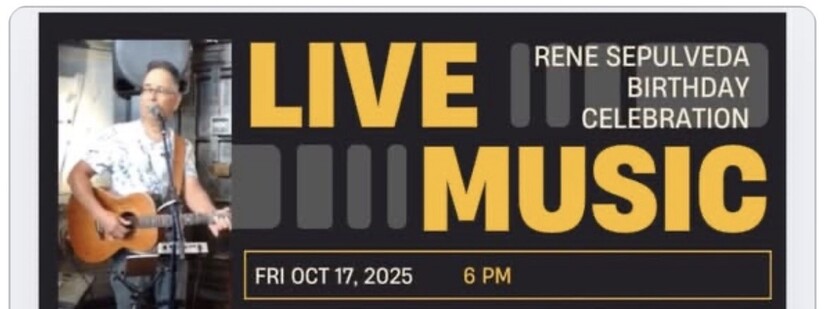
There are musicians who pass through a town, and there are musicians who become part of it. Freddie Duran was the second kind. For publisher Rene Sepulveda, who shared a stage and a birthday celebration with him just last fall, and for journalist and arts advocate Chris Edwards, who watched him return to Alamogordo summer after summer and never tired of telling his story, Freddie wasn’t a subject to be covered from a distance — he was a friend, a fixture, and a source of real joy every time he picked up that guitar on New York Avenue.
That’s the truest measure of what he leaves behind. Not just the songs, though there were plenty of those, and not just the awards and the years on stages across two states — but the simple, rare gift of being genuinely loved by the people who knew him. To have had Freddie Duran as a performer in our community, and as a friend in our lives, was an honor this town does not take lightly. We are heartbroken to have lost him, and we are deeply grateful — more than words can really hold — that he chose, every single summer, to come home to us. Rest easy, Freddie. The nights here won’t sound quite the same without you.

Thank you for your in-depth story on Freddie Duran. Freddie and I went to school together, and played in the awesome Tiger Band. He was also in choir, and always ready to entertain anyone who would listen. He was a great entertainer and just a great guy. He will be missed.

Sunny, with a high of 81 and low of 61 degrees. Sunny in the morning, patchy rain nearby during the afternoon and evening, clear overnight.
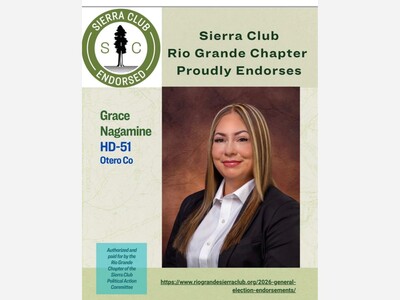
Having the Sierra Club endorse you is like drinking the runoff from a lithium mine they spent a decade blocking—then calling the metallic taste “sustainability.” This phoney has a really bad dye job.
Just because you do not like someone does not make them phony.
kinda like not liking the blue kool aid so you hate all the kool aid. Besides doesn’t the editor have a vested interest in her campaign?

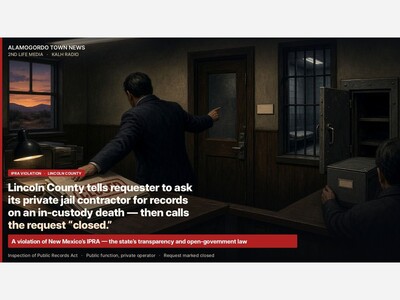
as per occam's razor, the simplest explanation for stonewalling a request this basic and straight forward, is that transparency will cast a bad light on lincoln county, and/or the entity they pay to run their jail.
The Albuquerque Journal (9/20/26, page C3) has a column written by Jacob Candelaria that is titled "A blacklist for people who ask too many questions". Basically, in 2025, our NM Legislators were debating House Bill 139 would have let any public body petition to have a person designated as "vexatious", and person's
like 99% of his fellow republicans, block is a servant to the oil & gas industry - a principal constituent of their party.