
 45° and Clear


Image
Sunspot Update: Mercury Removed from Telescope, but a Different Spill Emerges - AlamogordoTownNews.org
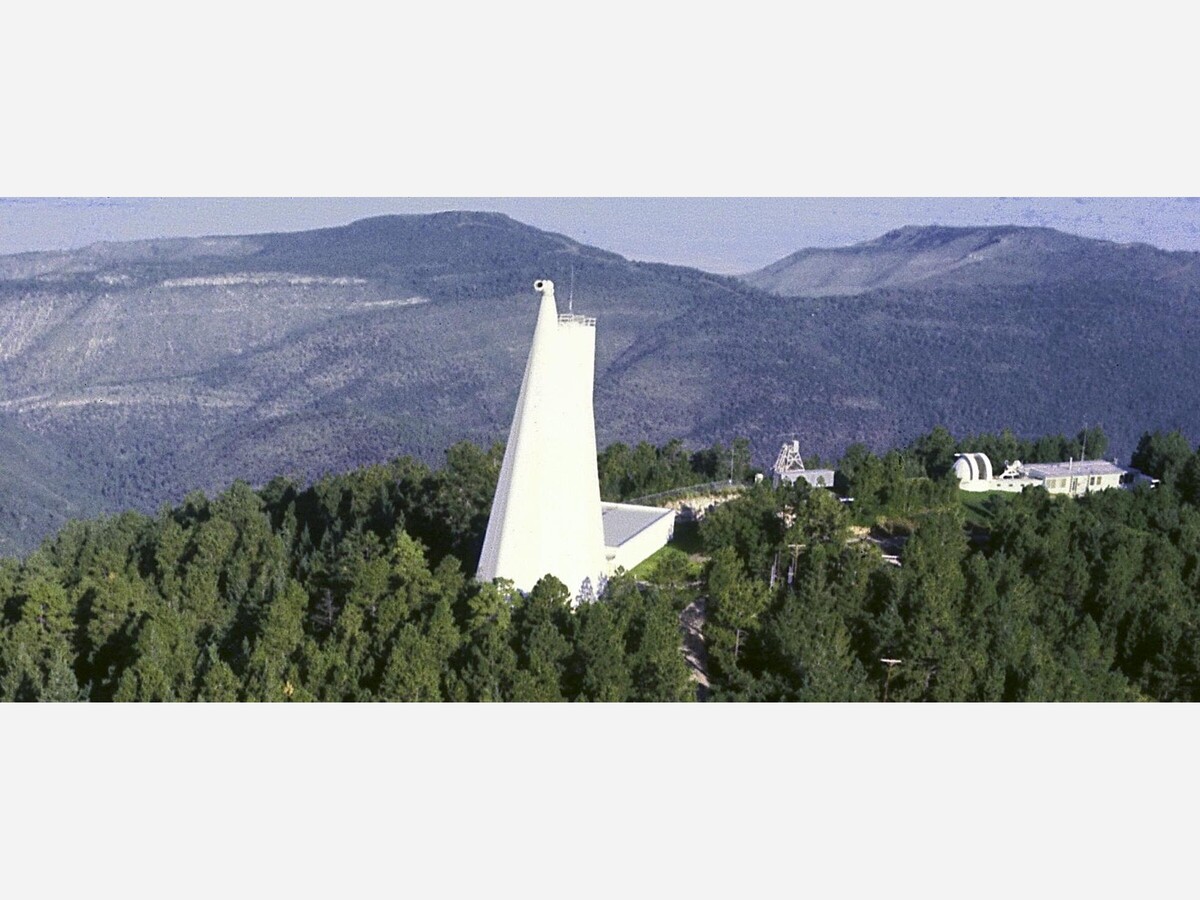
Sunspot N.M. By Dave Dooling for Alamogordo Town News -Mercury has been removed from the Dunn Solar Telescope at Sunspot Solar Observatory, but the National Science Foundation is saying little else for the moment. Meanwhile, Alamogordo Town News has learned of an older, different kind of spill at Sunspot. And, subtle wording of Federal law allowed NSF to avoid reporting the mercury spill to a national database.
“Thank you for reaching out,” Cassandra Eichner, an NSF Media Affairs specialist, told Alamogordo Town News on Thursday in response to a multi-point inquiry. “The Mercury was safely removed from the telescope. NSF will issue a public update on Sacramento Peak Observatory later this month.”
Eichner ignored additional questions about mercury vapors coating surfaces and about plans to request proposals for a demolition contractor.
Meanwhile, a report of an older, different kind of hazardous leak at Sunspot appeared in a national database on July 6.
The new report claims that an unknown quantity of PCB (polychlorinated biphenyl) was spilled at Sunspot around 2016. The spill is reported in the 2026 database at the U.S. Coast Guard’s National Response Center (NRC), which is the “designated federal point of contact for reporting all oil, chemical, radiological, biological and etiological discharges into the environment, as well as railroad incidents, anywhere in the United States and its territories.”
The July 6 entry reads: “Caller reporting an old mineral oil (PCB) spill at the Sunspot Observatory. This spill is reported to have taken place around 20 years ago, but was never cleaned up. Caller states they have been told which shaft and which location the spill is at. Caller states the observatory is closing down, and they believe the spill will be covered up.” No other detail is available.
According to the Environmental Protection Agency (EPA), PCBs had uses ranging from carbonless copy paper to electrical transformers between 1929 and their international ban in 1979 due to a range of adverse health effects, including cancer. Because they were widely used as an insulator in transformers, many sources remain in use.
The threshold, or minimum reporting quantity (Final RQ), set by Federal law for both PCB and mercury is one pound (0.454 kg). Information should first go to the National Response Center, which “fields INITIAL reports for pollution and railroad incidents and forwards that information to appropriate federal/state agencies for response.”
Reports from 1990 forward are available online as spreadsheets. A search from 2000 to today — covering “about 20 years ago”— has no other mention of Sunspot. How the spill is cleaned up will depend on the source, extent, and location. Cleanups often involve removing contaminated soil to safe disposal sites. EPA recommended contacting the New Mexico Environment Department with regard to handling the PCB spill. ATN found nothing in their on-line records and has submitted a query.
To be certain a report of a mercury leak at Sunspot was not overlooked, ATN filed a request with the NRC. On May 21, it replied, “Unfortunately, we were unable to find any NRC report regarding your request about a mercury spill at Sunspot.”
A subtlety in the wording of Federal law — 40 CFR, Part 302, Designation, Reportable Quantities, and Notification — allowed NSF to avoid reporting the spill. It defines a release as “any spilling, leaking, … into the environment.” The last three words are critical. The cleanup contract clearly described the leak as staying within the building.
EPA confirmed that “that releases of hazardous substances that are contained entirely within a facility and that do not enter the environment [including ambient air] are not required to be reported” under the Comprehensive Environmental Response, Compensation, and Liability Act (CERCLA).
But NSF’s silence following the initial announcement led to public speculation ranging to the sensational, including a large puddle sitting outside the Dunn, ready to roll downhill to Alamogordo.
The reality was simpler: only 186 pounds (about 1.6 gallon) leaked, although another 18,000 pounds (160 gallons) remained in the bearings and could have been released without proper control, which now has been done.
An additional factor emerged in other discussions with Alamogordo Town News, an effect called adsorption. This means vapors adhere to surfaces, not absorption, meaning soaking into a material. A 1982 study at the University of Auckland, New Zealand, showed that painted surfaces and vinyl flooring — both present in the Dunn — adsorb vapors like mercury. Because this is a surface effect, the bond is weak and surfaces can just as easily release vapors to the environment.
But, EPA case studies also show that mercury can be removed from a facility, which can then return to normal operation. The most serious case, at a home in Las Vegas, involved a 17-year-old boy smearing a quart of mercury (1/6 the amount released at Sunspot) around his grandmother’s house and poisoning himself. Yet, after removing hazardous material equivalent to a 13-foot cube and coating some surfaces with epoxy, the house was remediated and the owner was allowed to return.
The statement by NSF’s Eichner that “Mercury was safely removed” implies that surfaces inside the Dunn have been assessed as mercury-free or cleaned where they had adsorbed vapors.
Otherwise, the planned demolition could release mercury into ambient air, as specified under the Comprehensive Response Act. And this returns to an earlier question about the Dunn: If the mercury is gone, what public health hazard remains? Why rush to demolish?
About the journalist: Dave Dooling is a veteran areospace writer and educator who lives in High Rolls New Mexico. He recently retired as education director at the New Mexico Museum of Spac history, and now runs The Traveling Gizmo Show.

still hopeful that there can be some arrangement that would allow the existence of the facility to continue.
Received that crime flyer in the mail today. Wow! Mudslinging V2.0 by the blockheads as usual.

Sunny, with a high of 61 and low of 44 degrees. Sunny in the morning, clear for the afternoon and evening,

Couple of people around Santa Fe have told me her highness has been sucking up hard to Ant to get on to a staff job when his pending doom curtain closes here. Queens never learn to really be honest. It's just in their realm of mental health. They live in denial and have pent up retentive r.e.c.t.u.m.s.
His money would have been better spent listing all of his accomplishments while in office. Oh, wait……
Voted twice against the low-income utility rate bill (HB 91) and sponsored the failed 2026 tax on renewable generation (HB 113) which the state confirmed would have further raised PNM rates. We know who has you in their pocket Block. Stop the **** lies!


For those of the civilian public to understand. Every single Airman, marine, sailor and soldier whether Active duty or reserve or national guard has had explicit training on the UCMJ and illegal orders. This includes every “veteran for peace” It is political plain and simple.

Million-nine for the bakery, million for a theatre scam. These uneducated skells pass out money to sheis for what? They're not even good ideas. 3 mil and they don't know? Why doesn't we hire out side auditor like the FBI?
All that tax money. Is it true that Brien Caesar bought a four hundred k condo in wyoming last year? Heard, it's near Jackson. Someone put that stuff through. No wonder they change managers so often. Once a deals's done you don't have to stick around in this burg anymore.


Is there any chance that the Forest Service will allow Sunspot to remain open, after the demolition is completed?

Graphs lernt in grad school look like kinder. Has money from deals done too probably. Otherwise, would be working instead of lecturing us all.