Image
House Passes Immigrant Safety Act: Otero County’s Chaparral Detention Center Faces Uncertain Future as Another Rep. Block Amendment Fails - AlamogordoTownNews.org



Alamogordo, NM – January 31, 2026
In a closely watched and heated debate at the New Mexico State Capitol, the House of Representatives passed House Bill 9, the Immigrant Safety Act, on Friday, January 30, 2026, by a vote of 40-29 along mostly party lines. The legislation, which now heads to the Senate, prohibits state and local governments—including counties—from entering into or renewing contracts with federal Immigration and Customs Enforcement (ICE) for detaining individuals solely on civil immigration violations. It also incorporates provisions, supported by Gov. Michelle Lujan Grisham, to bar local law enforcement from transferring jail inmates to ICE custody in certain situations.
The bill’s passage marks a significant step in efforts to limit New Mexico’s role in federal immigration detention amid ongoing national protests and policy shifts. Supporters describe it as a moral imperative to protect immigrant communities and prevent complicity in family separations and for-profit detention practices. Critics, including rural lawmakers, warn of severe economic fallout in areas reliant on such facilities.
Local representative Rep. John Block (R-Alamogordo) actively opposed aspects of the bill, proposing a floor amendment during the extended afternoon debate. The amendment sought to establish a mechanism for affected counties to seek state reimbursement if a detention center closed due to the legislation’s restrictions. Despite passionate arguments highlighting potential hardships for counties like Otero, the amendment did not pass. The final version of HB 9 advanced without the reimbursement provision, leaving local governments to shoulder any resulting financial burdens independently.
Heavy Implications for Otero County’s Otero County Processing Center (OCPC)
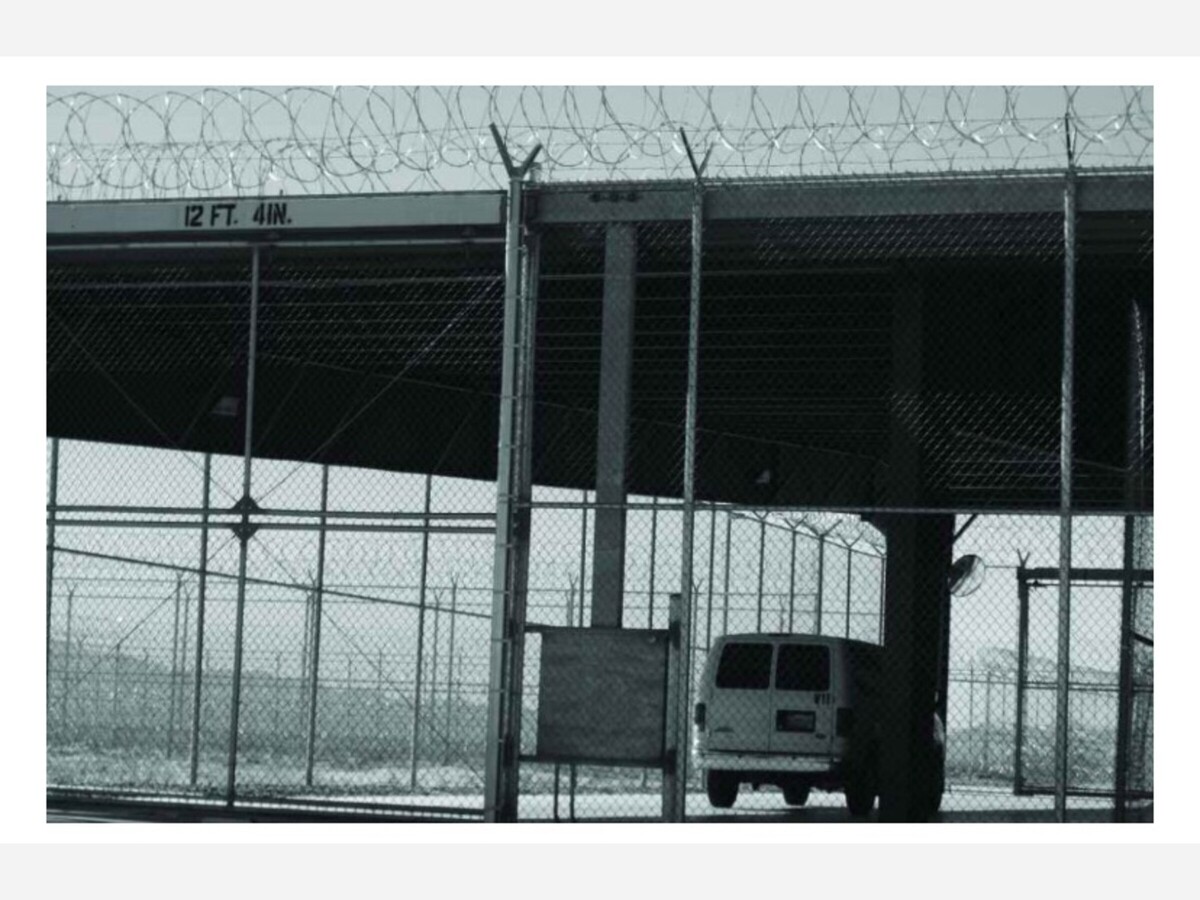
The primary facility impacted in southern New Mexico is the Otero County Processing Center (OCPC) in Chaparral, a county-owned detention center operated by the private firm Management & Training Corporation (MTC) under an Intergovernmental Service Agreement (IGSA) with ICE. The OCPC, with a contractual capacity of up to 1,089 detainees (and recent averages around 850 or more), is one of the state’s busiest ICE operations.
The facility provides revenue to Otero County through per-detainee payments. A key concern raised by county officials is outstanding bond debt tied to the facility’s construction. Historical and recent analyses point to approximately $45.2 million still due through 2028 on revenue bonds that financed the center. Some earlier claims suggested exposure up to $58 million if revenue streams ended abruptly. County leaders have argued that ICE contract income is vital for servicing this debt, potentially risking bond rating impacts and default, taxpayer burdens, or even bankruptcy scenarios without it. Otero County faces additional budget concerns with millions of dollars in potential exposure due to lawsuits tied to the Sheriff’s Department and the Elijah Hadley civil case against the county.
Otero County Commissioners’ Repeated Warnings on OCPC Closure Echo Familiar Tune—But Experts and History Suggest Backup Plans Were Long Overdue
As House Bill 9, the Immigrant Safety Act, advances through the New Mexico Legislature after passing the House on a 40-29 vote, Otero County officials continue to sound alarms about the potential closure of the Otero County Processing Center (OCPC) in Chaparral. County leaders, including past attorneys and commissioners, have repeatedly framed the facility’s revenue bonds—tied to its 2007 construction—as an insurmountable barrier to shutdown, warning of default risks, credit damage, and taxpayer fallout if the ICE contract ends.
Yet critics, financial experts, and long-standing analyses argue this narrative has been overstated for years, and Otero County has had ample time since the facility’s inception to develop mitigating strategies, contingency plans, or diversification efforts. The county’s reliance on a high-risk revenue stream from civil immigration detention, while profitable in narrow terms, has drawn scrutiny for prioritizing financial gain over broader community investment and humane considerations.
The Bond Debt Claim: A Recurring Argument
The OCPC, county-owned and operated by Management & Training Corporation (MTC) under an Intergovernmental Service Agreement (IGSA) with ICE, was financed through $62.3 million in revenue bonds issued in 2007. These bonds—higher-interest (originally around 9%) and without a public vote—rely solely on facility-generated revenue for repayment, not general taxes.
Outstanding debt figures have hovered in the $40–50 million range in recent years:
• County budget documents and expert reviews cite approximately $45.2 million remaining due through 2028.
• Earlier claims (e.g., from former County Attorney Michael Eshleman in 2021) referenced up to $58 million in potential exposure.
• A 2017 IRS audit led to conversion of remaining bonds (~$44.28 million at the time) to taxable status, but the core structure persisted.
Public finance expert Reilly White (UNM Associate Professor) reviewed filings and concluded the county bears no obligation to repay from taxes if revenue ceases. Reserves in dedicated bond accounts could sustain payments during transition, allowing time to repurpose the facility (e.g., for state/local corrections), refinance, or sell it—with proceeds covering bonds and any shortfall falling to investors, not taxpayers.
Cried This Tune Before”: Calls for Proactive Planning
Otero County has faced closure pressures and contract uncertainties for over a decade, including:
• 2017 DHS Inspector General findings of unsanitary conditions, broken infrastructure, and unjustified solitary confinement.
• Ongoing advocacy reports (e.g., 2021 AVID/Innovation Law Lab study) highlighting medical neglect, due process issues, poor food, and mistreatment.
• Past legislative pushes (e.g., 2021 bills targeting private facilities) where bond debt was cited as a key obstacle—yet no major diversification or backup plan materialized publicly.
ACLU of New Mexico and allies argue the bond issue serves as a pretext to maintain operations for profit, despite human costs. As Katie Hoeppner of the ACLU noted in prior coverage, the county “actively sought out a way to profit off of human misery” and has earned over $1 million cumulatively—benefits outweighed by risks like potential lawsuits that could erase gains.
Policy experts like Kristin Greer Love have suggested the facility could even be a net liability, with low-paying jobs offering limited economic uplift. They urge investment in alternatives better suited to rural Otero County’s needs.
Despite retroactive contract extensions (e.g., to March 2026 amid lapses) and commission support for continuity, no prominent public evidence shows comprehensive backup planning—such as economic diversification, facility repurposing studies, or reserve buildup beyond bond minimums—to address long-foreseeable risks from policy shifts, federal changes, or advocacy-driven reforms.
With HB 9 now in the Senate (potentially barring renewal of civil immigration detention contracts and lacking Rep. John Block’s failed reimbursement amendment), the window narrows. If enacted, OCPC’s ICE role could wind down, forcing adaptation without state aid for bond relief.
Otero County residents and leaders may now face the consequences of not hedging earlier against dependency on a controversial, volatile revenue source. For real-time updates on HB 9 and facility status, visit nmlegis.gov or local county resources.
For the most up-to-date tracking on HB 9, including floor amendments, votes, and Senate actions, visit the official New Mexico Legislature website at nmlegis.gov and AlamogordoTownNews.org
Sources:
• ACLU of New Mexico (Oct. 12, 2021, with ongoing relevance in 2026 coverage): Analysis of bond claims vs. expert views.
• 2nd Life Media Alamogordo Town News (Jan. 2026 articles on HB 9 impacts and OCPC economics).
• New Mexico Legislature (nmlegis.gov): HB 9 actions and votes.
• Santa Fe New Mexican, Border Report, and historical Otero County budget/financial documents (debt estimates ~$45.2M through 2028).
• Innovation Law Lab and related advocacy timelines on OCPC contracts and conditions.
• New Mexico Legislature official bill page for HB 9 (nmlegis.gov, 2026 session actions and vote records).
• Santa Fe New Mexican (Jan. 30-31, 2026) coverage of House passage, debate, and Block amendment.
• Source NM (Jan. 30, 2026) recaps on Day 11 proceedings, protests, and amendment details.
• ACLU of New Mexico analyses on Otero County bond debt claims, reserves, and expert perspectives.
• Border Report and related historical financial documents from Otero County.

i would count this as an achievement for humanity and common decency - as i have said before, no person should be imprisoned in this nation without the due process guaranteed in our constitution and laws.



Sunny, with a high of 81 and low of 61 degrees. Sunny in the morning, partly cloudy for the afternoon and evening, clear overnight.


Having the Sierra Club endorse you is like drinking the runoff from a lithium mine they spent a decade blocking—then calling the metallic taste “sustainability.” This phoney has a really bad dye job.
Just because you do not like someone does not make them phony.
kinda like not liking the blue kool aid so you hate all the kool aid. Besides doesn’t the editor have a vested interest in her campaign?






as per occam's razor, the simplest explanation for stonewalling a request this basic and straight forward, is that transparency will cast a bad light on lincoln county, and/or the entity they pay to run their jail.
The Albuquerque Journal (9/20/26, page C3) has a column written by Jacob Candelaria that is titled "A blacklist for people who ask too many questions". Basically, in 2025, our NM Legislators were debating House Bill 139 would have let any public body petition to have a person designated as "vexatious", and person's