
 81° and Partly Cloudy
Image
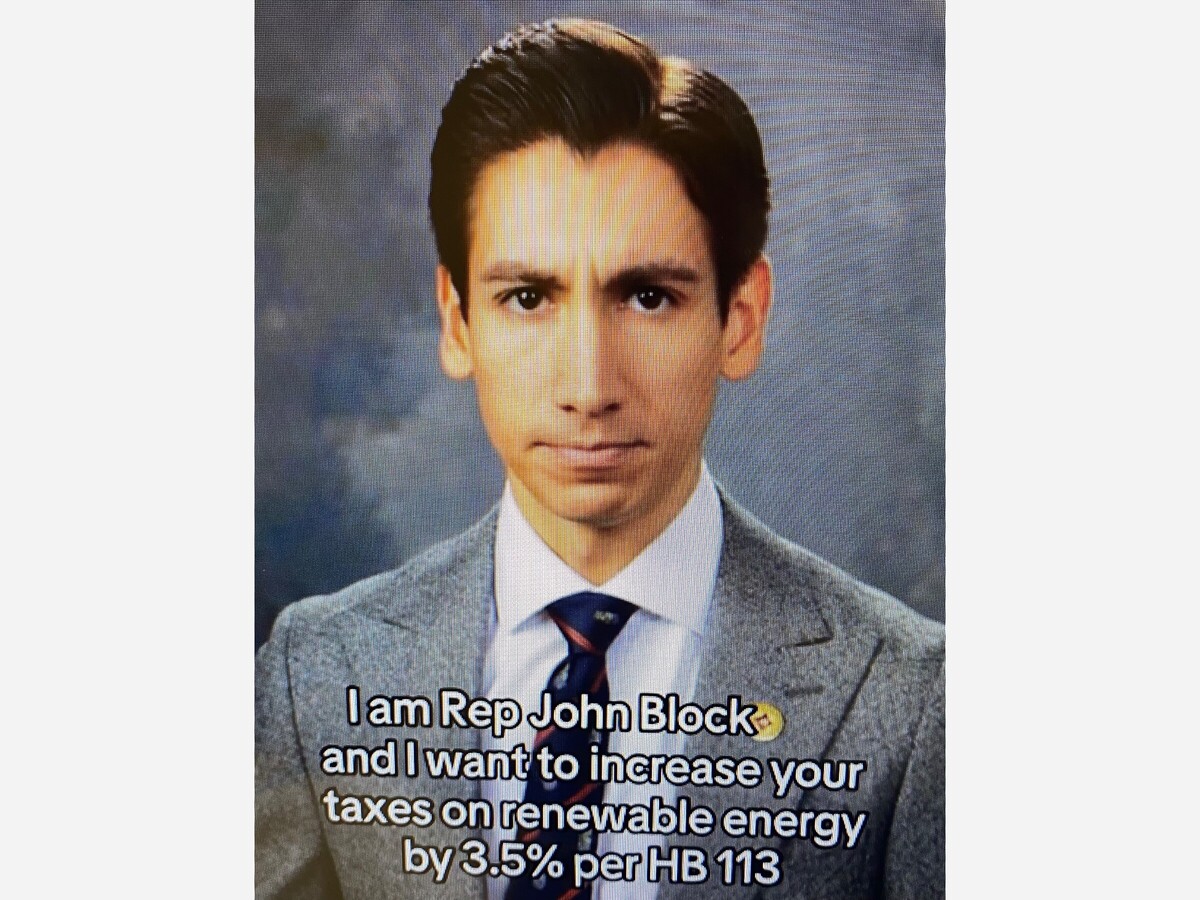



Alamogordo, NM — In a proposal that would have placed an additional financial strain on already vulnerable residents, Rep. John Block (R-Alamogordo), representing District 51 in Otero County, introduced House Bill 113 (HB 113)—officially titled the Renewable Energy Production Tax Act—during the 2026 legislative session. The bill proposed a 3.75% excise tax on the taxable wholesale value of each megawatt-hour of electricity generated from renewable sources, including solar, wind, biomass, hydroelectric, and geothermal.
The proposed tax increase which would have a disproportionate impact on the poor and rural elderly sponsored solely by Rep. Block. HB 113 aimed to channel revenue into the Severance Tax Permanent Fund amid anticipated future declines in oil and gas severance taxes. Block attemped to position it as ensuring renewable producers "pay their fair share," with exemptions for federal, state, tribal generation, and small-scale personal excess production (under 500 kWh in any 24-hour period). The tax would have taken effect January 1, 2027, if enacted. The fact remains if he was that committed to the his constituents then he should have called on a tax decrease on old and gas production to level the playing field, thus why no other representatives would sign on as co-sponsors.
The bill was tabled on a 6-4 party-line vote by the House Energy, Environment and Natural Resources Committee on January 27, 2026, stalling its progress unless revived. A majority voted to table it, arguing it would undermine New Mexico's established incentives for renewables under the Energy Transition Act and hinder investment in a sector vital for economic growth and job creation. Also that consumers in New Mexico cannot afford to pay additional taxes especially rural, elderly and at risk communities.
For rural Otero County residents—many in Block's district facing persistent economic hardship—the defeated proposal highlighted a troubling disregard for local realities by Mr. Block. Critics, including Western Resource Advocates, emphasized that such taxes on low-cost renewable production would likely pass through to consumers as higher utility rates, disproportionately burdening low-income households and those on fixed incomes.
Otero County's poverty rate stands at approximately 20% (U.S. Census Bureau 2019-2023 ACS estimates via Data USA and World Population Review; 20% in 2023 with a slight increase noted), significantly above the national average of 12.4%. The county's median household income hovers around $52,717—well below state and national levels—leaving families with limited buffers against rising costs. In Alamogordo, the poverty rate is 17.7% (U.S. Census Bureau QuickFacts 2019-2023 and Data USA 2023 estimates), with a similar median income of $52,515.
The elderly population is particularly at risk: About 18.3% of Otero County residents are 65 or older (U.S. Census Bureau QuickFacts), while Alamogordo's figure is higher at 19.1% to 19.5% (QuickFacts and related sources). Many seniors depend on fixed incomes from Social Security or modest pensions, making even modest electricity bill increases—potentially several dollars monthly from passed-through taxes—exacerbate energy burdens. In a region where households already use higher-than-average electricity (often 654–942 kWh/month per EIA and EnergySage data) and face rural-specific challenges like limited services and transportation, added costs could force painful trade-offs between utilities, medications, food, or heating/cooling.
Rep. Block's push for this tax, despite these demographics, reflects a pattern of him prioritizing taxes and bending to big oil, over protecting his constituents' most vulnerable—low-income families and seniors—who stand to gain little from renewable growth incentives but bear the brunt of regressive rate hikes. Opponents noted that low-income New Mexicans already spend disproportionately on energy, with some rural counties seeing burdens exceeding 26% of income in similar contexts.
By tabling HB 113, the committee shielded everyday ratepayers in economically challenged areas like Otero County from unnecessary added pressure, preserving incentives that support affordable, clean energy without directly hitting tight budgets hardest. Mr. Block showed a total disregard for his constituents and the elderly in the proposal to increase the tax burden on locals. The committee protected everyday ratepayers from Blocks out of touch tax increase proposal— especially low-income families and seniors — from an unnecessary and regressive increase in one of life’s most essential expenses.
Sources: New Mexico Legislature (nmlegis.gov, HB 113 text and committee actions); U.S. Census Bureau QuickFacts (census.gov, 2019-2023 ACS); Data USA (datausa.io, 2023); World Population Review; U.S. Energy Information Administration (EIA) residential data; EnergySage New Mexico electricity estimates; Western Resource Advocates testimony; local reporting from Alamogordo Town News & KALH Radio.

Would a flat tax rate amongst all energy production be a more viable alternative?

PNM should give money back to all those they severely overcharged instead of making customers find a way to make payments for PNM's mistakes.
the concept of natural monopolies can exist only under the coverage of completely transparent regulation....thanks to chris and other activists for shining the light into this situation.

Sunny, with a high of 94 and low of 77 degrees. Sunny in the morning, overcast in the afternoon and evening, clear overnight.





One correction is needed in the “New America” story: Ron deSantis is the governor of Florida, Greg Abbott is the Texas governor.
another distraction by dear leader to take voters' minds off the situations he has contrived to get our nation into...in order to take your minds off the fact that he was best buddies with epstein. and while the epstein files are still on the back burner, they're getting hotter eve

To improve Alamogordo, let's revert to the founding principles - only landowners should vote. Carpetbaggers like this ******* should go back to the plantation in Mississippi.
Wow! You can tell this dude’s mouth was open while he was being born. Just think about it for a moment…
Naw. He's right. We're the ones with skin in the game. Boonies ain't right with the world. They've proven it.

