Image
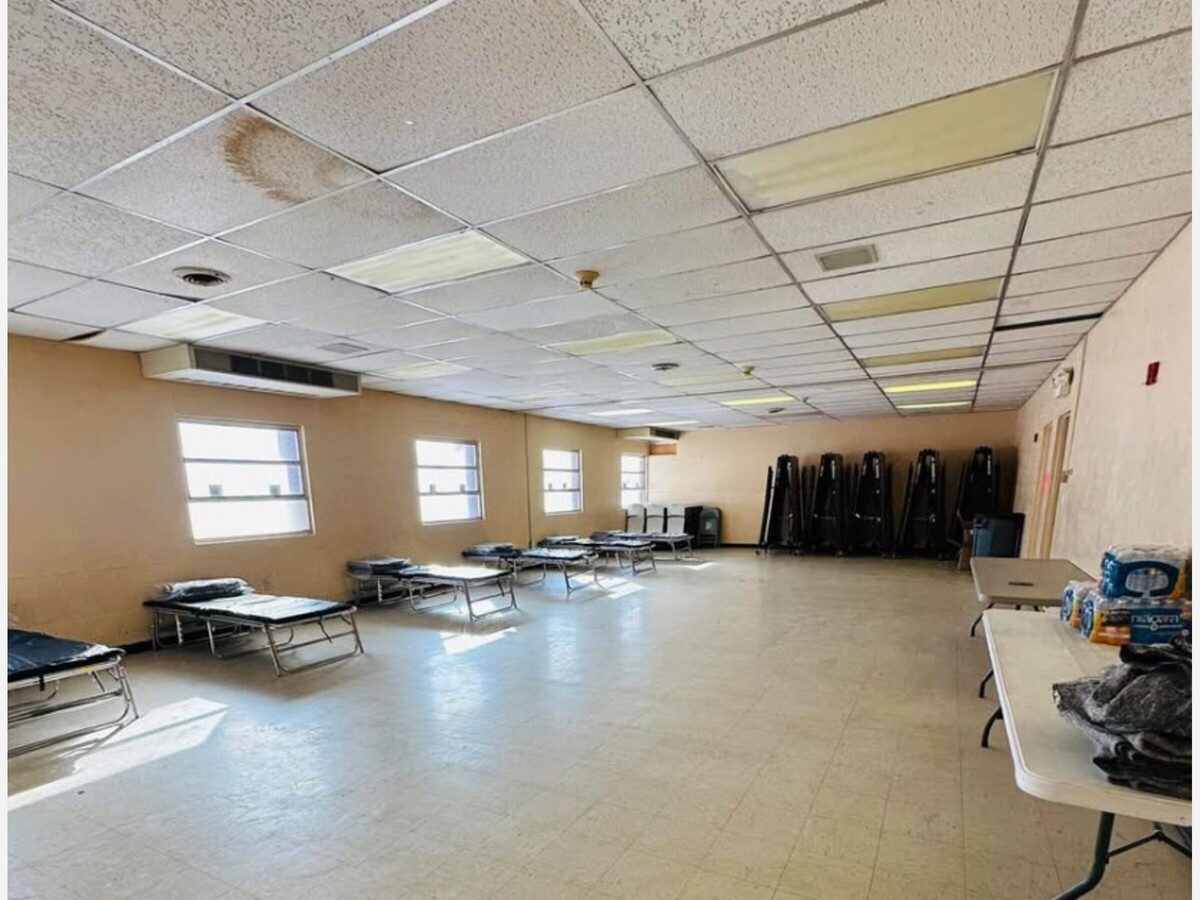



Alamogordo, NM – January 27, 2026 – A punishing winter storm—dubbed Storm Fern—has battered southern New Mexico since late last week, dumping heavy snow and ice across the Sacramento Mountains, causing widespread power outages affecting thousands, and plunging temperatures into the teens. While restoration crews from Otero County Electric Cooperative and PNM battle downed lines, broken poles, and hazardous terrain in communities like Cloudcroft, Timberon, and parts of the Mescalero Apache Reservation, the event has reignited debate over local governments’ preparedness for extreme weather, particularly in providing warm shelters for vulnerable residents.
Power outages peaked in the thousands in Otero County’s mountainous areas, with lingering blackouts reported as of Monday morning. Basin communities around Alamogordo fared better with lighter snow and faster recovery, but higher elevations continue to face frozen pipes, isolation, and life-threatening cold.
Otero County’s response represents a profound breakdown in leadership, made worse by the fact that the county holds far greater authority and capacity than the City of Alamogordo in situations involving public health, emergency sheltering, and regional coordination. The County Commission oversees a public health department, emergency management infrastructure, and county‑wide resources that are explicitly designed to respond to crises affecting vulnerable residents. It can activate emergency shelters, deploy public health personnel, coordinate with state agencies, allocate ARPA or contingency funds, and issue emergency declarations that unlock additional support. By contrast, the City of Alamogordo has no public health department, no social‑services division, and far more limited statutory authority; its role is largely supportive, not primary. Yet despite having the tools, funding mechanisms, and jurisdictional responsibility, the county defaulted to passive statements and symbolic concern while the Mescalero Apache Tribe and local nonprofits stepped in to provide the sheltering and humanitarian support the county itself is structurally obligated—and fully capable—to lead. This gap between what the county could do and what it chose to do underscores a failure not of resources, but of will, leadership, and accountability.
The City of Alamogordo, by contrast, has been transparent about its constraints. City officials state they lack the authority to independently declare a “Code Blue” cold-weather emergency or operate equivalent health services. Instead, the city has relied on community partners like Mountain View Church for primary sheltering. When church leaders requested help, Mayor Sharon McDonald and Acting City Manager Dr. Hernandez responded swiftly—approving staff to open the Recreation Center for showers, even with city facilities otherwise closed. These ad-hoc efforts demonstrate flexibility but highlight the city’s dependence on nonprofits rather than leading a broader response.
Standing out amid the criticism is the Mescalero Apache Tribe, which activated a clear and effective protocol. On January 26, the tribe announced via its official channels: “As temperatures are set to drop into the teens this evening, we want to remind everyone that the Warm Shelter is available at the Activity Hall in the Community Center. Join us for a warm and welcoming place to gather. Enjoy hot coffee and stay cozy with your neighbors! Open 24 hours to ensure everyone has a safe place to stay warm. Please take care of yourselves and each other during this chilly weather. Stay warm!” Earlier updates established emergency shelters through the tribe’s Emergency Operations Center and included provisions like meals for those without electricity, earning praise for its prompt, community-centered approach.
Local advocate Greg Gutierrez has proposed a Southern New Mexico Regional Emergency Preparedness Plan to bridge these gaps through joint efforts across Otero and Lincoln Counties. The comprehensive framework targets cities (Alamogordo, Tularosa, Ruidoso, Cloudcroft), rural areas (Timberon, Sunspot, Mayhill, Bent), Holloman AFB, and the Mescalero Apache Reservation.
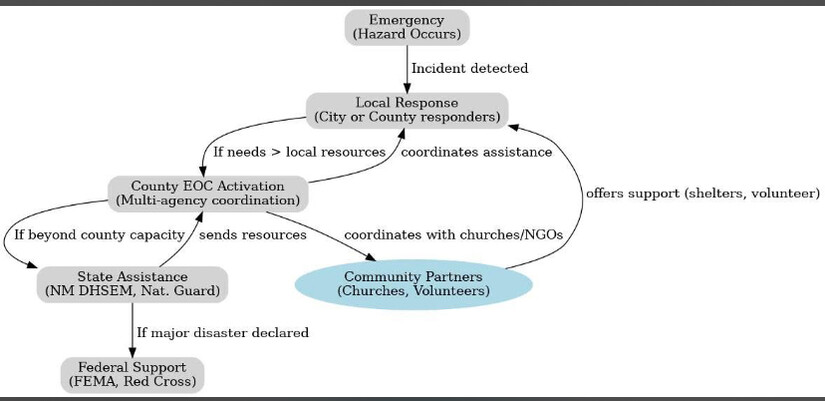
Key elements include:
• Pre-designated, ADA-compliant warming/cooling centers with backup power, water, communications, and pet access.
• Automatic “Code Blue/Red” activation triggers (e.g., ≤15°F for 12+ hours with outages).
• Multi-layered alerts via text, radio, TV, sirens, ham radio, and door-to-door outreach.
• Infrastructure upgrades: generators for critical sites, mutual aid pacts, prioritized road clearing, and fire mitigation.
• A task force of emergency managers, city/county/tribal reps, utilities, hospitals, volunteers, state DHSEM, and FEMA for drills and updates.
• Funding from FEMA/DHS grants, USDA rural programs, local ordinances, and nonprofits like the Red Cross.
Gutierrez invites public feedback to refine and implement the plan, arguing it would close longstanding holes in sheltering, communication, and resilience. He challenges locals to contact the county commissioner and pressure to finally implement a plan.
As crews work to restore power and frigid conditions persist, the storm has underscored a stark reality: while the City of Alamogordo and the Mescalero Apache Tribe have acted decisively within their means, Otero County’s superior resources have yet to deliver reliable, coordinated aid for the most vulnerable. Advocates say regional collaboration is urgently needed to avoid repeating these hardships in future extreme weather events.

We can learn a lot from Mescalero's shelter effort. How did it go? What worked well? What didn't work so great? Mescalero is stepping up their game and I give recognition where recognition is due. I also heard Red Cross in Ruidoso opened up a little temporary shelter too. It sounds like some plans are in place in local areas but how do we combine forces as a region is the next chapter of this story.
I think the county also needs to take a few pointers from Mountain View Church as they have been the main shelter in Alamogordo for a few years now. Runners Refuge may also have some insights they can provide.
Im not criticizing anyone or any agency. I simply used AI to help point out some patterns in the data we have available.
the mescalero apache government has a built-in advantage in their sensible approach to emergency safety needs - they have a long history of cultural community among their people.
that is completely missing in our current politicized environment....it has been replaced with suspicious concern that someone/some group might be getting something they do not deserve. the traditional religious concept of "caring for the least of these" no longer appeals to the broader public....it has been replaced by a self-reliant/independent/not my problem world view. after the tragic texas hill country floods last year, it was revealed that high water warning sirens had been proposed - but taxpayers urged their county commissioners not to accept available federal funds, and in a sense the commissioners voted to allow those deaths to occur.
that reality combines with several other facts; otero county is extremely large, but only 10% of that landmass pays property taxes - the remainder belongs to the federal government and is tax-exempt. also, outside alamogordo, the population is spread over significant distances; if you consider the number of volunteer fire dept's, and look at their distribution on a map, you will have a clearer understanding of this situation.
now, stop and think beyond the past few days of cold weather, and consider a different emergency - large uncontrollable forest fires - exactly like happened in ruidoso...which could easily occur in otero county. consider the magnitude of difference between a few cold nights impacting 50-75 homeless people, and fires creating several thousand homeless people in a matter of hours. anyone living up the hill can tell you that insuring a house here costs more each year, and several companies have given notice they will end underwriting here.
the best prepared, most hard-nosed prepper's in timberon will be up a creek - without a paddle - if their house burns down.
i will say that if the people's elected government plans to wait on an emergency to occur before it takes action - there is no plan. and if depending on churches/charities is their plan - they have no concept of a plan.



Sunny, with a high of 105 and low of 76 degrees. Sunny in the morning, clear in the afternoon and evening,







Congrats to SHERIFF YAZZA!
Thanks for being on top of this, in light of all the other problems at the County: namely the state auditors findings and Project Jupiter. Both are indicative to me that a new County Manager won't resolve the long-term tightly woven ball of problems this county has, including the Commissioners themselves. I've got