59° and Patchy rain nearby
Image
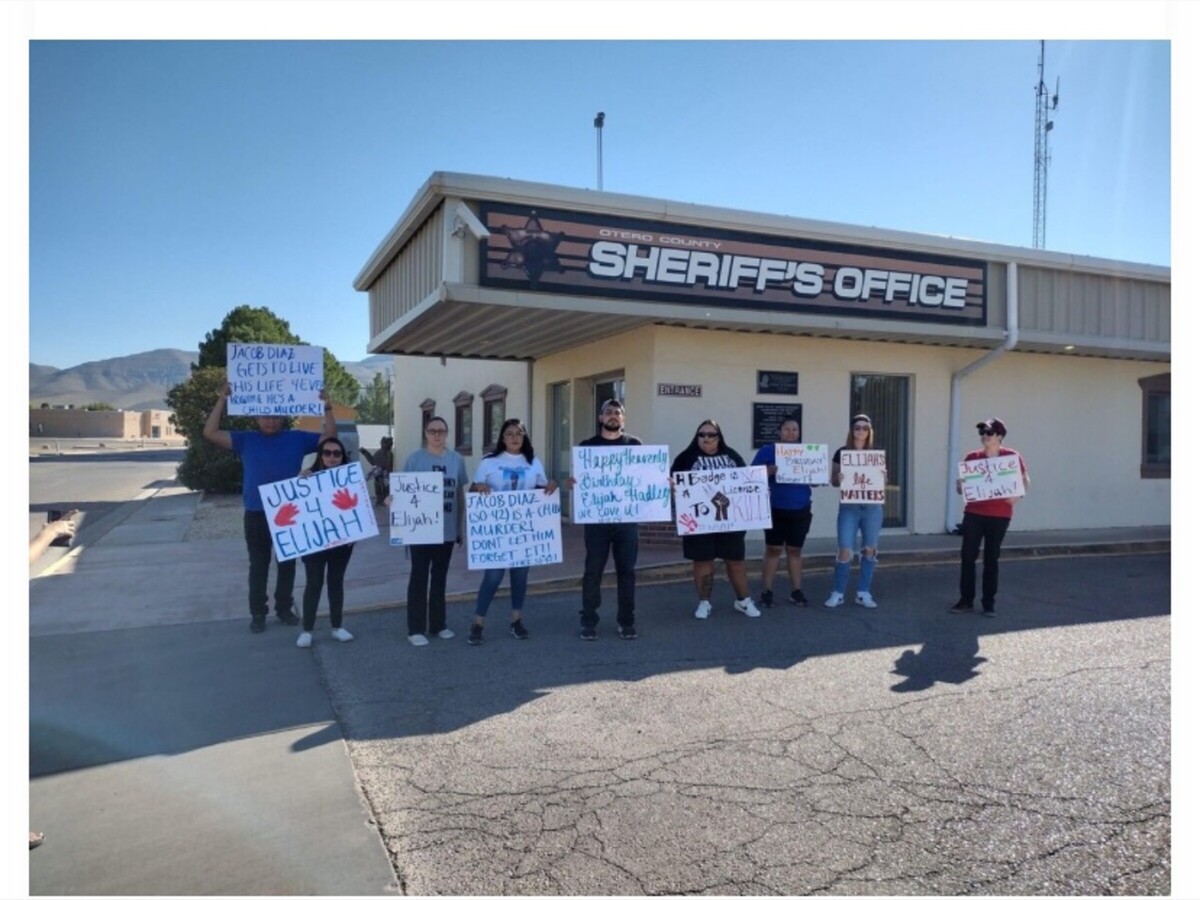
Justice for Elijah Hadley protesters outside of Otero County Sheriff’s Office in 2025 - AlamogordoTownNews.org



Alamogordo, NM – January 5, 2026 – As retired legal analyst specializing in police use-of-force cases and evidentiary disputes, I’ve been asked by 2nd Life Media to offer a preliminary analysis around the high-profile local prosecution attempt of Otero County Sheriff’s Deputy Jacob Diaz-Austin for the alleged first-degree murder of 17-year-old Elijah Hadley.
Note this analysis is preliminary and offered as an opinion only and does not constitute legal advice. The comments offered are based upon perceptions based upon decades of courtroom observations across the US.
Monday’s pretrial motion hearing before Judge Angie K. Schneider in the 12th Judicial District Court in Alamogordo, Otero County, New Mexico delivered a series of rulings that, on balance, appear to favor the state prosecutors.
These decisions strengthen the narrative of excessive force against a teenager—framed here as a “child” under New Mexico’s juvenile justice lens—while limiting the defense’s ability to muddy the waters with potentially prejudicial evidence
However, one key ruling on venue introduces a wildcard that could subtly benefit the defense at trial.
For context, Diaz-Austin faces charges of willful and deliberate first-degree murder stemming from the June 25, 2024, shooting on U.S. Highway 70 near Mescalero. Dashcam footage captures Hadley, a Mescalero Apache Tribe member, dropping what was later identified as a replica BB/pellet gun before the deputy fired 19-22 rounds, many after Hadley was down. Prosecutors, led by Bernalillo County DA Sam Bregman, argue this was not self-defense but premeditated overkill, emphasizing Hadley’s youth and the non-lethal nature of the item. The defense counters that Diaz-Austin reasonably perceived a threat in the heat of the moment.
Today’s rulings, while not dispositive, shape the trial’s evidentiary landscape in ways that align more closely with the prosecution’s theory. Let’s break them down:
1. Exclusion of Hadley’s Toxicology Report: A Clear Win for the Prosecution
Judge Schneider’s decision to bar Elijah Hadley’s toxicology results entirely is a significant blow to the defense. In use-of-force cases, defendants often seek to introduce victim toxicology to suggest impairment—implying erratic behavior that justified escalation. Here, excluding this evidence prevents any character assassination of Hadley, keeping the jury’s focus squarely on the deputy’s actions: Did firing multiple rounds into a prone teenager constitute deliberate murder, or reasonable force?
From a legal perspective, this ruling tracks New Mexico evidence rules (akin to Federal Rule of Evidence 403), where probative value must outweigh prejudice. By deeming the report “irrelevant” to self-defense claims, the judge signals that Hadley’s state of mind or potential intoxication doesn’t excuse the volume of gunfire. This favors prosecutors, who can now portray Hadley unambiguously as a vulnerable child in a welfare check gone wrong, without distractions that might humanize the deputy’s fear but dehumanize the victim.
2. Restrictions on Weapon Terminology: Neutralizing Defense Narratives
The court’s mandate for “neutral” descriptors—“pellet gun,” “pellet pistol,” or “replica firearm”—prohibits loaded terms like “pistol” or “gun.” This is another evidentiary curb that benefits the state. Defense teams in officer-involved shootings frequently use ambiguous language to amplify perceived threats, blurring the line between toy and lethal weapon in jurors’ minds.
By enforcing precision, Judge Schneider ensures the jury confronts the reality: Hadley held a non-firearm that he dropped before shots were fired. This ruling underscores the prosecution’s excessive force argument, as it highlights the disproportionality of Diaz-Austin’s response. In my experience analyzing similar cases (e.g., those post-Ferguson reforms), such linguistic controls often tip juries toward accountability, making it harder for the defense to invoke “split-second decision” defenses without addressing the item’s harmlessness.
3. Limiting William Garza to Lay Witness Status: Curtailing Expert Bolstering
Denying expert status to William Garza, tied to the Otero County Sheriff’s internal probe, restricts him to factual testimony only—no opinions on policy compliance or investigative validity. This hampers the defense’s potential to leverage departmental reviews (including FBI input) as authoritative endorsements of Diaz-Austin’s conduct.
Prosecutors gain here by preventing “expert halo” effects, where jurors defer to perceived authorities. It keeps the trial evidence-based on footage and eyewitnesses, not insulated by institutional validations. Notably, the defense’s revelation of no planned experts—and Diaz-Austin’s possible testimony—suggests a strategy shift toward personal narrative, which could backfire if cross-examination exposes inconsistencies in the excessive force claim.
4. Denial of Change of Venue: A Potential Defense Advantage Amid Local Ties
The one ruling that leans defense-friendly is the denial of a venue change, keeping the trial in Alamogordo despite prosecution concerns over local law enforcement sympathies. This echoes a June 2025 denial and could favor Diaz-Austin if the jury pool includes community members inclined to view officers as protectors rather than aggressors.
In rural districts like Otero County, where police-community bonds run deep, this might dilute the prosecution’s “excessive force against a child” framing. However, it’s a double-edged sword: High-profile scrutiny, including from Hadley’s tribal supporters and groups like JusticeForElijah.org, could pressure for impartiality or even invite appeals if bias emerges.
Overall Perception: Prosecution Gains Ground on Substance, Defense on Setting
Viewed holistically, these rulings perceive as favoring the state by streamlining a case centered on unjustified lethality. By excluding victim-blaming evidence and enforcing factual neutrality, Judge Schneider has fortified the first-degree murder charge, making it easier for prosecutors to argue premeditation in the face of a surrendered, unarmed teen. This aligns with broader trends in post-2020 policing accountability cases, where courts increasingly scrutinize force proportionality—especially involving minors.
Yet, the venue denial injects defense optimism, potentially offsetting evidentiary losses with a sympathetic locale. As the March 16 jury trial approaches, expect appeals or further motions; the defense’s self-testimony plan signals a high-stakes gamble.
This analysis draws from decades and of courtroom observations and docket trends nationwide, with no formal orders reviewed as fact.
Dr. Ramirez (retired) has no affiliation with parties in this case and provides this analysis for 2nd Life Media Alamogordo Town News without warranty of accuracy nor as legal advise.

a clearly written and balanced overview of the technical aspects of this trial.
Well written. What are your qualifications as to your views again?
Doctor of what?
Dr Rameriz is a retired trial attorney and retired university professor with adoctorate of criminal justice
Thank you Chris!


Overcast, with a high of 82 and low of 63 degrees. Overcast during the morning,
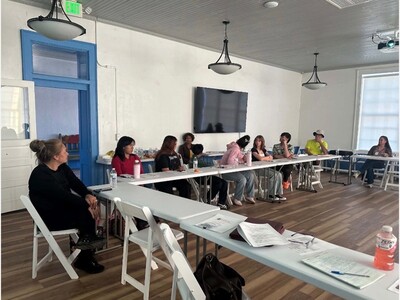
there is our future, kudos to both the students and the organizers.
the problems facing the republican party of new mexico pale in comparison with those of their national party - as the old saying - Meaning: Problems in an organization or society start at the top, with its leaders.
The fish rots from the head down
True. A prime example of this was the DNC failures in the 2020 election.
I have voted Republican in the past, but not this time. Our church group knows a few people who have tried to run or get involved and the old school fools won't let anyone they don't know get in at all. You can't solve any problem with the same people who created it. That's why we have terrible doctors here.

when public utilities are taken private the ultimate goal is to generate profits for their investors - come on, ray charles could see that.
If they are truly public utilities, why do they charge?
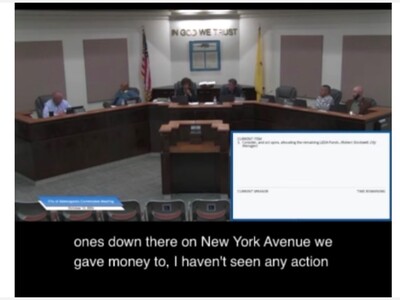
I follow theatres across the county, and know, this report is very sparse with details. Impossilbe to spend a million dollars on removing a fly loft, rigging and weights. New roof . . other upgrades, no where near a million bucks. The defamation should be on the managers who awarded inexperienced developers.
2nd Life Media is not an owner. We sold our share and that owner sold it to the present owner. Might want to check your facts. Also LEDA requires receipts and documentation. We had an estimated when we were an owner of aproximately $3 million needed to make it operational. Check your facts.
It will take well over a million dollars to make the theater usable to the public. We have not yet spent a million dollars, but we are far from complete. Our projected open date is Summer/Fall 2027.