
 77° and Patchy rain nearby
Image
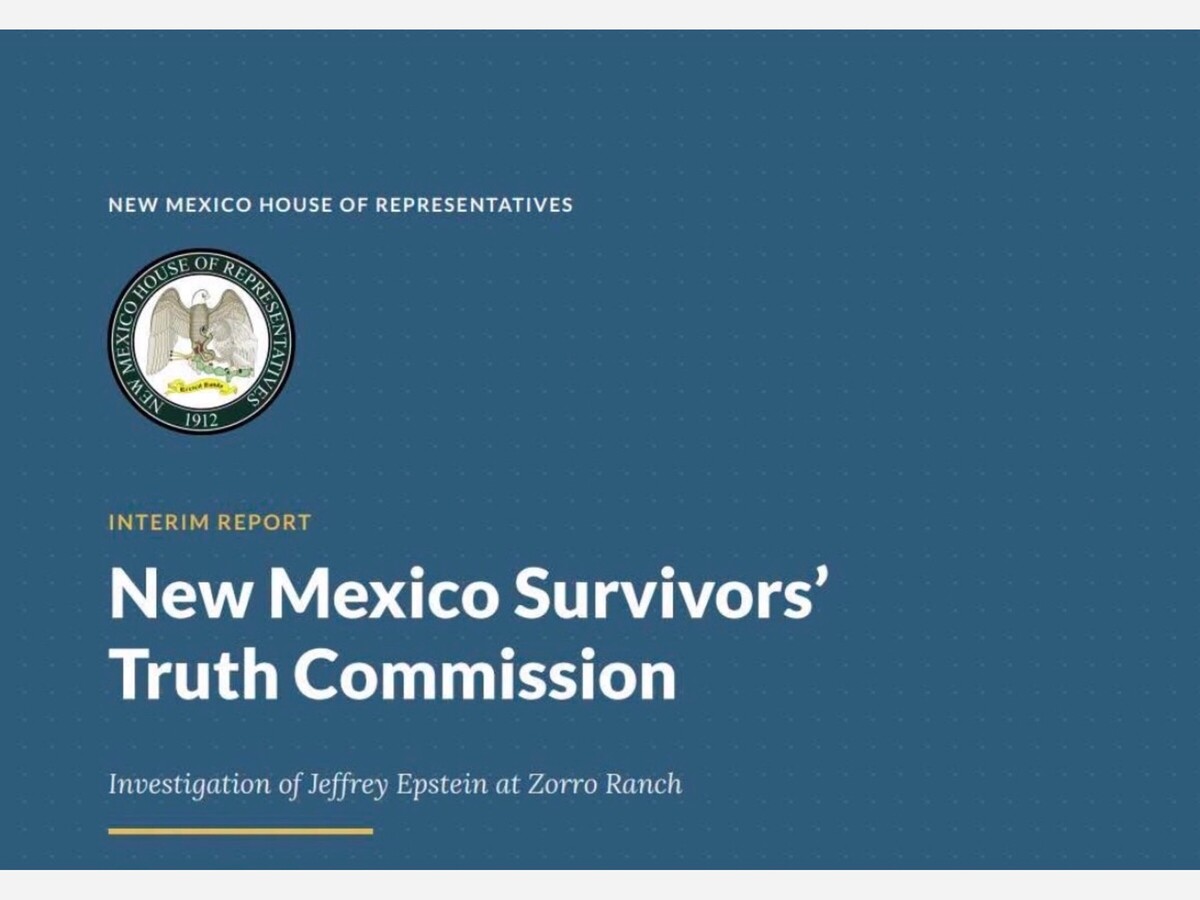



Independent Candidate’s Statement on Truth Commission Interim Report Offers Sharp Rebuke to Rep John Block’s Cynicism
The New Mexico Survivors’ Truth Commission faces a wall of obstruction. Federal agencies refuse to comply with lawful subpoenas. Half of an estimated 6 million pages of documents remain withheld. Critical email records span only a decade, leaving decades of Epstein’s New Mexico operations undocumented. Of 20 subpoenas issued by the Commission, only 10 received full compliance.
And from within the state, the criticism comes even more sharply. Rep. John Block called the interim report a “feeble” “nothing-burger” that “helps no victims.” He asked cynically: “Did we ever think they would hold anyone accountable? I hoped so, but now we have our answer: Nope.”
Into this void of obstruction and indifference stepped Grace Nagamine, an independent candidate for New Mexico House District 51
Her statement on the Truth Commission Interim Report is a direct counter to her opponents dismissal—and it speaks to something Block’s words revealed he does not understand: what survivors actually need.
“The survivors of Jeffrey Epstein’s crimes in New Mexico deserve more than silence, more than partial answers, and more than institutional delay,” Nagamine said. “They deserve the full truth.”
Those eleven words capture what Block’s criticism completely missed.
Lived Knowledge of Institutional Failure
Nagamine’s statement carries weight because she does not speak from theory. She comes to the Truth Commission’s work with personal knowledge of what it means to be failed by institutions.
In her book, “Your Neighbor: Living the Fight,” Nagamine details her survival of childhood abuse, domestic violence, homelessness, addiction, and incarceration. She has navigated through Child Protective Services as a grandparent, the criminal justice system as a defendant, the welfare system as a mother in poverty, and the mental health system while struggling with trauma and addiction.
She did not theorize these failures. She lived them.
That lived experience is precisely what allows her to understand what the Truth Commission is attempting to do—and why federal obstruction of that work is so damaging.
“The pain of abuse is not abstract to me,” Nagamine said in her statement. “I know what it is to live with experiences that others cannot fully understand unless they have walked a similar road. That lived knowledge creates a different kind of urgency—a determination to keep pressing for answers that my opponent has never demonstrated and, frankly, never could.”
That “opponent” is Rep. Block. His opponent is the federal government’s refusal to cooperate. What connects them is indifference.
When Institutions Refuse to Cooperate
The Commission faces federal obstruction at every turn. The U.S. Attorney’s Office for the Southern District of New York (SDNY), which prosecuted Epstein federally, has refused to comply with the Commission’s subpoena. The Southern District of Florida rejected compliance. The FBI, the FAA, JPMorgan Chase, and multiple other U.S. Attorneys’ offices have simply ignored the Commission’s requests.
This is the same federal government that allowed Epstein to operate in New Mexico for three decades without investigation. It is the same bureaucracy that deferred responsibility between agencies while survivors were being abused.
Now, when the Truth Commission seeks to finally investigate, those same institutions are blocking the path.
Nagamine recognizes what this means. “When institutions that hold critical records refuse or delay, it compounds the original harm,” she said. “Survivors should not have to wait while the powerful or the bureaucratic decide how much truth is convenient to release.”
This is not abstract complaint. This is someone who has lived what happens when systems refuse to cooperate with someone seeking help. She waited in emergency rooms while social workers took hours. She navigated CYFD while caseworkers delayed responses. She fought the court system while judges postponed hearings. She knows the cost of institutional delay.
For survivors at Zorro Ranch, the cost is seven years—from Epstein’s death in 2019 until March 2026 when the first search warrant was finally executed. Seven years of silence while federal agencies decided what to do.
The Truth Commission’s Purpose: Not Prosecution, But Recognition
Block’s criticism that the interim report “helps no victims” reveals a fundamental misunderstanding of what truth commissions do. They are not criminal courts. They do not issue charges or send people to prison. Their function is different and, for many survivors, equally vital: they name what happened, document how it was facilitated, and create an official record that validates survivors’ experiences.
Nagamine understands this because she has lived the alternative: silence, institutional abandonment, and the pain of being told your suffering is not significant enough to warrant investigation.
“The New Mexico Survivors’ Truth Commission was created with a clear and necessary mission,” Nagamine said in her statement. “To investigate what occurred on New Mexico soil, to document the failures that allowed it, and to give survivors a measure of recognition and justice that had been denied for far too long. I trust that mission. I believe in the work the commissioners and special counsel are doing.”
This statement stands in stark contrast to Block’s dismissal. Where Block saw waste and process failure, Nagamine sees purpose. Where Block counted missing charges, Nagamine recognized that recognition itself is a form of justice—the simple act of official investigation that says: what happened to you was real. It matters. We are looking.
For a survivor who has waited decades for someone in government to acknowledge their abuse, that matters more than Block’s cynicism suggests.
Contrasting Responses to Institutional Failure
Block’s criticism of the Commission’s work reveals his approach to institutional failures: he dismisses them as expensive mistakes. He asks why the interim report makes no charges, issues no final findings, offers no immediate recommendations. He counts the cost and declares it waste.
Nagamine’s approach—shaped by her own experience navigating failed systems—is different. She recognizes that change requires persistence, that institutional failure requires documentation, and that survivors require both accountability and recognition.
“I will study its findings carefully and work to turn its recommendations into concrete legislation,” Nagamine said, referring to the Commission’s final report expected in January 2027. “This is not about politics as usual. It is about whether New Mexico will finally choose transparency and justice over continued institutional failure.”
This is not the language of someone looking for quick wins or easy answers. This is the language of someone who has lived long-term institutional resistance and knows that meaningful change requires sustained commitment.
Block has demonstrated no such commitment. His social media attack contained no acknowledgment of survivors, no recognition of the Commission’s work, and no alternative vision for pursuing justice. It was purely fiscal criticism divorced from any survivor-centered framework.
Nagamine’s statement, by contrast, centers survivors throughout. She names them. She honors their pain. She commits to action based on the Commission’s findings.
Federal Obstruction Compounds the Original Harm
The most powerful part of Nagamine’s statement addresses the federal obstruction that is crippling the investigation: “At the same time, I am disappointed by the lack of full cooperation from certain federal authorities and agencies in response to lawful subpoenas. When institutions that hold critical records refuse or delay, it compounds the original harm.”
This sentence shows understanding that goes beyond policy analysis. It recognizes a psychological and moral reality: survivors are harmed not just by the original abuse, but by the institutions that refuse to investigate it.
Every delay, every refusal, every withheld document is a secondary harm that reinforces the message survivors received during their abuse—that their suffering is not important enough to warrant attention.
Federal agencies refusing to comply with lawful subpoenas are not simply being bureaucratically inefficient. They are compounding trauma. They are telling survivors a second time: we will not help you. We will not pursue the truth. We will protect the powerful over your need for answers.
Block does not understand this. His criticism suggests he views the Commission’s work as an optional government expense, something nice to have if it doesn’t cost money or time. He has no framework for understanding why survivors need the Commission’s work.
Nagamine has that framework because she has lived the damage of institutional indifference.
What Representation Looks Like When Led by a Survivor
Nagamine’s final commitment is direct: “When the people of District 51 elect me to represent them, I will treat the Commission’s final report—expected in January 2027—as more than a document to file away. I will study its findings carefully and work to turn its recommendations into concrete legislation that strengthens protections, closes loopholes, improves accountability, and centers the needs of survivors.”
This is not performative. She is not promising to read a report and move on. She is committing to action based on the Commission’s findings.
For a district that includes Holloman Air Force Base, where military families struggle with trauma and separation; where CYFD involvement can traumatize families further; where domestic violence and poverty are endemic, a representative who understands these systems from lived experience offers something different than Block’s dismissal.
It offers the knowledge that change is possible because she has lived it. She survived abuse. She overcame addiction. She navigated homelessness. She rebuilt her life. She founded a nonprofit that now serves families across Otero County. She did not give up when systems failed her. She transformed her survival into service.
That is the kind of persistence the Truth Commission needs—not from survivors themselves, but from their representatives.
The Choice Before New Mexico
The Truth Commission is under siege. Federal agencies are blocking access to records. Rep. Block is dismissing the work as worthless. The investigation faces a final deadline of January 2027, with critical witness depositions and comprehensive analysis still ahead.
In this moment, Grace Nagamine’s statement represents a different choice. It says: survivors matter. The truth matters. Institutional accountability matters. And those of us in government should treat the pursuit of justice as more important than budget criticism or political convenience.
“This is not about politics as usual,” Nagamine said. “It is about whether New Mexico will finally choose transparency and justice over continued institutional failure. The survivors have waited long enough. I intend to stand with them.”
Block asked sarcastically: “Did we ever think they would hold anyone accountable?”
Nagamine is answering: “Yes. And when I’m in office, I will.”

two very difference visions of what our government should look like, and how it should function...one is, go along to get along - the other says search for the truth. it is past time for the truth to be told, to not spare the horses, to let the chips fall where they may.
whose side are you on?



Sunny, with a high of 79 and low of 61 degrees. Sunny in the morning, clear during the afternoon and evening,



as per occam's razor, the simplest explanation for stonewalling a request this basic and straight forward, is that transparency will cast a bad light on lincoln county, and/or the entity they pay to run their jail.
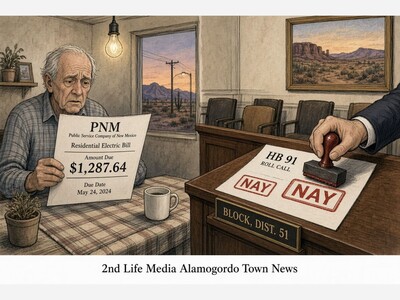



like 99% of his fellow republicans, block is a servant to the oil & gas industry - a principal constituent of their party.

Just thought the one thing all these first-timers have in common is no qualifications. Wanting to serve, help, or partake isn't enough. None of these people have any professional experience. Where are the engineers, CPA's, Ph.D's?
Business owners, a practicing attorney, one with a PHD, seems to me you didn't review the video.
Sounds like the author is a gordito themself.


like many others, i have experienced work-place environments where favoritism and cliques were present - adding unnecessary stresses to any job. two observations about such places; that the ultimate goal of governmental ethics regulations is to prevent the appearance of imp
Just to weigh in on this. Whatever the editor thinks about his right to publish is certainly his point of view, but it's getting to the embarrassing stage of conjuring divisiveness bent on turning a functioning government he doesn't like, but the people have elected.
The editors point of view is we need a functioning government. The viewpoint allegations were not of the editors making it was mailed to the city with a copy to the editor.