77° and Patchy rain nearby
Image

The AI Hypocrisy: We Use It Hundreds of Times Daily, Yet Freak Out Over a Picture - An AI image uses 1 teaspoon of water to create.



When an AI-generated image appears on social media, outrage is swift. Users demand regulations, share alarming claims about “10 gallons per image” water consumption, and express moral outrage.
Yet these same critics have already used AI hundreds of times that day without noticing.
Before finishing morning coffee, the average American interacts with AI dozens of times: credit card fraud detection, email spam filtering, social media content curation, GPS navigation, appointment scheduling, loan approvals, investment management, streaming recommendations, and voice authentication. By conservative estimates, Americans use AI-powered systems hundreds of times daily—almost all invisibly embedded in routine commerce and convenience.
The disconnect is stark. AI fraud detection systems analyze your credit card transaction in milliseconds. AI algorithms screen and rank every social media post you see. Machine learning models refine weather forecasts and optimize delivery routes. Yet only the visible image triggers moral outrage.
This selective environmental consciousness reveals how Americans understand AI: not as the invisible infrastructure powering modern commerce, but as a visible technology choice—one we simultaneously depend on and denounce.
What Companies Are Actually Doing
The corporate adoption of AI tells the real story of the technology’s integration into everyday life. Nearly 80% of businesses globally are using AI in some capacity in 2024. In North America, the numbers are even higher: Organizations in North America are witnessing the highest AI adoption percentage, which increased to 82% in 2024.>
More dramatically, 92% of Fortune 500 companies now use ChatGPT, and more than 7 million enterprise workplace seats are active—a 9x increase year-over-year.
By industry, the adoption patterns are striking:
About 63% of companies use GenAI to write text content, 36% to generate images, and 27% to assist with coding. But these numbers only capture intentional generative AI use. The real adoption is much higher when including machine learning for transactions, analytics, and customer service.
In specific sectors:
• Retail & E-commerce: Customer service has seen an explosive growth in AI adoption, increasing by over 2000% since January of 2025. AI now screens every chat inquiry, powers recommendation engines, manages inventory, and optimizes pricing in real-time. Walmart and Amazon are the largest retail users of AI from self checkout analytics to credit card processing and even messaging targeted to consumers online.
• Finance: Every major bank uses AI for fraud detection, credit scoring, and algorithmic trading. When you approve a loan online or check your credit score, AI has already evaluated you through multiple models.
• Healthcare: In 2025, 31% of individual legal professionals reported using generative AI at work. While legal-specific, this illustrates professional adoption. Healthcare adds diagnostic AI, appointment scheduling, and insurance processing and screening.
• Manufacturing: In 2025, 51% of manufacturers reported using AI in some form, with AI most often applied in marketing and sales (27.11%) and production processes (26.23%).>
• Logistics & Delivery: Amazon, UPS, FedEx, and every major shipping company use AI for route optimization, package sorting, demand forecasting, and warehouse robotics and AI for customer service tracking updates. Click on that tracking number and AI engine helped provide the status result.
The reality: Americans interact with AI-powered business systems far more than they interact with visible generative AI tools. Yet the social media image generates the outrage, the hypocrisy is astounding.
The Water Reality: What Actually Uses Massive Amounts
Here’s where the hypocrisy becomes quantifiable. Americans express alarm over AI’s water consumption while remaining silent about industries consuming orders of magnitude more water.
The real water-intensive industries:
Agriculture dwarfs everything else. In 2015, agriculture pulled 118 billion gallons of water per day for irrigation.
Growing corn, raising cattle and irrigating soybeans sit at the top of the chart, and most of that water exits through the crops and livestock themselves rather than flowing back to a river.>
To put this in perspective: US corn farming uses more water in a single day than every American data center consumes directly in a year.
Thermoelectric power generation is the second largest consumer. Power plants pulled 133 billion gallons per day. Note that power plants withdraw enormous volumes of water to cool steam turbines.
Industrial manufacturing follows:
• Forest product manufacturing in the US uses around 4 billion gallons of water a day.>
• Steelmaking uses around 1.8 billion gallons per day.
• Crude oil refining uses around 270 million gallons a day.
• Semiconductor manufacturing uses around 80 million gallons a day.
Recreational use is often overlooked:
• U.S. golf courses use 2 billion gallons daily.
• Residential lawns consume 9 billion gallons.
Data centers, by contrast: All U.S. data centers combined use approximately 50 million gallons per day for on-site cooling. AI represents roughly 15-20% of data center energy, suggesting ~10 million gallons daily for AI specifically.
The disparity is stunning. Americans anxiously debate AI’s water footprint while maintaining manicured lawns that consume 900 times more water than all AI data centers combined.
Why the Selective Outrage?
Nobody protests outside a corn processing plant or demands regulations on golf course irrigation.
The water footprint of livestock production—vastly larger than AI’s—barely registers in public discourse.
The issue is visibility combined with novelty. The “10 gallons per image” figure appears to be viral misinformation without academic backing. Once this false claim entered public consciousness, it shaped perception regardless of fact.
Established technologies receive moral acceptance through familiarity. We’ve normalized agriculture and power generation. AI, being new, triggers fear and scrutiny that older, larger polluters never faced.
The Uncomfortable Reality
To be clear, AI’s water consumption isn’t irrelevant. Unlike carbon, water impacts are local and depend on basin-level scarcity. Many data centers are in water-stressed regions, competing with agricultural and residential use. Data centers in Arizona or Nevada present genuine challenges to local water supplies.
But the contradiction deserves examination. Americans don’t actually oppose AI—we depend on it constantly, have organized financial and commercial systems around it, and use it hundreds of times daily.
What we oppose is visibility. We’re comfortable with invisible algorithms powering credit card swipes, social media feeds, and financial decisions. Yet an AI-generated image triggers environmental outrage—despite consuming far less water than maintaining residential lawns.
This selective concern reveals more about psychology than environmental science.
Meaningful policy and meaningful debate requires proportional concern matched to actual impact, not panic over novelty. Know the facts!
Data Sources
1. Qualtrics - “How Businesses Are Using AI in 2025” (January 13, 2026)
2. SellersCommerce - “How Many Companies Use AI?” (December 16, 2025)
3. McKinsey/Stanford HAI AI Index Report 2025
4. Aristek Systems - “AI 2025 Statistics: Where Companies Stand and What Comes Next” (November 7, 2025)
5. Lawrence Berkeley National Laboratory - U.S. Data Center Water Consumption Analysis (2023-2024)
6. Orennia - “Which Industries Use the Most Water in America” (3 weeks ago)
7. Orennia - “Visualizing US Water Use by Sector” (3 weeks ago)
8. Understanding Your AI - “Does AI Really Use 10 Gallons of Water Per Image?” (February 4, 2026)
9. United Nations University - “Rising Emissions, Depleting Water and Vanishing Land—UN Scientists: AI Is Threatening Natural Resources for Billions” (June 8, 2026)
10. Brian Potter - “How Does the US Use Water?” (September 14, 2025)
11. Expert Assessment - “The Systemic Environmental Risks of Artificial Intelligence” (arxiv.org)
12. The Conversation - “AI has a hidden water cost − here’s how to calculate yours” (September 1, 2025)
13. U.S. Geological Survey - Water Use in the United States
14. Carnegie Mellon University - Industrial Water Consumption Analysis

this minimizes the effect of using ai specifically to mislead, or give the appearance of truth to falsehoods - and that is a use which we cannot afford, and should not condone...
“The price of freedom is eternal vigilance.”
― John Philpot Curran
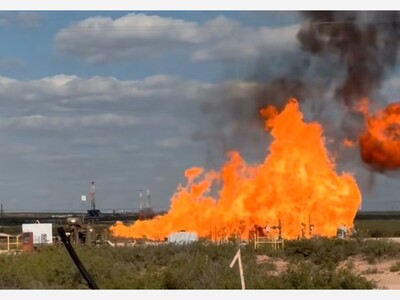


Sunny, with a high of 79 and low of 61 degrees. Sunny in the morning, clear in the afternoon and evening,




as per occam's razor, the simplest explanation for stonewalling a request this basic and straight forward, is that transparency will cast a bad light on lincoln county, and/or the entity they pay to run their jail.


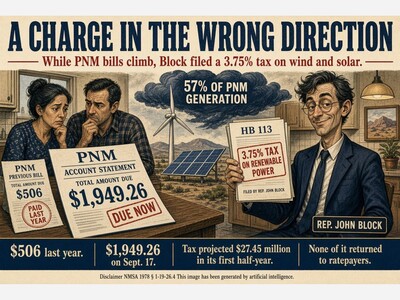
like 99% of his fellow republicans, block is a servant to the oil & gas industry - a principal constituent of their party.

Just thought the one thing all these first-timers have in common is no qualifications. Wanting to serve, help, or partake isn't enough. None of these people have any professional experience. Where are the engineers, CPA's, Ph.D's?
Business owners, a practicing attorney, one with a PHD, seems to me you didn't review the video.
Sounds like the author is a gordito themself.