
 77° and Overcast
Image
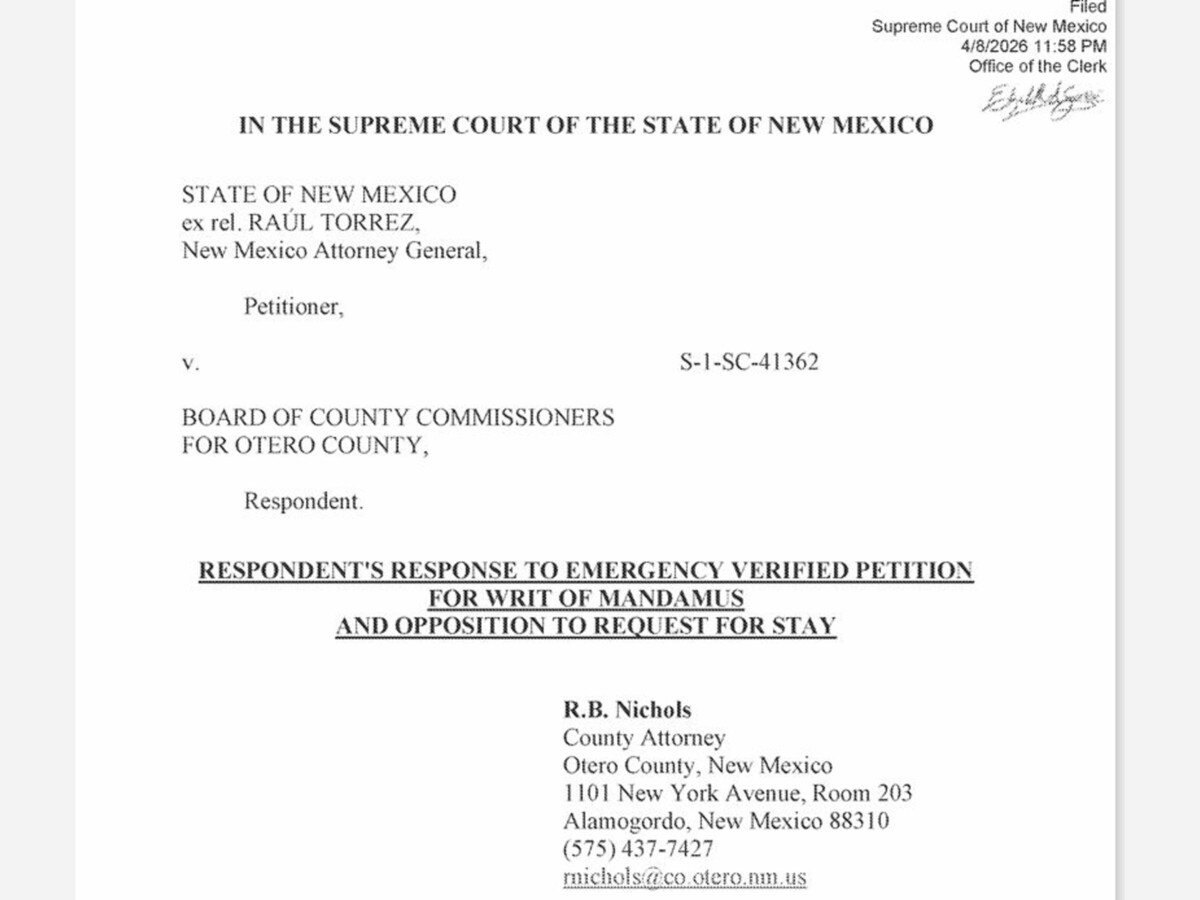



Documents obtained by Alamogordo Town News through an Inspection of Public Records Act request reveal Otero County's formal legal rebuttal — a point-by-point dismantling of the Attorney General's emergency petition that accuses Santa Fe of trying to accomplish through the courts what its own law cannot yet do -April 9, 2026 | Alamogordo Town News
2nd Life Media AlamogordoTownNews.org and KALHRadio.org has obtained Otero County's formal response to Attorney General Raúl Torrez's emergency mandamus petition through an Inspection of Public Records Act request to County Attorney R.B. Nichols. The 29-page response, filed with the New Mexico Supreme Court on April 8, 2026 — along with a stack of supporting exhibits — is the most detailed public accounting yet of why Otero County believes the AG's legal assault on the Otero County Processing Center's ICE contract is not just wrong, but cynically timed and legally hollow.
The response was filed under Case No. S-1-SC-41362 and signed by Nichols alongside outside counsel Samantha M. Adams of the Adams+Crow Law Firm and Paul J. Kennedy of Kennedy, Hernandez & Harrison, P.C. — a legal team the county commission authorized when it approved funds for outside litigation counsel earlier this spring.
The bottom line from County Attorney Nichols and his team: deny the petition, deny the stay, and send the AG to pursue his theories in ordinary court proceedings where they belong.
Attorney General Torrez filed his petition on April 1, 2026, seeking an immediate stay and invalidation of the Intergovernmental Service Agreement between Otero County and ICE for detaining individuals at the Otero County Processing Center in Chaparral. The AG argued the agreement is unlawful on two grounds: that New Mexico municipalities lack statutory authority to detain individuals for the federal government based solely on civil immigration violations, and that Otero County failed to obtain required approval from the New Mexico Department of Finance and Administration, rendering the contract void.
The AG's office went further in its public statements, declaring: "Otero County's conduct is precisely the kind of maneuver HB 9 was designed to prevent. With minimal public notice, commissioners convened an emergency meeting to rush through a new five-year agreement just days before their previous contract expired. The agreement bars the County from withdrawing for any reason while leaving ICE free to exit at will. By rushing to lock in a long-term detention contract on the eve of that law taking effect, Otero County acted in direct defiance of public policy set by the New Mexico Legislature."
When the AG determined the county's first emergency meeting violated the state's Open Meetings Act, Torrez stated publicly: "The Open Meetings Act is not optional. It ensures that public business is conducted in the open, not rushed through under the guise of an emergency when no true emergency exists."
Strong words. Otero County's legal team has a response to each of them — and the documents back it up.
The county's response, obtained by 2nd Life Media AlamogordoTownNews.org and KALHRadio.org through our IPRA request, opens with language that makes the county's posture unmistakably clear. For eighteen years — since the Otero County Processing Center opened in 2008 — the State of New Mexico said nothing about the county serving the federal government in detaining noncitizens. Not a word from the AG's office. Not a letter from the Department of Finance and Administration. Not a challenge from the Legislature. Nothing.
Now, forty-nine days before House Bill 9 takes effect, the AG has filed what the county's brief calls a "manufactured emergency" — seeking the most drastic extraordinary remedy available from the state's highest court to void a countersigned federal procurement contract. The filing documents exactly what is at stake for Otero County residents if the court grants what Torrez is asking:
The Otero County Processing Center houses approximately 900 federal civil immigration detainees, employs about 284 county residents, and secures more than $14 million in outstanding, irrevocably pledged county revenue bonds. The reserve fund backing those bonds holds only $5,450,303.66 — less than half the outstanding principal — with the next interest payment due October 1, 2026.
As the county's brief puts it plainly: "If mandamus issues, County residents will suffer."
One of the most damaging sections of the county's response for the AG's case is the documented history of the state's own participation in the very arrangement it now calls illegal.
According to the IPRA documents provided to ATN by County Attorney Nichols, in early 2024 a DOJ attorney named Daniel Rubin collaborated with the county and the General Services Department to revise, finalize, and approve the MTC Operations Agreement — the operational contract that explicitly depends on the ICE Intergovernmental Service Agreement for its revenues. Rubin and a colleague signed their approval in February 2024. In September 2025, when the county submitted a proposed amendment to that same agreement, the DOJ formally denied it — but in doing so, explicitly reaffirmed its prior approval of the underlying structure, stating the amendment would "remove language which was approved by the DOJ."
The county's response also attaches a 2007 DFA memorandum on intergovernmental agreements that the AG never mentioned in his petition. That memo — the state's own finance department's guidance — explicitly instructs that intergovernmental services agreements like the one at issue here are not joint powers agreements and should not be processed through the JPAA framework. That is the exact framework the AG is now claiming the county was required to use.
"The State did not merely acquiesce in the OCPC structure," the county's brief states. "It actively approved and administered it."
County Attorney Nichols and outside counsel lay out five threshold reasons the court should deny the petition before even reaching the merits — any one of which, they argue, is independently sufficient.
First, there is no lawful act the county can actually perform to comply with a writ. The contract's Article 14 gives only ICE the right to terminate. The county has no authority to unilaterally release or expel federal detainees held under federal administrative warrants. And refusing to perform the contract would simultaneously breach the federal agreement and violate the state's own statutory pledge to bondholders.
Second, the United States government is an indispensable party to this case — it is a signatory to the very contract the AG wants voided — and cannot be compelled to appear in state court due to sovereign immunity.
Third, the AG has identified no clear, settled legal duty the county violated. These are first-impression legal theories — questions no New Mexico court has ever answered — and mandamus requires a clear, existing legal duty, not a novel interpretation argued for the first time.
Fourth, adequate remedies exist through ordinary court proceedings, where a full factual record can be built and the United States can participate.
Fifth, and perhaps most pointed: the state's own bond pledge statute, NMSA 1978 Section 4-62-6(C), bars the relief sought. That law provides that the state "pledges to and covenants with the holders of any bonds that it will not limit or alter the rights or powers of the county to fulfill the terms of any agreements made with the holders of the bonds." Granting the AG's petition would force the state to break its own statutory promise to bondholders.
The county's response includes one of the sharpest legal observations in the entire filing — an internal contradiction in the AG's own position that the brief frames as dispositive.
If Otero County truly lacked legal authority to operate a federal detention facility since 2008, then House Bill 9 — which prospectively bans counties from entering or renewing ICE detention contracts — was entirely unnecessary. Legislatures do not prohibit conduct that is already illegal. HB 9 would have been superfluous if the county never had the power to enter these contracts in the first place.
"HB 9's existence," the county's brief states, "is the Legislature's acknowledgment that the County's authority was real, that the IGSA was valid, and that prospective legislative action was required to change that. DOJ cannot simultaneously argue that HB 9 was necessary and that the IGSA was always void."
The county's brief takes direct aim at the AG's claim that the county could simply raise taxes to cover any bond default if the stay is granted. County Attorney Nichols calls this a fundamental misunderstanding of how revenue bonds work — and a "disturbing revelation given DOJ's state leadership and advocacy responsibilities."
These are revenue bonds, payable solely from detention facility revenues. They are not tax-backed general obligations. The county has no authority to transfer that financial risk to county residents through a property tax levy. The bond ordinance doesn't allow it. The law doesn't require it.
What a stay would actually trigger, according to the county's detailed financial affidavit: immediate disruption of IGSA revenues, default risk on $14,330,000 in outstanding principal backed by only $5.45 million in reserves, potential acceleration of the entire debt, and likely foreclosure and sale of the facility to a private operator — who could then contract directly with ICE to resume the same detention operations. The detainees would not be released. They would be transferred out of state, farther from their families and attorneys, with no improvement in their legal situation.
As the county's brief frames it, if the AG's actual goal is improving conditions for detainees, "functionally ensuring they are shuttled off to Texas does not meet the supposed policy goal of this petition."
The county's response closes with language that cuts to what Nichols and his legal team believe is really driving this litigation. The AG's petition opened with an extended discussion of House Bill 9 — a law that, by the AG's own admission, "is not at issue" in this proceeding. The county's brief argues that framing was deliberate: designed to cast the county's conduct as defiant of a clear legislative mandate before then disclaiming reliance on the very law it spent pages discussing.
"DOJ raised HB 9 precisely to inflame, not inform," the county's response states.
The filing notes that the only practical effect of the AG's requested relief is to accomplish through mandamus — on untested legal theories the state itself contradicted through two decades of approvals — what HB 9 is designed to achieve prospectively, before HB 9 takes effect on May 20, and before its constitutionality can be challenged in ordinary litigation.
The county has signaled it intends to challenge HB 9's constitutionality when the time comes. It is prepared to argue that the law conflicts with federal statutes authorizing ICE to contract with local governments, that it violates the Contracts Clause, and that the state's own bond pledge statute independently protects the county's right to maintain its revenue-generating contracts.
The New Mexico Supreme Court has the county's full response and exhibits. The court has not yet ruled on the emergency stay request or set a hearing date. With HB 9's May 20 effective date approaching, the court's timeline is compressed. A ruling — in either direction — is expected in the coming weeks.
For the 284 workers at the Otero County Processing Center in Chaparral, for the bondholders who financed its construction, and for the roughly 25,000 residents of Otero County whose county government faces a potential financial catastrophe if the facility closes, the stakes could not be higher.
Alamogordo Town News will continue covering this case as the Supreme Court acts. The full response brief and exhibits are on file with this publication and available through our IPRA documentation. The link below provides the full filing and exhibits submitted to the courts:
Otero County response to AG mandamus petition with exhibits.pdf - Google Drive
Documents provided by Otero County and Otero County Attorney R.B. Nichols in response to a 2nd Life Media AlamogordoTownNews.org and KALHRadio.org IPRA Request

i suspect that the county will prevail in this current conflict, but, as i have previously stated - i believe that five years from now there will be a reckoning. the precise timing of the county's actions will likely satisfy a strict reading of the law....but the novel introduction of a poison pill in the new agreement - allowing the ICE/DHS freedom to exit the agreement at will, while prohibiting the county from doing so, will ultimately be ruled a subterfuge, and thus invalidated.
"the county has signaled it intends to challenge HB 9's constitutionality when the time comes." this returns to the situation i previously questioned: lacking a waiver in HB 9 that would legally permit the county to continue its contractual arrangement with ICE/DHS. this exposes the underlying question: is otero county legally coequal with the state of new mexico? stated another way: is the state of new mexico constitutionally prohibited from regulating the counties therein?
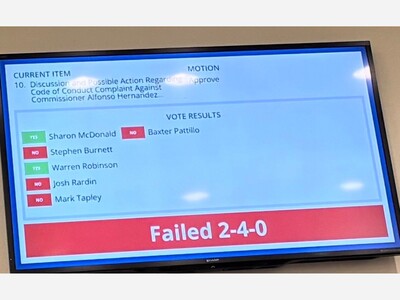
One more time, ATN gets it wrong. Now they have to find someone else besides Kim Night Owl Pampers to impeach the four commissioners ELECTED to run our city. Clearly, a landslide is coming, and the two rogue actors will be out.


Light rain shower, with a high of 65 and low of 61 degrees. Light rain shower for the morning, moderate or heavy rain shower in the afternoon, light rain shower in the evening,

Man-oh-man. You wrote, "The attorney only checked the paperwork." *** do you want? The trial at Nuremberg? Doubting every little thing you can pick on reveals your paranoia. Stephanie is OUT for a legal reason. The smoky mayor feeding you garbage is clickbait.
Nice comment. I believe your sheet and hood are ready to be picked up at the kkkleaners.
Racist garbage.

once again; complete transparency should be expected with any entity that enjoys status as a natural monopoly.
Absolutely




well stated, sir.
Thank you for the transparency this town deserves. Your due diligence is much appreciated. 🌿

another opportunity to watch the voting block...


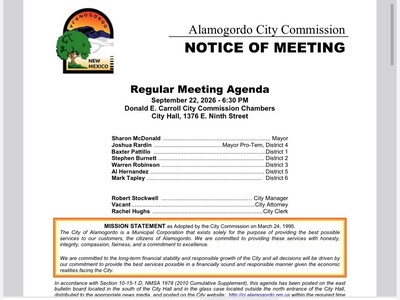
this meeting will be the opportunity to see if the 4 vote majority on the city commission will stand or fold - i'm inclined to think they will stick together, and if that is the case, their control over the city's business will be established.