63° and Partly Cloudy
Image
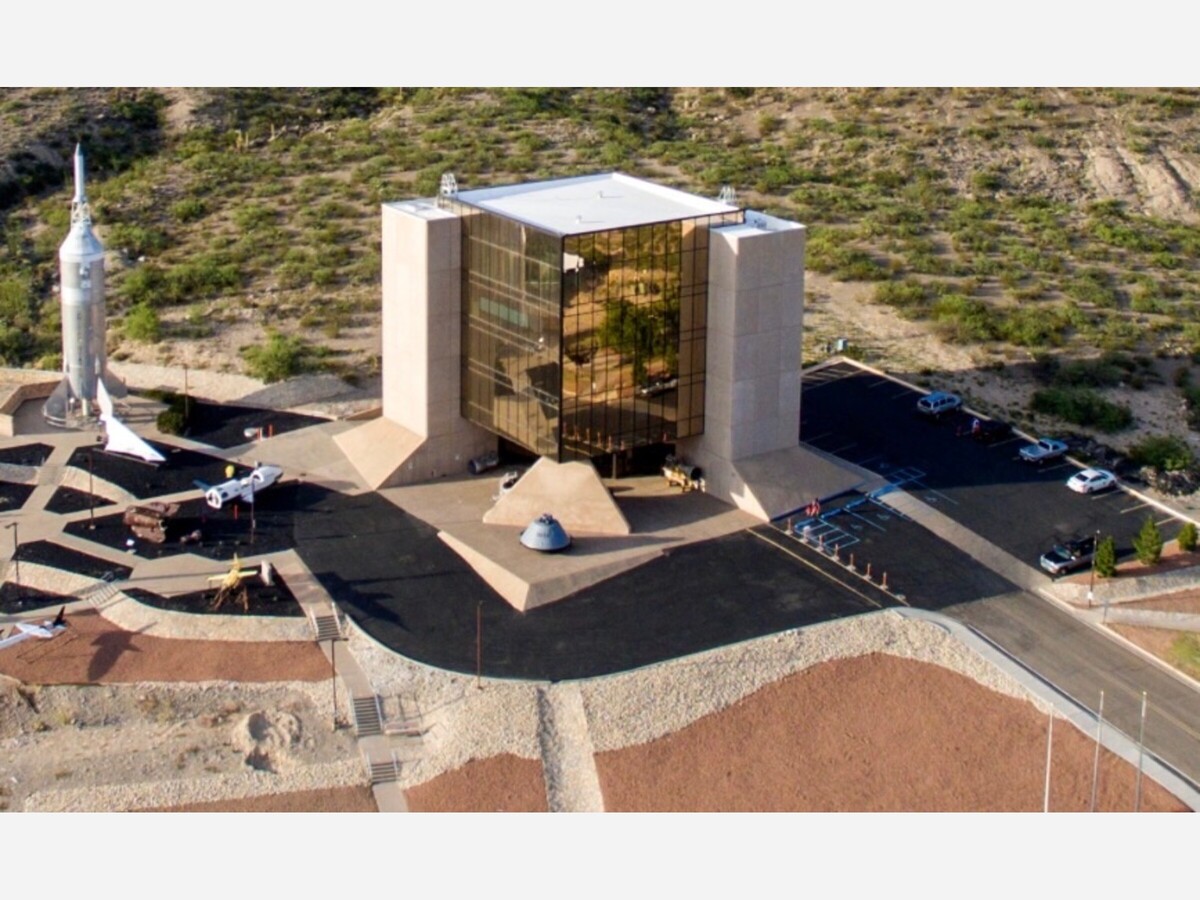
Alamogordo’s Iconic “Golden Cube” Poised for Golden Milestone: 50 Years as New Mexico’s Gateway to the Stars and Economic Beacon for the Tularosa Basin - AlamogordoTownNews.9rg



ALAMOGORDO, N.M. (February 28, 2026) — For nearly five decades, the gleaming four-story “Golden Cube” has stood sentinel against the Sacramento Mountains, its gold-tinted glass reflecting not just the desert sun but the extraordinary story of New Mexico’s outsized role in humanity’s reach for the stars. As the New Mexico Museum of Space History prepares to celebrate its 50th anniversary in October 2026, the institution — born from one local leader’s bold vision — is reflecting on a half-century of inspiration, education, preservation, and profound regional impact that has helped put Alamogordo and the Tularosa Basin firmly on the global map.
The story begins not in a laboratory or launch pad, but in a living room in 1973. Then-Mayor Dwight A. Ohlinger — a local insurance and realty businessman — was watching a television commercial for the Pro Football Hall of Fame when inspiration struck. Why not create an International Space Hall of Fame right here in Alamogordo? The Tularosa Basin, after all, had earned its nickname as the “Cradle of the Space Age.” From the thunderous V-2 rocket tests at White Sands Missile Range in the 1940s to Colonel John P. Stapp’s record-breaking rocket sled runs at Holloman Air Force Base that proved humans could survive the rigors of spaceflight, and even the training of Ham the Astrochimp at Holloman before his historic 1961 Mercury flight — this high desert landscape had been ground zero for America’s leap into the cosmos.
Ohlinger rallied support at every level. Governor Bruce King embraced the idea, issuing a proclamation designating Alamogordo as the official site. Letters of endorsement poured in from legends like Wernher von Braun, Neil Armstrong, and Dr. Charles Stark Draper. In just nine months, the New Mexico Legislature unanimously approved funding. Architect Charles E. Nolan Jr. and Associates designed the striking “golden cube” — a modern four-story structure with reflective gold glass flanked by adobe pillars, evoking both futuristic ambition and Southwestern roots. Dedicated on October 5, 1976, with the first 15 inductees into the International Space Hall of Fame, the museum opened to the public on November 23, 1976. A planetarium and IMAX theater followed in 1981. Over the years the name evolved — briefly the Space Center in 1987, then the New Mexico Museum of Space History in 2001 — but the mission never wavered.
Today, as a Smithsonian Affiliate and American Alliance of Museums-accredited institution under the New Mexico Department of Cultural Affairs, the 28,000+ square-foot campus has grown into a world-class destination. Visitors explore interactive exhibits on New Mexico’s space legacy, planets, living and working in space, and the primates who paved the way for humans. Outdoors, the John P. Stapp Air & Space Park showcases massive rockets including the towering Little Joe II (used to test Apollo abort systems), the historic Daisy Track rocket sled, and the Astronaut Memorial Garden where Ham the Astrochimp rests — a beloved site where visitors still leave bananas in tribute. The Clyde W. Tombaugh Education Center, New Horizons Dome Theater & Planetarium, and International Space Hall of Fame round out the experience.
A Half-Century of Regional Transformation
The museum’s impact stretches far beyond its exhibits. For Otero County and the broader Tularosa Basin, it has become an economic and cultural engine. Drawing more than 100,000 visitors annually, it anchors tourism alongside White Sands National Park and contributes significantly to the local economy through lodging, dining, and retail. State tourism data consistently shows that cultural and historical attractions like this one drive millions in spending and support thousands of jobs across New Mexico — with Alamogordo reaping direct benefits as a rural community.
Educationally, it has inspired generations of local students. Free and low-cost STEM programs, school field trips, star parties, and the monthly Launch Pad Lecture Series have turned the “Hill” into a classroom without walls. Kids from Alamogordo, Cloudcroft, and Tularosa grow up seeing rockets on the skyline and learning that groundbreaking science happened in their own backyard — fueling dreams of careers in aerospace, engineering, and beyond. The museum also serves as the official repository for Spaceport America, tying it to New Mexico’s future in commercial spaceflight.
“From the vision and championing of prior Alamogordo Mayor Dwight A. Ohlinger envisioning an international icon, the Golden Cube has done more than preserve history — it has helped shape the identity and the tourism economy of our entire region,” said Mayor Sharon McDonald recognizing the importance of this upcoming 50 year milestone.
Countdown to 50: A Year-Long Celebration Already Underway
The “49 & Counting” campaign is turning 2026 into a year-long tribute. Highlights on the calendar include:
• Women in Space (March 8): International Women’s Day celebration with STEM booths, food trucks, scavenger hunt, and a keynote honoring trailblazing female astronauts and scientists (upper parking lot near the Tornado jet, 12:00–4:00 p.m.).
• Big Bang STEM Expo (June 27): Hands-on rocket and telescope building at Tay’s Special Event Center and museum grounds; first 50 kids receive free STEM kits.
• July 4th Extravaganza: Drive-in fireworks viewing from one of the best vantage points in the Basin — expected to draw capacity crowds.
• Trinity Site Fall Tour (October 17): Exclusive guided motor-coach visit to the world’s first atomic test site, offered only a few times each year.
• Golden Induction Gala (October 2026): The grand finale — a formal ceremony inducting a new class into the International Space Hall of Fame and officially marking 50 years.
Throughout the year, the free Launch Pad Lecture Series (first Friday of every month at 9:00 a.m.) continues with hot coffee, fresh donuts, and compelling talks on everything from shuttle program history to Virgin Galactic’s future in New Mexico.
As the countdown accelerates toward October, the Golden Cube stands as more than glass and steel — it is living proof that one community’s vision can illuminate the world. For the children of the Tularosa Basin and visitors from across the globe, it continues to say: Look up. Dream big. The stars are closer than you think.



Sunny, with a high of 78 and low of 63 degrees. Sunny in the morning, clear in the afternoon and evening,


truly international sports are a great thing for all concerned - and doing this up right is a feather in ruidoso's hat!


Congratulations! Now whoever was charging burritos to the village house account at the Chisum, that the village refused to pay for when the bill came, can afford to buy their own burritos.



glad there is fine weather for these events, and pleased to see this feather in ruidoso's cap.