71° and Sunny
Image
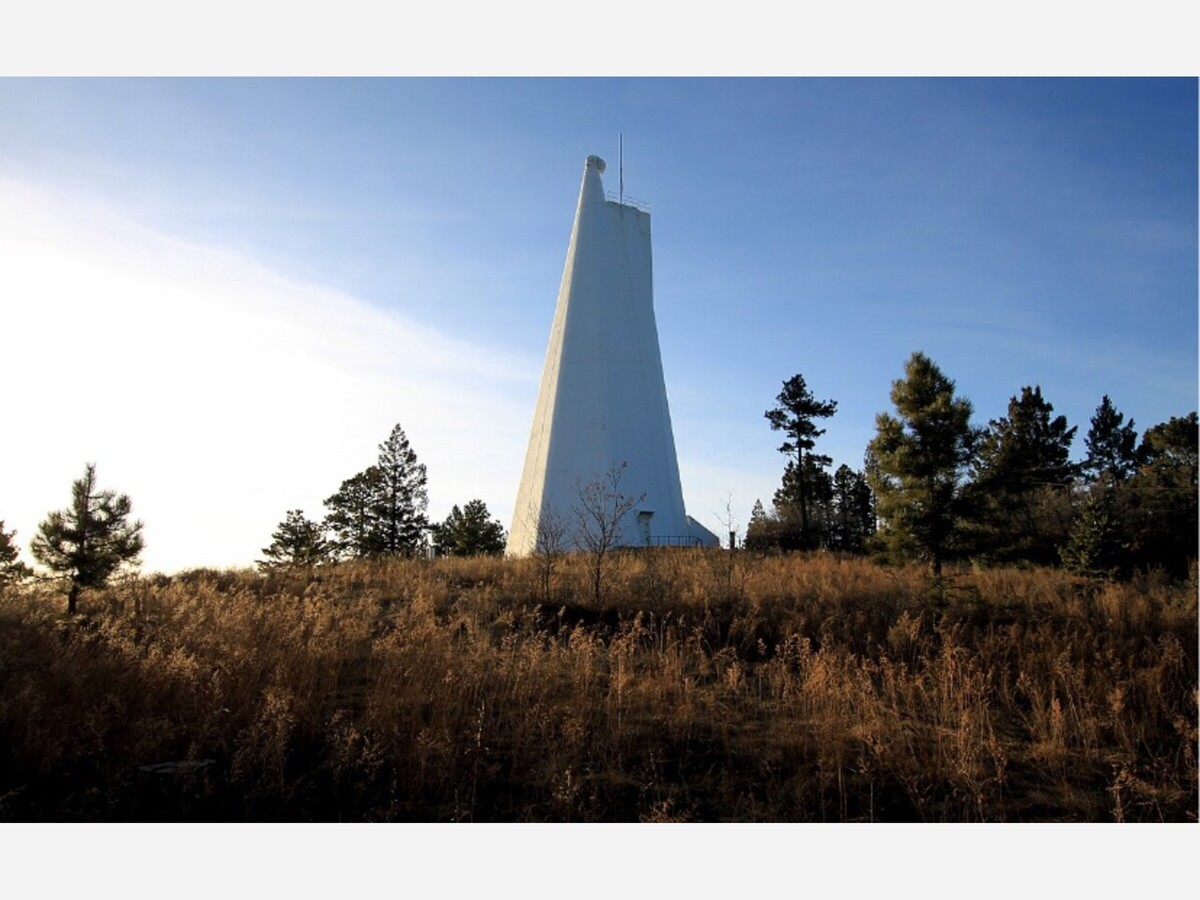



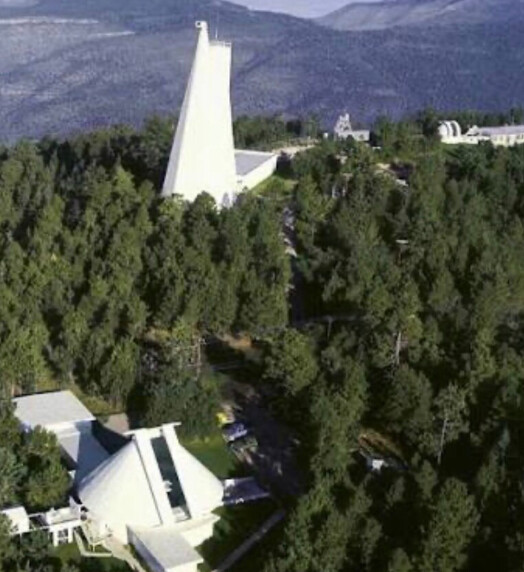
CLOUDCROFT, N.M. — In the pine-covered heights of the Sacramento Mountains, 18 miles south of Cloudcroft and overlooking the Tularosa Basin near Alamogordo, the iconic white tower of the Richard B. Dunn Solar Telescope has stood sentinel over the sun for more than half a century. But that chapter is closing. The National Science Foundation announced this week it will proceed with permanent closure and demolition of the Sunspot Solar Observatory — formerly the Sacramento Peak Observatory — following a liquid mercury leak discovered Jan. 5, 2026, years of reduced operations, and mounting safety and repair costs.
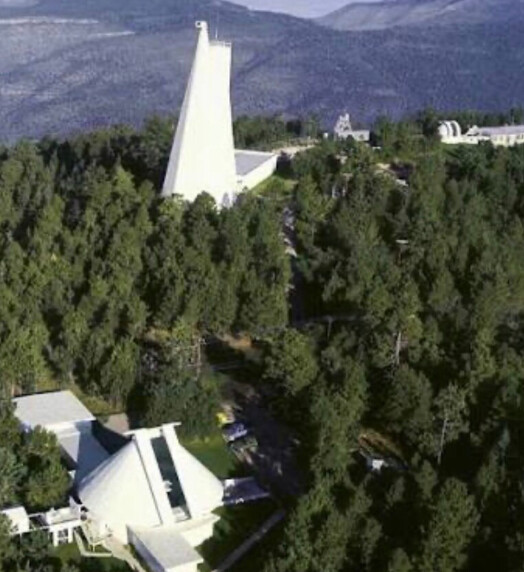
The decision has sparked heartbreak across Otero County and beyond. Former staff, lifelong visitors, and locals who grew up under the tower’s shadow describe it as far more than bricks and steel — it’s a piece of New Mexico history that inspired careers in science, boosted tourism, and tied the region to the dawn of the space age.
“It was a big part of my childhood that is being destroyed, my dad used to take the track team up there to practice in altitude and we’d discuss the science of the sun,” said Rene Sepulveda who recalled visiting as a child.
Roots in World War II and the Birth of a Mountain Observatory
The story of Sunspot begins not in the 1960s with the gleaming tower, but in the crucible of World War II. British radar operators and American scientists noticed solar flares and sunspots causing radio blackouts and radar interference — a revelation kept secret until 1945. The U.S. military suddenly needed reliable solar forecasting for communications, guided missiles, and high-altitude aircraft.
Dr. Walter Orr Roberts of Harvard’s High Altitude Observatory (HAO) in Climax, Colorado — then the world’s highest permanent astronomy site — operated a coronagraph there but faced chronic winter cloud cover. In 1947, the newly formed U.S. Air Force (formerly Army Air Corps) funded a complementary site with clearer skies and a direct line-of-sight to the White Sands Missile Range for rocket tracking.
A small crew, including Roberts, solar astronomer John “Jack” W. Evans, and young observer Rudy Cook (who lived alone for months in a railroad boxcar with his dog), surveyed Sacramento Peak at 9,200 feet. The forested ridge blocked ground-heated air currents, offering exceptional daytime “seeing.” By 1948 the site was approved; in 1950 the USAF formalized a memorandum of agreement with the U.S. Forest Service on Lincoln National Forest land
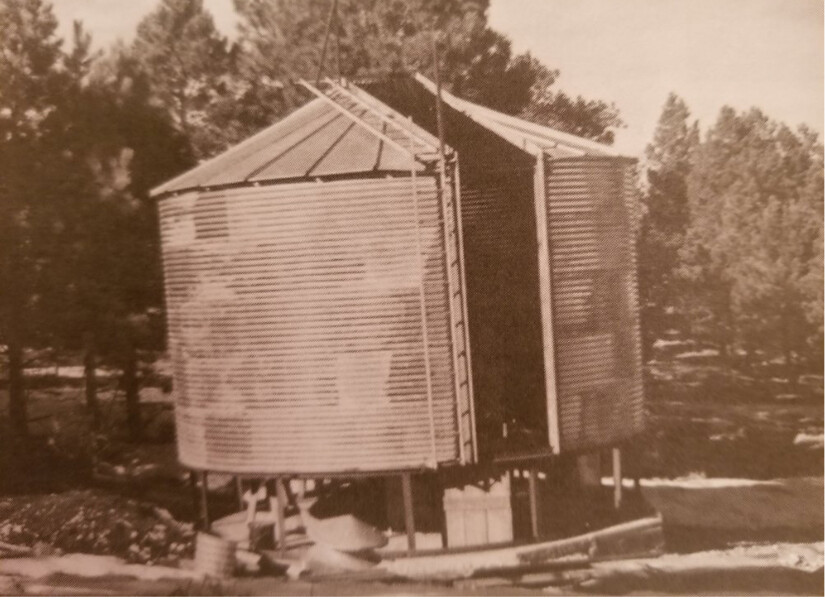
Humble beginnings followed. The first permanent structure — the “Grain Bin Dome” — was a prefabricated Sears & Roebuck grain bin hauled up a dirt road from High Rolls in 1950-51, with a slit cut in the roof for telescopes. In 1952, crews built the on-site “Big Dome,” later renamed the John W. Evans Solar Facility, housing the world’s largest coronagraph at the time (16 inches). The Hilltop Dome followed in 1963 for flare monitoring.
By the mid-1950s, Sacramento Peak was a world-class solar research hub, with Air Force officers, scientists, and families forming the tight-knit community of Sunspot.
Engineering Marvel: The $3 Million Vacuum Tower Telescope
The crown jewel arrived in the late 1960s. Proposed in 1958 and designed by solar instrument visionary Richard B. Dunn, construction on the Vacuum Tower Telescope (later renamed the Dunn Solar Telescope in his honor in 1998) began in 1966 under the U.S. Army Corps of Engineers. It was completed in 1969 at a cost of approximately $3 million — roughly $25-30 million in today’s dollars.
The design was revolutionary and remains unique:
• A 136-foot concrete tower rises above ground, with the optical path plunging another 193 feet into a pit — a total vacuum tube longer than a football field.
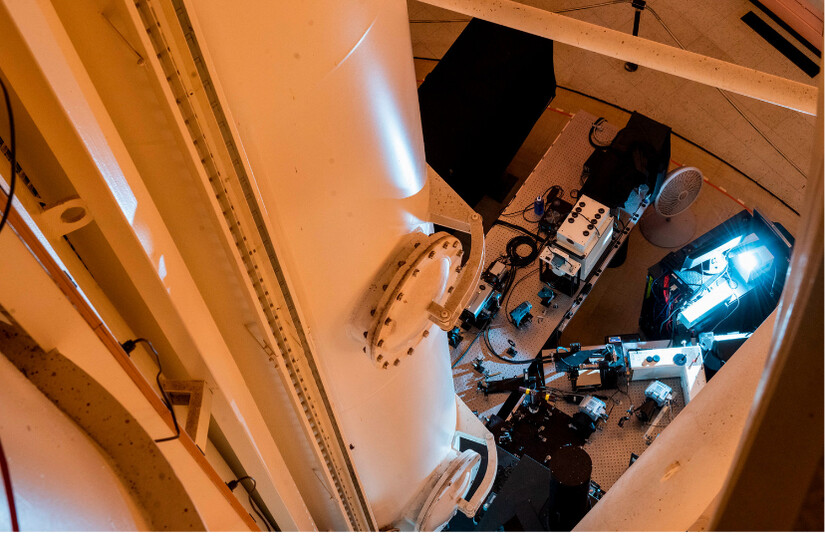
• Sunlight enters via a heliostat at the top, reflects down to a 64-inch (1.6-meter) primary mirror at the bottom, then returns to instruments in a ground-level lab.
• The entire 250- to 350-ton rotating optical system and 40-foot observing platform floats on a half-inch layer of 120 gallons of liquid mercury in a sealed bearing — allowing frictionless, hand-movable rotation to track and de-rotate the sun’s image.
• The vacuum (evacuated to simulate 55 km altitude) eliminates internal air turbulence from the sun’s intense heat, delivering razor-sharp high-resolution images of the solar atmosphere.
At the time, it was state-of-the-art — one of the finest ground-based solar telescopes in the world, optimized for studying sub-regions of the sun in exquisite detail
Critical Then, Legacy Today
In the 1950s-70s, the observatory’s work was vital. It complemented Climax for near-daily solar coverage, supported military space-weather forecasting, and advanced understanding of sunspots, flares, magnetic fields, and the chromosphere. Astronauts trained there ahead of Skylab in the early 1970s. Data from the Evans Facility tracked million-degree coronal emissions into 2009, aiding solar-cycle predictions.
Ownership transferred from the Air Force to the National Science Foundation’s National Solar Observatory (NSO) in 1976. Under NSO, Sunspot became a prolific hub — new instruments were built roughly every 10 days at its peak — and a testbed for technologies later used on the massive Daniel K. Inouye Solar Telescope (DKIST) in Hawaii.
Today, the landscape has shifted. DKIST, with its 4-meter aperture and advanced adaptive optics on a superior high-altitude site, has superseded older facilities. Sunspot’s operations transferred in 2018 to a global consortium led by New Mexico State University; the Dunn has run in limited mode since 2019. The mercury system, once brilliant engineering, now poses environmental and safety risks. After the January 2026 leak, NSF deemed repairs too costly and risky. The agency will remove and dispose of the mercury (rendering the telescope inoperable), then demolish the structure and restore the Forest Service site. NSF has pledged up to $100,000 for an interpretive exhibit and signage to preserve the story
A Community Landmark and Tourism Draw
For southeast New Mexico, Sunspot was never just a lab. It created jobs, housing, and a school in its heyday. The Visitor Center, dedicated in 1998 at a cost of $1.5 million through state and federal partnerships, welcomed thousands of tourists annually with guided tours of the tower and stunning views of the Tularosa Basin and nearby Apache Point Observatory.
Its loss hits hard in Alamogordo, Cloudcroft, and beyond — a tangible link to the region’s military-scientific heritage alongside White Sands and Holloman Air Force Base.
As demolition plans move forward, the community’s message is clear: Sunspot’s scientific legacy endures in archives, discoveries, and the scientists it inspired. The tower may come down, but the stories — of a grain bin turned observatory, a mercury-floating marvel, and a mountain outpost that stared at the sun for 75 years — will remain part of New Mexico’s rich tapestry.
For now, the white tower still catches the morning light over the pines. Soon, it will stand no more — a quiet reminder that even the stars of yesterday must eventually make way for tomorrow’s dawn

What a shame to lose such a historical site! We enjoy taking our out of town visitors up to the cool pines, browsing the gift shop/museum, and then enjoying a relaxing drive back down the hill. Are they going to just tear down everything, including the museum? This, coupled with the loss of Ruidoso Downs horse racing, will absolutely devastate the tourism in the area. Have our local and state officials tried to do anything to salvage the buildings from total destruction, while cleaning up the mercury spill?


Overcast, with a high of 71 and low of 55 degrees. Overcast in the morning, thundery outbreaks in nearby during the afternoon, clear in the evening, patchy rain nearby overnight.




Love your shop in Las Cruces! Haven’t been to the one here in Alamo yet.
Hi Troy,
What do you think of the manga Jaadugar: A Witch's Life in Mongol (Tomato Soup). It's now an anime from Saru Science/Crunchyroll.
Enjoy!



Thank you Sheriff!