78° and Sunny

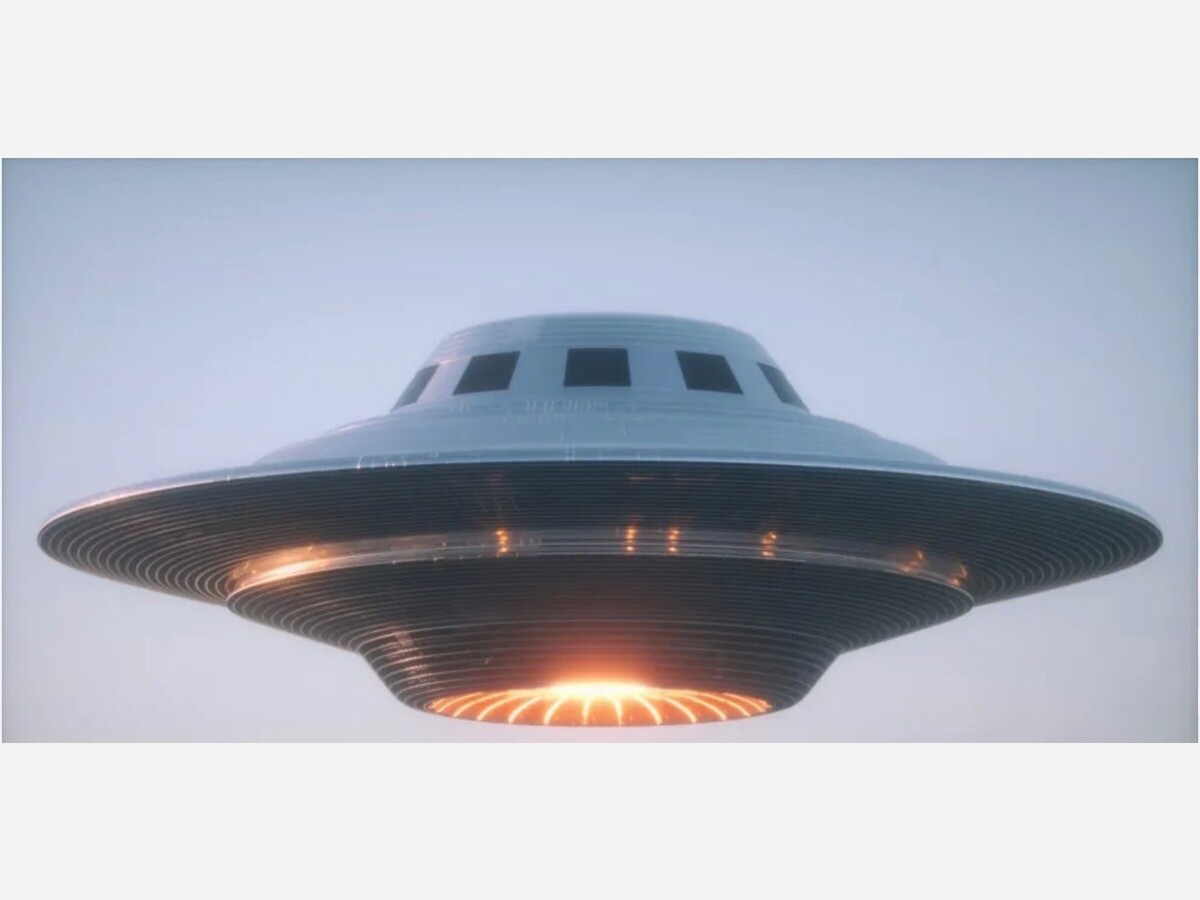
Secret Nazi Flying Saucer Base at the South Pole and Other Newsroom Oddities


By Dave Dooling
At least that’s what the press release promised.
The offer from 1978 resurfaced as I sifted through half a century of notebooks, press badges, government reports, memorabilia, and … um … oddities. It was a photocopy of a nearly random pasteup of photos of flying saucers, a map of Antarctica, and, of course, a few swastikas.
As science writer for The Huntsville Times, with Space Shuttle as the most important part of my beat, it was intriguing. I could sneak some photos of the base, the saucers, and maybe even the blueprints, then come home and save NASA and the taxpayers a few billion dollars.
Alas, I could not talk the newspaper’s management into fronting the $9,999 asking price for a seat on the 747 jetliner — also pictured in the release — that would take us to Antarctica and see where Hitler’s minions hid flying saucers and more at the end of World War II.
Another favorite was a threat of a lawsuit for stealing an idea. Or so it was claimed in an angry e-mail from Party of the First Part (for purposes of this case not filed in U.S. Court). It centered on a story I wrote, during my 1996–99 stint with the Science@NASA web site, about the Dusty Plasma Lab developed by Dr. James Spann at Marshall Space Flight Center.
It was a neat apparatus that looked like something out of a sci-fi movie, but with a very real purpose: How do grains of dust act when gravity pulls them together to form planets while slight electrostatic charges caused by sunlight push them apart?
It was a fun story. Then I got the e-mail.
“I demand to know the names of the attorneys who will defend you and NASA in the forthcoming Law Suite I will file,” exasperated Party of the First Part wrote. “I am sick and tired of NASA stealing my ideas.”
Over the years various letters and e-mails complimented or challenged my work, but this was new. Party of the First Part ranted a bit more, referring at least two more times to the forthcoming “Law Suite.”
Hey! That sounds pretty good. My office had a grey metal desk and chair almost as old as me stuffed in a converted broom closet (really!).
But, a Law Suite? Oak bookcase and desk. Padded leather chair. Over-stuffed couch where I can nap after a grueling day of writing.
Yes! Send me a Law Suite!
But, I did the right (write?) thing and forwarded the e-mail to our web manager. She sent Party of the First Part a “What the heck is your problem?” reply and we never heard back. I stayed in the GSA-issue metal chair. No naps.
Another oddity was The Pyongyang Times of North Korea. Early in my writing career I was a copy editor writing headlines (the original click bait, like the one on this story) and designing pages at The Daily Press in Newport News, VA, during 1974–76. Our motto was “We fit the news to print.”
One day The Pyongyang Times started showing up in the mail. I guess our colleagues in Pyongyang thought we needed some guidance to see the True Path. Indeed, we looked forward to it each week because the layout and headlines were among the worst we ever saw.
We wrote headlines so each line in a “deck” formed a logical section of a sentence or phrase before going to the next line. We juggled words and metaphors and counted letters to make sure they would fit the column. Adjectives and adverbs had to stay with their nouns and verbs. And, you never, ever, split a preposition or an infinitive verb across two lines.
Above all, we had to draw people into the story. Read this! It’s genius!
By contrast, The Pyongyang Times editors often ran a headline until it hit the end of the column, hyphenated the last word, and resumed on the next line. It was decades ahead of PowerPoint.
Almost every headline extolled the virtues of “The Respected and Beloved Leader, Comrade Kim Il Sung.” Stilted headlines, mixed fonts, and low image content made The Gray Lady, as The New York Times was known, look jovial.
But things move on. Digging up scans showed that The Pyongyang Times has evolved into the computer era. It looks a bit sharper, but the Beloved Leader still is the headliner, right next to reports of their successes in developing ballistic missiles.
Maybe they followed up on the Nazi Flying Saucer memo.
The author is a semi-retired newsman and science educator.
CAPTION
Front page of The Pyongyang Times from March 12, 1975, has several headlines praising The Beloved Leader. Insets add headlines that hyphenate words. Images courtesy Internet Archive (https://archive.org/).