59° and Patchy rain nearby

Commentary by Ryan S Alamogordo - A Structural, Behavioral, and Civic Reflection


Note: the commentary below was first published on NextDoor by Ryan S of Alamogordo. Alamogordo Town News welcomes guest commentaries as community contributors. The comments published are the opinions of the author and may or may not reflect those of the ATN editorial board.
A Structural, Behavioral, and Civic Reflection
What I Learned About and After the Exploring Leadership and the Mayor’s Role Forum (12/06/25)
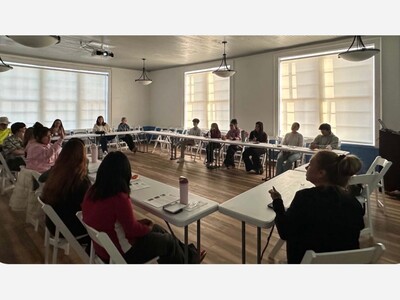
The December 6th forum on leadership and the mayor’s role revealed far more than the panel likely intended. What unfolded was not simply a conversation about governance, but an unfiltered window into the psychology, habits, and structural vulnerabilities of small-city power. In a room of only thirteen residents—out of a population of thirty-one thousand—the interpersonal dynamics, rhetorical patterns, and institutional reflexes became the real curriculum.
1. Leadership as Narrative Performance Rather Than Structural System
Throughout the evening, it became clear that local governance often operates through narrative construction rather than administrative systems. Although the panel offered explanations of the commission–manager form of government, these remained surface-level. The emphasis was not on mechanisms or constraints, but on personal experience, emotional framing, and identity presentation.
This was especially visible in outgoing Mayor Payne’s communication style. Her repeated claims of transparency, thick skin, openness to criticism, and appreciation for diverse perspectives functioned less as factual descriptions and more as affirmations of the leader she imagines herself to be. Yet these statements stand in tension with her documented online behavior, escalation in disagreements, and tendency to smooth narratives around past conflict. The gap between rhetoric and observable action is precisely where public trust begins to erode.
2. The Incongruence of Reassurance Language
One of the most striking patterns of the forum was Payne’s reliance on reassurance phrases—“I’m transparent,” “I can take criticism,” “call me anytime,” “we’re always open.” These are not explanations; they are protective scripts, deployed to deflect scrutiny rather than address it. They bypass, rather than engage with:
structural opacity and internal tensions
contradictions in past decision-making
documented defensiveness when challenged
patterns of online hostility
Leaders use reassurance when they are unwilling or unable to acknowledge the full truth of their behavior or their institution’s limitations. Payne’s narratives may not be intentionally deceptive; they serve instead to protect her self-image and soothe the community—even when they contradict the public record.
3. The Sanctuary City Controversy: Local Vulnerability to National Ideology
The discussion of the “Sanctuary City for the Unborn” resolution was unexpectedly clarifying. Despite Payne being personally pro-life and deeply connected to related nonprofits, she opposed the resolution because:
it was legally meaningless in New Mexico
it exposed the city to costly lawsuits
it was imported political theater, not governance
it damaged local nonprofits, including those she supported
it placed municipal leadership in a regulatory posture over women’s bodies
it turned the city into a stage for a national culture war
Her disgust was genuine. Her professional experience in the pro-life sector taught her that symbolic resolutions do nothing to reduce abortions and only fracture communities. The controversy revealed how fragile Alamogordo’s civic ecosystem is—how quickly external ideological machinery can hijack local decision-making and destabilize consensus.
4. The Plea for Narrative Control: “Don’t Get Information Off the Internet”
Payne’s insistence that residents avoid “getting information off the internet” was perhaps the most revealing moment of the evening. Presented as a warning about misinformation, it functioned far more as a plea for centralized narrative control. The internet is a threat to leaders who rely on emotional framing because it:
archives commission meetings and statements
exposes contradictions and patterns
allows residents to verify claims independently
decentralizes knowledge and weakens gatekeeping
empowers citizens to think structurally rather than passively
Ironically, this forum was broadcast live via Facebook, then posted on YouTube. Many citywide events and related information is posted on social media and the internet. The commission meetings are uploaded to YouTube - the “internet”. So which is it, watch the videos or don’t go the internet for information? It’s really neither when it’s an effort to control the narrative or provide spin,
5. The Social Atmosphere: A Room Defined by Affirmation
While several participants asked meaningful questions, a significant portion of the comments were affirmational—public expressions of support for Payne, McDonald, Hernandez, and the city generally. The forum often functioned less as a space for deliberation and more as a ritual of reassurance, where residents validated leadership rather than critically examine governance.
This dynamic—common in small municipalities—reflects a civic culture shaped by familiarity, social loyalty, and the desire to appear cooperative. In such environments, critique feels socially risky, and affirmation becomes the default. The result is a setting that feels safe for leaders but limiting for residents seeking deeper structural clarity.
6. The Most Revealing Question: How to Support the Transition
When a resident asked how the community could genuinely support the transition into new leadership, Mayor-elect McDonald provided one of the most grounded and procedural responses of the evening.
She emphasized:
A) Partnerships
Progress relies on collaboration with nonprofit organizations whose missions align with community needs. Some issues cannot be solved by municipal action alone.
B) Jurisdictional Boundaries
Many concerns—such as job creation—lie outside city authority. The city can facilitate, not command. This was the first moment any leader clearly articulated the limits of municipal power.
C) Constructive Civic Engagement
Attending meetings, reviewing agendas, and providing public comment are not emotional appeals—they are the mechanisms through which the commission receives direction.
This contrasted sharply with Payne’s framing. Payne’s appeals to civic participation often carry a defensive emotional undertone; McDonald’s explanation was procedural, calm, and aligned with the actual machinery of governance.
7. Payne vs. McDonald: Two Philosophies of Governance
The contrast between Payne and McDonald illuminated two fundamentally different approaches to leadership:
Mayor Payne’s Style
Narrative-driven
Emotionally reactive
Image-protective
Honest about jurisdictional limits
Relies on reassurance language
Avoids structural acknowledgment of conflict
Performs leadership
Mayor-elect McDonald’s Style
Process-oriented
Modest and grounded
Clear about procedural steps
Partnership-focused and non-performative
Practices governance
Future forward and collaborative
This distinction is not merely stylistic; it shapes how each leader interprets conflict, handles scrutiny, and defines the city’s role in community problems.
8. The Broader Lesson: Small Cities Are Narrative Ecosystems
The forum offered a microcosm of Alamogordo’s civic dynamics:
a community hungry for reassurance
leaders relying on narrative smoothing to bridge gaps
residents conditioned to affirm rather than interrogate
external ideologies intruding into local governance
a new mayor signaling a shift toward clarity and process
an outgoing mayor protecting the story of her tenure
a persistent confusion between public comment and public influence
The city’s stability depends less on its formal structures than on whether citizens and leaders alike cultivate the quiet discipline of clarity, partnership, and structural honesty.
What I learned from the forum was not merely how leaders speak, but how the room behaves—and how that behavior reveals the relational limits of civic life here. Leadership transitions in Alamogordo are not just administrative; they are shifts in narrative control.
And the health of this city will depend on whether its future stories reflect reality—or continue smoothing over it.