68° and Patchy rain nearby
Image
Block Sponsored a Tax Increase on PNM's & Other Utilities Power. State Analysts Said Ratepayers Would Pay - Alamogordo Town News



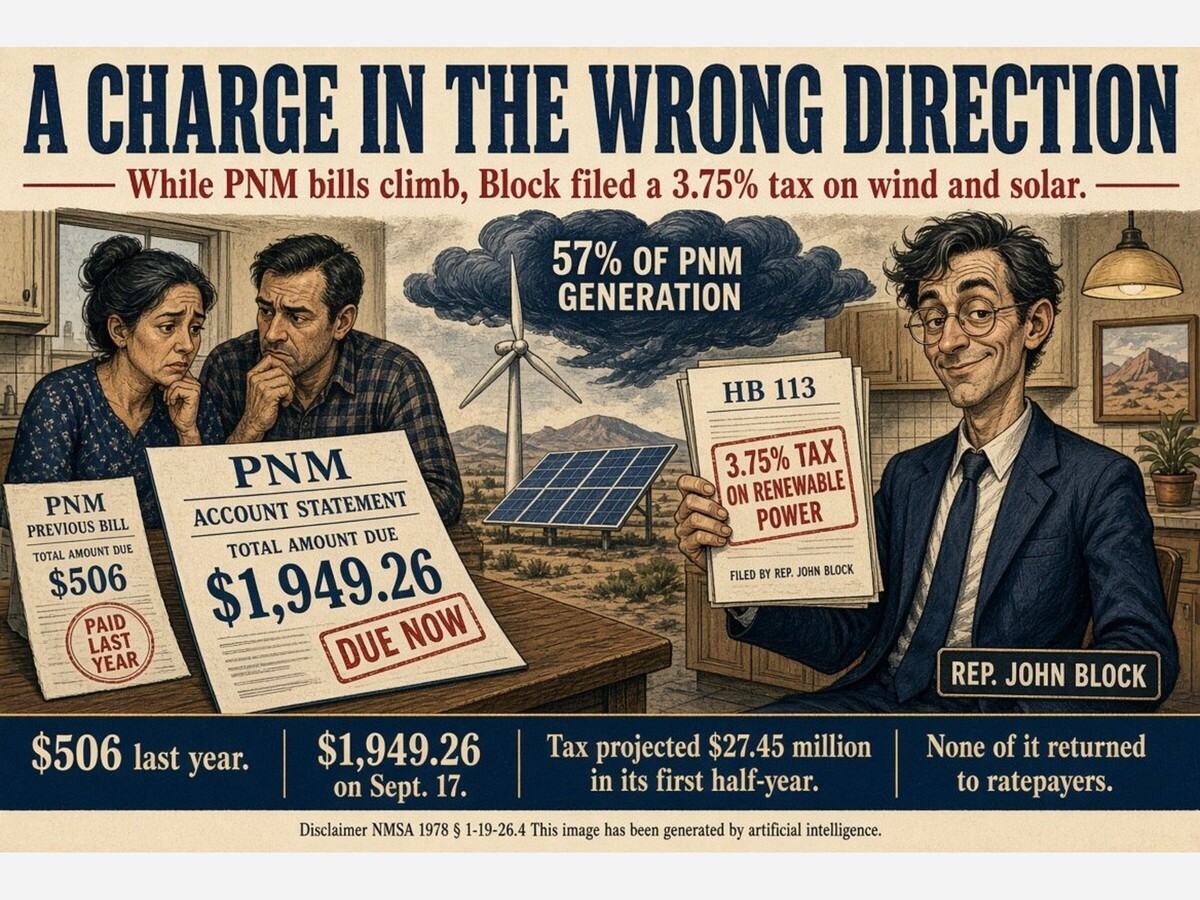
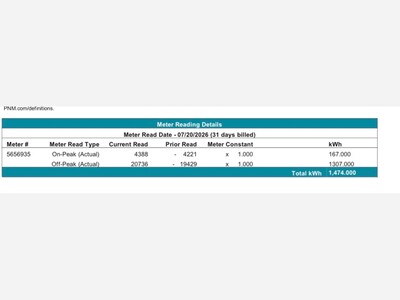
ALAMOGORDO, N.M. —News and Analysis: Kelly and James Metcalf raise five children on one income. On Sept. 17 they opened a PNM bill for $1,949.26. The same stretch last year cost about $506. Johnny Martin, 74, spent $12,000 on a new air conditioner and appliances and still got four straight bills over $400.
Residents packed a town hall to tell regulators their bills had doubled or tripled. Regulators blame a meter-reader shortage and a two-stage rate increase.
Rep. John Block was in the room, and regulators praised him for coming. One of his neighbors did not. Tanya Burns told the crowd that Block is seldom around, that he has not responded to her on a number of issues, and that he has not been an advocate for affordable power. She called his appearance political theater weeks before an election.
Those are her views. The record below is why its important to review rather or not that she has a point.
The bill
Block sponsored House Bill 113 in 2026. It would have taxed electricity generated from renewable resources at 3.75% of its wholesale value, starting Jan. 1, 2027. A similar bill was filed in 2025.
In 2025, 57% of PNM's generation came from wind and solar.
What it would have cost
The Taxation and Revenue Department projected the tax would collect $27.45 million in its first half-year and between $56.5 million and $59.8 million in each of the next three years. That is more than $200 million collected from renewable generators statewide in three and a half years.
The state's energy department said the tax would increase retail electricity prices for New Mexico ratepayers, that is those very locals already complaining about their PNM Bill last week to the PRC. It was estimated at roughly $3 per megawatt-hour in added cost during peak months of 2024.
That did not cause the Metcalfs' bill to increase because Block's bill got no where. It was a charge in the wrong direction, every month, while bills are already climbing, sponsored by Block who claims he is there for you the concerned consumer.
The damage beyond the bill
The monthly charge is the smallest part of what the state's analysts warned about.
None of the money would have come back to ratepayers. It was directed to the Severance Tax Permanent Fund.
If the goal was fairness, why raise a tax?
The rate in Block's bill, 3.75%, matches the state's severance tax rate on oil and gas. One state analysis described the bill as taxing renewable energy in a way similar to that tax. The apparent argument is parity: if oil and gas pay, wind and solar should too.
There are two ways to make two tax rates equal. You can raise the lower one or cut the higher one. Block chose to raise one.
That is a notable choice for this legislator who claims to be a fiscal conservative. On energy, he filed a tax increase, and it landed on the power source that supplies most of this city's electricity.
This outlet's editorial stance is limited government. A new excise tax, stacked on an existing one, with a $3.5 million bureaucracy to collect it, is not that.
In 2024 Block voted against raising royalty rates on new oil and gas wells on state land. In 2026 he co-sponsored a bill, as its third sponsor, to have combined-cycle natural gas counted as renewable. So he has opposed higher charges on oil and gas, backed a friendlier label for gas, and proposed a new tax on wind and solar.
None of his 2026 energy bills advanced. Voters should still ask why the tax was filed twice?
It's been reported in Santa Fe that he is in a race for his life. Per Tanya Burns comments and the analysis that followed it is clearly, why!
Grace Nagamine, the independent on the Nov. 3 ballot, has her specific position on PNM billing and utility costs, are found in videos one her campaign Facebook Page.
Block has declined to speak with Alamogordo Town News, was invited to an upcoming community forum and has not responded. Written questions about this article, including why he chose a new tax instead of a cut, were sent on 10/5/26 and were not answered by publication.
ATN will publish his response in full if he provides one.
Sources

like 99% of his fellow republicans, block is a servant to the oil & gas industry - a principal constituent of their party. they fear the rise of renewable sources of energy and seek governmental protection from competition. their "investment" in the republican party has paid off over decades - and block was simply responding to their "instructions".
oil & gas, just like any other mineral/elemental substance is a depletable resource - that can and will ultimately run out - and severance taxes are the normal (and best suited) means of protecting the interests of the state/citizens as they are drawn down. wind and sunshine are not depletable - certainly not around here - and our legislature recognized that....only a blockhead would try to tax the wind and sun.

I'm one who supports a salary, but I definitely agree this is such a poorly written bill that I will certainly vote NO.
And thank you, Chris, for such a well researched and documented argument here. I would like to share this.
as always - the devil is in the details - one item i did not see addressed; usually reimbursements (such as per diem) are not subject to federal income tax, is this the case here?
I voted no for this exact reason. Thank you for pointing it out.


Sunny, with a high of 74 and low of 55 degrees. Patchy rain nearby in the morning, sunny in the afternoon, clear in the evening,



Love your shop in Las Cruces! Haven’t been to the one here in Alamo yet.
Hi Troy,
What do you think of the manga Jaadugar: A Witch's Life in Mongol (Tomato Soup). It's now an anime from Saru Science/Crunchyroll.
Enjoy!