78° and Heavy rain at times
Image



Part 2: The Commission-approved ICIP request was funded in full by the 2026 Legislature — but never mentioned in the closure proposal
Editor's note: This is Part 2 in an ongoing Alamogordo Town News series examining City Manager Robert Stockwell's proposal to close Bonito Lake to recreation and fence the reservoir. Part 1, “Stockwell’s Up to $1 Million Fence Proposal for Bonito Lake Draws Growing Opposition Over Public Access,” examined the fiscal arguments, the Open Gate agreement, and the community response after the Commission tabled the proposal until its September 22, 2026 meeting.
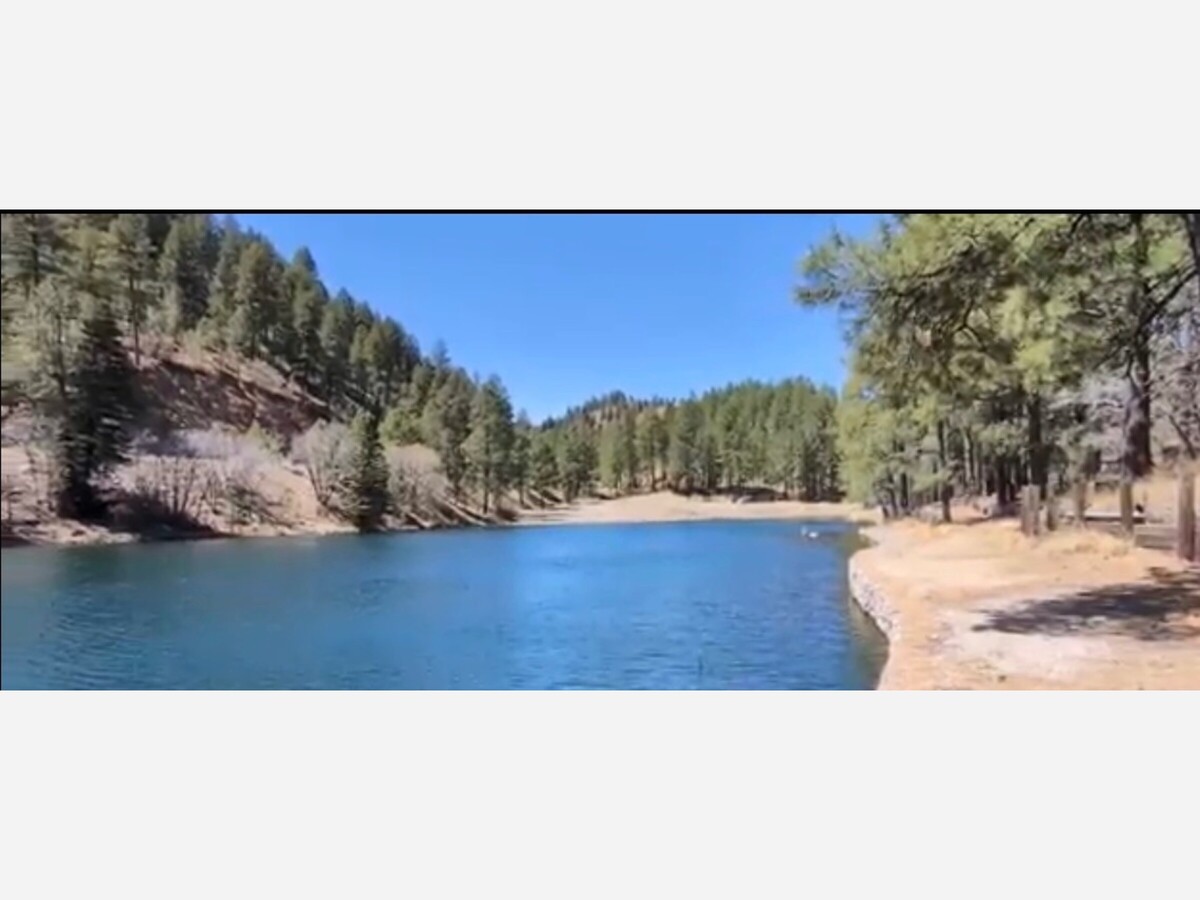
A significant piece of the Bonito Lake funding picture was absent from the City’s written presentation on closing the reservoir to recreation: the New Mexico Legislature has approved $250,000 specifically for shoreline and day-use improvements — money the City itself asked for.
That appropriation stands in sharp contrast to the narrative presented by City Manager Robert Stockwell. His August 25 agenda report stated that Fund 088 lacked enough money for full restoration but could be used to secure the reservoir. Staff recommended ending the Open Gate Agreement and constructing security fencing that could cost up to $1 million — four times the amount the State has committed to help keep the lake open.
The report did not mention the appropriation at all. That omission is the story, because it leaves only two possibilities: either Alamogordo’s city manager did not know his own city had requested and won $250,000 in state funding for the very facility his proposal targets, or he knew and left it out.
The first reflects a serious gap in understanding of the City’s finances. The second reflects something worse.
Why the ICIP matters
The Infrastructure Capital Improvement Plan, commonly called the ICIP, is an annually updated five-year plan that identifies and prioritizes community infrastructure needs. The ICIP does not provide funding by itself, but it positions projects to compete for state capital outlay and other funding opportunities — support for projects that might otherwise compete with streets, utilities, public safety and daily operations. Our community has been fortunate to have legislators willing to back infrastructure and quality-of-life projects that Alamogordo could not easily fund alone.
Alamogordo’s July 2025 agenda report stated that a project must be included in the ICIP to remain eligible for capital outlay and most federal, state and private funding requests. This is basic municipal finance — the kind of process any city manager is expected to know cold.
On July 8, 2025, the Alamogordo City Commission unanimously adopted Resolution 2025-19, approving its FY 2027–2031 ICIP and identifying five projects for legislative consideration. The first project listed was unmistakable:
“Bonito Lake Park Fishing Access and Day Use Re-Opening” $250,000.
This was a Commission-approved request to improve fishing and day-use access — not to close the lake or construct a million-dollar perimeter fence.
A change in direction — and an unexplained departure
At the time the City submitted that request, then-Parks and Recreation Director Belinda Bass was overseeing work to reopen Bonito Lake in accordance with the Commission-approved master plan. Her approach was not an independent change in policy; it followed the phased direction the City had already adopted.
The master plan contains two numbered phases for Bonito Lake, followed by long-term improvements.
Phase 1 focuses on safe access: resurfacing the road from the Bonito Lake gate to the dam, installing guardrails and a fire lane, and developing a five-year improvement plan.
Phase 2 addresses the day-use area and campgrounds — lakeside parking, shoreline pathway access, replacing a bridge and missing handrails, restoring campground access and replacing restrooms — with longer-term recommendations for improved shoreline access, a nonmotorized boat launch and an accessible kayak launch. The plan expressly states that access to the lake and campgrounds is a priority. (City of Alamogordo Community Services Master Plan, Chapter 6, pp. 99, 102–104.)
Director Bass’s emphasis on restoring the campgrounds as a more natural camping experience, pursuing practical, lower-cost improvements, and positioning the lake for outside funding was exactly the work the adopted plan called for. Then she was gone.
Records obtained through an Inspection of Public Records Act request appear to show that Bass received a severance payment when she left the City. Severance is not what a city typically pays an employee who simply resigns. The circumstances of her departure have never been publicly explained.
Consider the sequence
The Commission adopts a reopening plan. Bass executes it and the City wins $250,000 from the State to advance it. Bass departs with a severance payment and no public explanation. And one of Stockwell’s first major policy proposals reverses the very work she was leading — without disclosing the funding her work helped secure.
Nothing in the public record proves these events are connected. That is precisely the problem: the record is silent where the public deserves answers, and the City has offered none.
Was Bass’s commitment to the Commission’s adopted reopening plan a factor in her removal? Until the City explains her departure, residents are left to wonder.
Stockwell’s case, in his own words
As reported in Part 1 of this series, Stockwell laid out the financial reasoning behind his position in a text message exchange with Alamogordo Town News — an argument that never once acknowledged the state money his own City requested.
“Even when the campground was functional the fees did not cover the full cost,” Stockwell wrote, adding, “What percentage of the ‘locals’ pay city water bills and taxes to the general fund.”
He argued that the economic benefits of recreation at the lake flow largely to Lincoln County and Ruidoso rather than to Alamogordo. “The pool parks and recreation all occur in Alamogordo not Lincoln county,” he wrote, framing his role as fiscal stewardship: “My job is to advise the city commission and be responsible to them and the citizens of Alamogordo for using the financial resource entrusted to us for good of Alamogordo.”
He pushed back on using Lodgers’ Tax revenue, arguing that spending those funds “to improve a campground that directly competes with those very rooms,” while “the meals not cooked around the campfire are being purchased in Ruidoso,” would undercut the city’s own hospitality industry. And when this publication suggested the city save taxpayers money and fix potholes instead of building a fence, Stockwell replied, “I agree we need to fix potholes - in Alamogordo, not Lincoln County.”
Take that stewardship claim at face value and the proposal still fails its own test.
A steward of Alamogordo’s finances would know that the State had committed $250,000 to the lake.
A steward would weigh that the City was prepaid under its seven-year Open Gate Agreement with the New Mexico Department of Game and Fish — and that ending public access with time remaining would obligate the City to repay the state.
A steward would hesitate before proposing up to $1 million in new fencing, plus perpetual maintenance, for a barrier in Lincoln County that fixes no potholes anywhere. Stockwell’s own framework — spend Alamogordo’s money on Alamogordo — argues against his own fence.
The Legislature funded the request
During the 2026 legislative session, lawmakers included the full $250,000 request in Senate Bill 240. The enacted bill authorizes the money:
“to plan, design, construct, repair and improve shoreline and day use areas at the Bonito Lake recreational area owned by Alamogordo and located near Ruidoso”
Governor Michelle Lujan Grisham signed SB 240 on March 11, 2026. It became Chapter 71 of the Laws of 2026, and the Bonito Lake appropriation was not among the governor’s line-item vetoes. The official reference is the Senate Finance Committee Substitute for Senate Bill 240, Section 48, Item 294, page 171.
This is not obscure information. It is a public law, five months old, funding a project the City itself placed at the top of its legislative wish list. A city manager preparing a major policy recommendation about that exact facility either found it or failed to look.
What the Commission must ask
The $250,000 does not solve every operating, campground or long-term restoration problem at Bonito Lake, and legislative approval does not mean the money is sitting in a City bank account — capital outlay normally requires a state grant agreement, project documentation and local acceptance before spending begins. But the appropriation demolishes any impression that no outside help is available, and it should have been in front of the Commission from the start.
Before voting on September 22, 2026 the Commission should demand hard answers from Stockwell directly:
Has the grant agreement been issued, and when is it expected?
What improvements can the $250,000 complete?
Was the appropriation considered — or even known to staff — when the fencing proposal was developed?
How would permanent closure square with the purpose the City presented to the Legislature, with the adopted master plan, and with the repayment the City would owe under the Open Gate Agreement?
And why did the Parks and Recreation director executing the reopening plan leave with a severance payment just before that plan was targeted for reversal?
In July 2025, the City asked for $250,000 to reopen fishing and day-use access. In March 2026, the Legislature approved that request in full.
In August 2026, the city manager Stockwell asked the Commission to close the lake without mentioning either fact.
Before Alamogordo spends up to four times the appropriation to fence out the public, residents deserve a complete accounting of the money already secured to keep them in — and a straight answer about what happened to the director who was making it work.


Just thought the one thing all these first-timers have in common is no qualifications. Wanting to serve, help, or partake isn't enough. None of these people have any professional experience. Where are the engineers, CPA's, Ph.D's?
Business owners, a practicing attorney, one with a PHD, seems to me you didn't review the video.


Sunny, with a high of 79 and low of 62 degrees. Sunny during the morning, overcast during the afternoon and evening, clear overnight.



like many others, i have experienced work-place environments where favoritism and cliques were present - adding unnecessary stresses to any job. two observations about such places; that the ultimate goal of governmental ethics regulations is to prevent the appearance of imp
Just to weigh in on this. Whatever the editor thinks about his right to publish is certainly his point of view, but it's getting to the embarrassing stage of conjuring divisiveness bent on turning a functioning government he doesn't like, but the people have elected.
The editors point of view is we need a functioning government. The viewpoint allegations were not of the editors making it was mailed to the city with a copy to the editor.

like 99% of his fellow republicans, block is a servant to the oil & gas industry - a principal constituent of their party.


i would say that while our economy is "the hottest in the world" according to el presidente, this would be an excellent time for block to seek employment in the private sector....just like barela.
Pipqueak is a prime example of the defects of their party. They don't recruit qualified leaders. It's duplicitous, unemployed people who know all they have to do is start an internet site and walk the neighborhood dressed up on Sundays. The population here doesn't know how to vote.



It is so important to understand the differences in the candidates' stand on this critical issue! Protecting our water in the desert is understood by all political parties living here! Nagamine is taking a stand to protect us!
many politicians claim to represent common sense, but here in new mexico, defending our water supplies and electrical power generation is pretty much the definition of common sense - and sucking up to billionaires is not.