66° and Overcast
Image
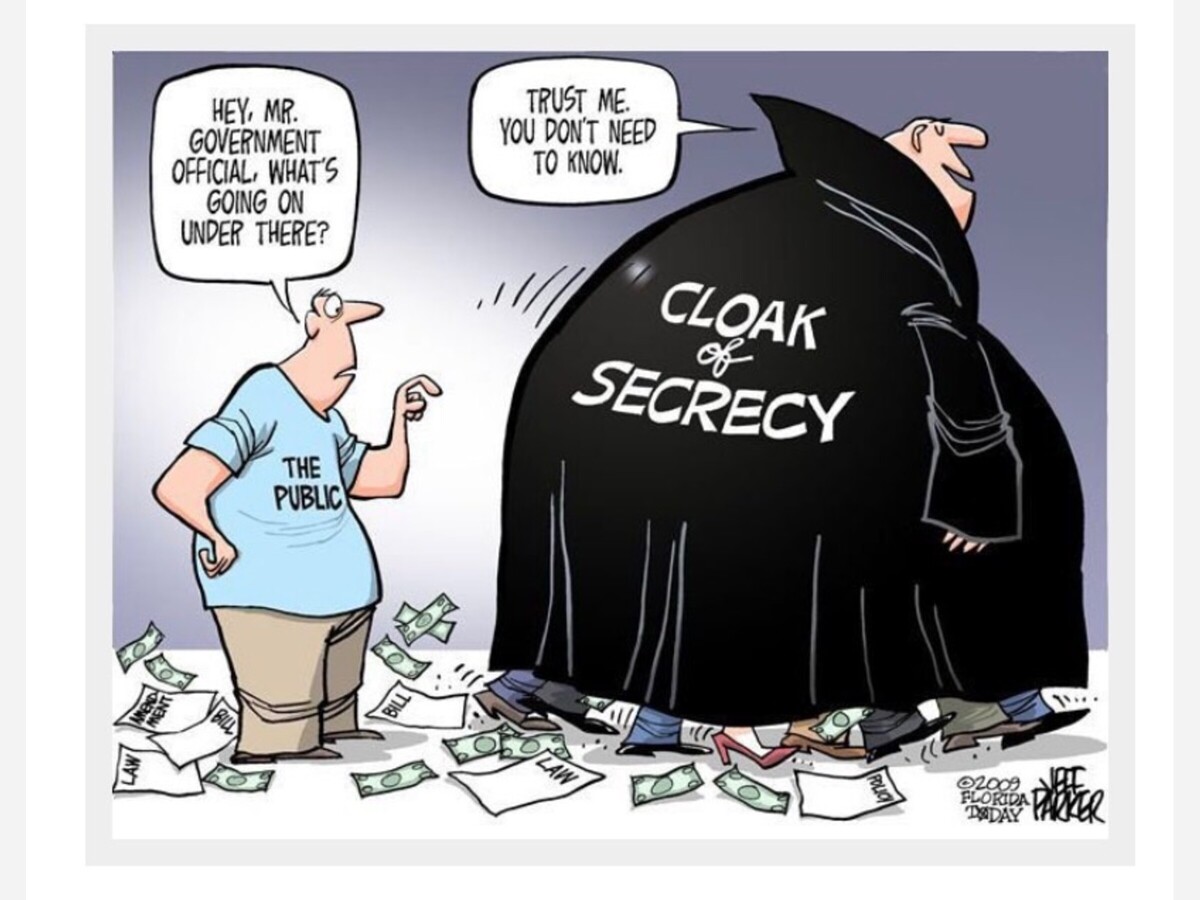



SANTA FE, NM – As frustrations mount in government offices across New Mexico over the costs and staffing demands of complying with public records requests, county officials are increasingly turning to the courthouse to fight back against what they characterize as burdensome and strategic use of the state's Information and Public Records Act (IPRA).
The trend reached a inflection point this month when the Board of County Commissioners of Eddy County—a sparsely populated county in southeastern New Mexico—filed a sweeping lawsuit against Jason Sanchez, a Texas-based citizen who has submitted dozens of IPRA requests and publicly criticized county operations. The filing, and its recent amendment, signals an escalating confrontation between government entities seeking relief from transparency obligations and citizens asserting First Amendment rights to access information and criticize officials.
For transparency advocates and constitutional lawyers, Eddy County's aggressive litigation strategy represents precisely the kind of retaliation that the First Amendment was designed to prevent. But for county administrators and their allies, the lawsuit reflects a genuine crisis: residents and activists are weaponizing IPRA, they argue, flooding government offices with requests that consume scarce resources and distract from core public services.
We're seeing a coordinated effort by some counties to treat IPRA compliance as optional, said one transparency advocate familiar with records disputes across the state. They'll spend $50,000 on litigation to avoid spending $10,000 on records requests. It makes no sense unless the goal is to discourage people from asking.
The Sanchez Case: A Test of First Amendment Limits
In a legal filing that could reshape how New Mexico public bodies handle records requests and public criticism, Jason Sanchez has filed sweeping counterclaims accusing Eddy County of retaliatory litigation—filing a lawsuit designed to punish and silence his protected speech and public records requests.
The case, which centers on information requests under IPRA and increasingly heated public criticism of county operations, presents one of the stronger retaliation-in-litigation theories available under First Amendment jurisprudence, legal experts would likely agree based on the pleadings.
A Broader Pattern: Counties Take Offense Against IPRA
The Sanchez case arrives amid a growing backlash against IPRA by county governments struggling with what they characterize as unsustainable compliance costs. According to interviews with county commissioners, sheriffs, and administrative staff across New Mexico, IPRA requests have multiplied in recent years—some counties report handling dozens or hundreds annually—creating staffing bottlenecks and legal uncertainties.
We don't have a dedicated records officer, said one county administrator who requested anonymity. When a request comes in, whoever is nearest stops what they're doing. When you get 50 requests in a month—half of them from the same person—it's not compliance anymore; it's a distraction.
This frustration is not unique to Eddy County. Other counties have adopted their own defensive strategies:
Delayed responses that push the statutory clock
Narrow interpretations of what qualifies as public records
Broad assertions of exemptions for law-enforcement and personnel records
Requests for clarification designed to discourage further filings
Cost-shifting arguments that administrative burden justifies non-compliance
Eddy County, however, took the most aggressive step: filing suit against the requester himself.
Government Workers' Complaints Reach Hearing Stage
The frustration from government employees is expected to dominate an upcoming legislative hearing on IPRA's implementation, scheduled for later this year. County commissioners, sheriffs, and budget officers have indicated they will present testimony arguing that IPRA's current framework is unsustainable—that the law allows requesters to extract disproportionate resources from agencies without penalty.
We're not anti-transparency, county officials are expected to argue. We're asking for reasonable constraints: limits on the number of requests per filer, exemptions for requests deemed to impose undue burden, or extensions when compliance would require hiring temporary staff.
Transparency advocates counter that such limits would undermine IPRA's core purpose and that the administrative burden argument has been rejected by courts as a basis for withholding public records.
Once you allow agencies to decide which requests are too burdensome, you've killed transparency, said one attorney who has litigated IPRA cases. Suddenly every agency will claim burden. The law doesn't contain a 'you've asked too many questions' exception, and for good reason.
The tension reflects a fundamental philosophical divide: Is IPRA an entitlement for citizens to know how government operates, or is it a privilege that government can calibrate based on resource constraints?
Eddy County's Lawsuit: Escalation or Canary in the Coal Mine?
Against this backdrop, Eddy County's decision to sue Sanchez takes on new meaning. It is either an aberration—an isolated overreach by frustrated county officials—or a signal that other counties will follow if the legal gambit succeeds.
Sanchez's requests began in February 2023, focusing on records related to county officers Jared Rostro and Eric Threlkeld. The County initially produced records; later, it sought to claw back materials, asserting they were confidential. Sanchez disputed this, engaged in IPRA litigation, and, critically, took to social media to criticize the County's transparency practices and specific officers.
By Eddy County's account in its original complaint, Sanchez became a serial requester—submitting dozens of IPRA requests, including inquiries about Flock Safety (automated license-plate readers), personnel matters, and communications. The County characterized his activity as harassment and strategic burdensome behavior designed to embarrass officials and drain county resources.
In March 2025, the Board filed suit against Sanchez, invoking a criminal harassment statute and seeking declaratory and injunctive relief that would bar him from posting confidential information and from defaming county employees. In August 2026—sixteen months later—it amended the complaint, adding allegations about Sanchez's Flock Safety requests and his public criticism of the County's response to those requests.
The Damning Timeline
But here's where constitutional concerns crystallize. The timing of the Board's lawsuit is the central problem:
March 12, 2025: Sanchez files an amended federal civil-rights complaint alleging that the County retaliated against him for seeking records and speaking publicly
March 24, 2025: Twelve days later, the Board files its complaint against Sanchez
August 21, 2026: The Board amends its complaint, explicitly incorporating Sanchez's IPRA requests and public posts as grounds for relief
Constitutional lawyers call this temporal proximity, and it is the hallmark of retaliatory litigation. A court might ask: What changed between March 12 and March 24? The only significant event was Sanchez's accusation of retaliation itself.
Sanchez's counterclaims argue that the Board's suit is the retaliation—that by filing a lawsuit against him for requesting records and criticizing officials, the County is punishing the very conduct the First Amendment protects and IPRA enables.
This is textbook retaliation, Sanchez's attorneys argue in their filing. The County didn't sue Sanchez because of legal violations; it sued because he asked too many questions and spoke too loudly.
The Legal Vulnerability: No Viable Cause of Action
What compounds the Board's legal exposure is the weakness of its underlying complaint. Sanchez correctly identifies that the Board invokes a criminal harassment statute to support civil relief—a fundamental mismatch. The Board does not allege false statements with the specificity required under defamation law. It attempts to assert personal injuries of county employees rather than its own corporate interests. It relies on IPRA, a statute designed to require disclosure, as a basis for preventing disclosure.
In separate federal litigation (Rostro v. Board of County Commissioners), the County itself has argued that IPRA provides no cause of action for public bodies—only for aggrieved requesters. The Sanchez lawsuit suggests the County is taking the opposite position to suit its immediate interests.
The Board is trying to have it both ways, noted one legal analyst. In Rostro, IPRA gives the Board no rights. In Sanchez, IPRA is the foundation for an injunction against a requester. Courts will notice the inconsistency, and it undermines any claim of good faith legal theory.
The Constitutional Collision: First Amendment Meets Government Workload
The Sanchez case crystallizes a tension at the heart of modern transparency law. Counties argue that IPRA places unlimited demands on limited budgets. Citizens and transparency advocates argue that IPRA is a binding statutory obligation and that we don't have the staff is not a valid exemption.
Moreover, when a government entity responds to records requests by filing a lawsuit against the requester, it enters constitutionally dangerous territory. The First Amendment has long protected citizens' right to petition government for redress of grievances—a category that includes IPRA requests. It protects criticism of public officials and their conduct. It prohibits prior restraints on speech and publication.
Sanchez's counterclaims argue that Eddy County's lawsuit violates all three principles. By suing to enjoin his speech and to punish his records requests, the Board is weaponizing the courthouse to suppress constitutionally protected activity.
Legal Standard: Beedle and Retaliatory Litigation
Sanchez's primary counterclaim relies on the Tenth Circuit's established framework in Beedle v. Wilson, 422 F.3d 1059 (10th Cir. 2005), which governs retaliatory litigation. That precedent permits constitutional liability where:
The plaintiff engaged in protected speech or petitioning
The defendant initiated or maintained a lawsuit against them
The lawsuit was adverse and would chill a reasonable person's protected activity
The lawsuit was substantially motivated by retaliation for that activity
Each element appears robustly pleaded in Sanchez's counterclaims.
Element One (Protected Activity): The filing clearly establishes that IPRA requests, pursuit of litigation for civil rights violations, and public criticism of government officials and their discipline records constitute protected speech and petitioning under the First Amendment. Courts have consistently held this. Sanchez's requests for records about Jared Rostro and Eric Threlkeld, his commentary about surveillance systems (Flock Safety), and his criticism of county transparency practices all fall comfortably within protected categories.
Element Two (Adverse Action): A lawsuit seeking injunctive relief against a citizen's speech and records requests is unambiguously an adverse action. The Board seeks to permanently bar Sanchez from posting certain information and from criticizing county employees—exactly the kind of prior restraint that violates the First Amendment.
Element Three (Chilling Effect): The Board's requested relief would predictably deter a person of ordinary firmness. An indefinite injunction threatening contempt for discussing public officials based on vague allegations of defamation of current or former County employees creates exactly the kind of self-censorship the First Amendment prohibits. Sanchez has already incurred legal fees and faces the threat of an unconstitutional injunction—genuine, concrete injury.
Element Four (Retaliatory Motive): This is where Sanchez's case becomes particularly compelling. The pleadings identify multiple factors supporting retaliatory motive:
Temporal proximity to the federal retaliation complaint
The Board's express reliance on the number and scope of his requests as justification
The Board's inclusion of his threat of litigation as an injury
The Board's focus on his public criticism and social media posts
The absence of any viable legal cause of action underlying the Board's claims
The Board's Legal Weaknesses
The Board's complaint faces substantial threshold problems that strengthen Sanchez's retaliation theory:
No Viable Cause of Action: Sanchez correctly identifies that the Board invokes a criminal harassment statute (NMSA 1978, § 30-3A-2(A)) to support a civil injunction—a non-starter for relief. The Board does not plead false statements with the requisite specificity, actual malice, or applicability to public figures/matters of public concern. It attempts to assert the personal defamation and privacy interests of employees rather than its own injury. Collectively, these pleading defects suggest the Board is not pursuing a genuine legal theory but rather using the judicial system as a tool to punish Sanchez.
IPRA Provides No Basis for Relief: The Board's fundamental misunderstanding of IPRA actually supports Sanchez's retaliation claim. IPRA is a disclosure statute that creates enforcement mechanisms for requesters denied records—not for public bodies seeking to escape their statutory obligations or to sue requesters for making requests. The Board's own position in Rostro v. Board of County Commissioners (cited in the counterclaims) contends that IPRA provides no express cause of action for the public body. This inconsistency—arguing in one case that IPRA doesn't empower the Board to sue, then suing Sanchez based largely on IPRA requests—undermines any claim of good faith legal basis.
No Qualified Immunity: The Board cannot assert qualified immunity. Municipal entities (as opposed to individual officials) cannot benefit from qualified immunity defense; Sanchez has correctly sued the Board as an entity and structured his claims under Monell, which holds municipalities liable for official policy. The law that Sanchez's rights were clearly established—that First Amendment protections for IPRA requests and public criticism of government are not subject to novel interpretation—is well beyond dispute.
State Constitutional Claim: An Underutilized Arrow
Sanchez's Count II claim under Article II, Section 17 of the New Mexico Constitution may prove equally or more powerful than the federal claim. New Mexico has a strong textual guarantee of free speech and petitioning that courts have recognized as independently protective. The state constitutional claim carries advantages:
No qualified immunity available under the NMCRA (New Mexico Civil Rights Act)
Broader protection: State constitutions can provide more expansive speech protections than the federal First Amendment
Damages without immunity defenses: The NMCRA removes the qualified immunity and sovereign immunity shields available in § 1983 actions
Attorney fees: Available under Section 41-4A-5
The Board's filing, maintenance, and amendment of this suit—repeatedly adding allegations centered on Sanchez's protected activity—appears to violate Article II, Section 17 as clearly as it violates the First Amendment.
Likelihood of Success: The Court's Probable Path
Based on established precedent and the pleadings, Sanchez's counterclaims face a relatively clear path to success on at least the retaliation claims:
Highly Likely (65-75% probability): The § 1983 First Amendment retaliation claim under Beedle is well-pleaded. The temporal proximity, the Board's focus on protected activity, the absence of legal basis, and the predictable chilling effect all point toward liability. A court would likely survive a motion to dismiss and, at trial or summary judgment, find the Board liable unless evidence emerges that contradicts the temporal proximity or Board motivation.
Highly Likely (65-75% probability): The NMCRA claim proceeds on similar facts and benefits from the removal of qualified immunity. State courts may be particularly receptive to a state constitutional claim that the Board's own judicial process was weaponized against a citizen exercising constitutional rights.
Moderate Likelihood (40-55% probability): On damages, the amounts recoverable depend on proof at trial. Sanchez will recover actual damages (attorney fees incurred to defend this suit, emotional injury, lost time) and potentially nominal damages. Punitive damages are unavailable against municipalities under § 1983 and not sought here. However, attorney fees under § 1988 (federal) and § 41-4A-5 (state) could be substantial, as Sanchez has engaged experienced counsel.
Likely (50-60% probability) on initial motions: The Board will argue that Sanchez has not pleaded a plausible inference of retaliatory motive sufficient to survive a motion to dismiss—a standard established in Ashcroft v. al-Kidd, 563 U.S. 731 (2011), and applying to retaliation claims. However, the temporal proximity, focus on protected activity, lack of legal basis, and Board inconsistency across related litigation likely meet the plausibility standard.
The Board's Defenses: Thin Gruel
The Board's possible defenses are limited:
We had a good-faith legal theory: The pleadings undermine this. Relying on a criminal statute for civil relief, failing to plead actionable falsity, and asserting others' interests are not good-faith lawyering. Moreover, the Board's own position in Rostro contradicts this.
The lawsuit is unrelated to retaliation: The timing and content of the amended complaint (which explicitly adds allegations about protected activity) make this difficult to sustain.
Sanchez's requests were genuinely burdensome: Even if true, administrative burden does not excuse IPRA compliance, and it certainly does not justify retaliatory litigation under the First Amendment.
What Failure Here Could Mean: A Chilling Warning to Other Counties
If Sanchez prevails—as constitutional law suggests he likely will—the implications extend far beyond Eddy County. The case would establish binding precedent that New Mexico municipalities cannot use litigation to punish or discourage IPRA requests, public criticism, and citizen petitioning. The Board's suit would serve as a cautionary tale: attempting to silence dissent through the courts results in constitutional liability, attorney fees, damages, and public humiliation.
However, if the Board somehow succeeds or significantly delays the litigation, a dangerous precedent could emerge. Other counties might emulate Eddy's playbook: When faced with persistent IPRA requests and public criticism, file a lawsuit against the requester, cite administrative burden, invoke criminal statutes creatively, and seek injunctions against speech. If such suits were tolerated, IPRA would become effectively unenforceable for active citizens, and the threat of litigation would chill speech and records requests.
This case is a test, one transparency advocate explained. If governments can sue their critics and requesters into silence, IPRA is dead. The statute only works if people feel safe asking questions without legal retaliation.
The Broader Implication: IPRA at a Crossroads
The Sanchez case arrives at a critical moment for IPRA. The law has been on the books since 2003, and over two decades it has become a crucial tool for journalists, activists, researchers, and ordinary citizens investigating government conduct. Yet it has also generated frustration among government employees overwhelmed by requests.
The question now is whether the state legislature will respond by amending IPRA to accommodate government concerns—or whether courts will enforce it as written, making clear that administrative burden is not a defense to transparency obligations.
County officials are expected to lobby the state legislature for modifications: Request limitations, undue-burden exemptions, fee schedules, or time extensions. Transparency advocates will argue that any such amendments would eviscerate the law's core purpose.
We don't need to modify IPRA, said one transparency lawyer. We need counties to do their jobs and comply with it. If they're overwhelmed, they should hire staff. The solution to understaffing is not to exempt government from the law.
Meanwhile, if Eddy County's gambit fails—as it likely will—it may paradoxically strengthen IPRA by establishing that the courts will not tolerate retaliatory litigation. Government employees frustrated by IPRA's demands will have to seek legislative relief rather than judicial suppression of requests.
The Legislative Hearing: Government Officials vs. Transparency Advocates
This fall, that philosophical divide will play out at a public legislative hearing on IPRA's implementation. County officials and their representatives are expected to testify that the current framework is unsustainable. They will present examples of serial requesters, large document productions, and staffing shortages. They will argue that IPRA was designed to accommodate reasonable requests from citizens and journalists, not to serve as a tool for political harassment or strategic embarrassment.
Transparency advocates and government accountability organizations are preparing counterarguments. They will note that:
IPRA has no undue burden exemption, and courts have consistently rejected that defense
Administrative challenges are not constitutional defenses to statutory disclosure obligations
If government cannot handle the workload, it should hire staff, not suppress requests
Requesters deserve predictable timelines and clear decisions, not delays and obstruction
The legislative solution is to fund IPRA compliance, not to hobble the statute
The hearing will reveal whether the legislature is sympathetic to government complaints or remains committed to transparency. If sympathetic, amendments could follow—amendments that civil rights lawyers warn would undermine citizens' ability to hold government accountable.
Next Steps: Litigation and Legislative Uncertainty
The Sanchez case is now in the Fifth Judicial District Court. The Board will likely file a motion to dismiss Sanchez's counterclaims, arguing insufficient pleading. Sanchez will oppose, likely augmenting the record with the temporal proximity and the Board's inconsistent legal positions. The court will then rule on the motion, and if denied, discovery will proceed.
Discovery into Board deliberations, email communications, and official policy decisions will be critical. Emails discussing IPRA strategy, meeting notes about Sanchez's requests, communications about his federal lawsuit, and timing of the county's litigation decision could prove devastating to the Board's defense.
Trial, if the case proceeds to that stage, would likely center on Board motivation and whether the temporal proximity and focus on protected activity prove retaliatory intent. Given the strength of Sanchez's pleadings and the weakness of the Board's legal theory, summary judgment in Sanchez's favor appears plausible.
But the outcome of the Sanchez litigation and the result of the legislative hearing will likely reinforce each other. If courts soundly reject retaliatory litigation strategies, counties may abandon them and instead seek legislative relief. If the legislature accommodates government complaints with IPRA amendments, counties may become bolder in contesting requests. The two processes—judicial and legislative—will determine IPRA's future trajectory.
Conclusion: A Test Case for Transparency and Free Speech in the Digital Age
The Sanchez case is not merely a dry dispute about courtroom procedure or municipal liability. It represents a fundamental struggle between two competing visions of government accountability in New Mexico.
On one side is Eddy County's vision: a government entitled to relief from what it views as unreasonable transparency demands, armed with the power to sue those who make excessive requests or criticize its operations. That vision has appeal to overburdened government employees and commissioners juggling competing budget priorities.
On the other side is Sanchez's vision: a government bound by the law it wrote, subject to citizens' constitutional right to know how it operates, unable to use litigation as a weapon against speech and petitioning. That vision has appeal to journalists, activists, and anyone who believes democracy requires an informed citizenry.
Sanchez has filed a well-pleaded, legally sound retaliation counterclaim that stands on firm Tenth Circuit precedent and New Mexico state constitutional law. The Board's temporal decision to sue (just twelve days after Sanchez alleged retaliation), its express focus on protected activity, the absence of a viable underlying cause of action, and its inconsistent legal positions across related litigation collectively create a strong—perhaps overwhelming—inference of retaliatory motive.
Unless the Board can produce evidence contradicting this narrative or demonstrating a legitimate, non-retaliatory reason for the suit, Sanchez's likelihood of success on his counterclaims is substantial. For public bodies considering similar litigation, the case is a reminder that the courthouse is not a tool for suppressing speech and petitioning.
But the outcome of Sanchez's case is only the beginning. The real battle over IPRA's future will play out in the legislature, where government officials will seek relief from transparency obligations, and in the court of public opinion, where citizens and advocates will argue that democracy depends on knowing how their government operates.
If Eddy County's gambit fails—and constitutional law suggests it will—it may paradoxically clarify an important principle: You can amend the transparency law through the legislative process if you believe it needs fixing. But you cannot suppress it through litigation, and you cannot retaliate against those who exercise it.
SOURCES AND LEGAL REFERENCES
Primary Legal Documents:
Sanchez v. Board of County Commissioners of Eddy County, No. D-503-CV-2025-00292, Fifth Judicial District Court, State of New Mexico, County of Eddy
Respondent's Answer to Amended Complaint and Counterclaims (filed August 22, 2026)
Rostro v. Board of County Commissioners of Eddy County, No. 2:24-cv-00055-KG-JHR, United States District Court for the District of New Mexico (cited in counterclaims)
Federal Constitutional and Statutory Sources:
U.S. Constitution, First Amendment (Protection of Speech and Petitioning)
42 U.S.C. § 1983 (Civil Rights Act)
42 U.S.C. § 1988 (Attorney's Fees in Civil Rights Cases)
Key Case Law:
Beedle v. Wilson, 422 F.3d 1059 (10th Cir. 2005) – Governing precedent on retaliatory litigation and First Amendment violations
Monell v. Department of Social Services, 436 U.S. 658 (1978) – Municipal liability under § 1983
Pembaur v. City of Cincinnati, 475 U.S. 469 (1986) – Official policy and final policymaker doctrine
Owen v. City of Independence, 445 U.S. 622 (1980) – Qualified immunity and municipal good-faith defense
Ashcroft v. al-Kidd, 563 U.S. 731 (2011) – Plausibility standard for retaliation claims
Van Deelen v. Johnson, 497 F.3d 1151 (10th Cir. 2007) – Protected nature of citizen complaints and petitions
New Mexico State Law:
New Mexico Constitution, Article II, Section 17 (Freedom of Speech and Petitioning)
NMSA 1978, Chapter 41-4A (New Mexico Civil Rights Act - NMCRA)
NMSA 1978, § 41-4A-3 (Damages and Relief under NMCRA)
NMSA 1978, § 41-4A-4 (Qualified Immunity)
NMSA 1978, § 41-4A-5 (Attorney's Fees under NMCRA)
NMSA 1978, § 41-4A-9 (Sovereign Immunity)
NMSA 1978, § 41-4A-12 (NMCRA Applicability)
NMSA 1978, § 41-4A-13 (Notice Requirement)
NMSA 1978, § 30-3A-2(A) (Criminal Harassment Statute - invoked but problematic in Eddy County's complaint)
NMSA 1978, § 4-38-1 (Board of County Commissioners Corporate Powers)
Information and Public Records Act (IPRA):
NMSA 1978, Chapter 14-2 (New Mexico Public Information Act - IPRA, also known as the Inspection of Public Records Act)
IPRA Request Response Requirements and Statutory Timelines
IPRA Exemption Procedures (Segregation, Redaction, Request-Specific Responses)
Interview and Commentary Sources:
Anonymous interviews with New Mexico county administrators, commissioners, and sheriffs regarding IPRA implementation challenges (August 2026)
Transparency advocates and government accountability organization representatives (specific interviews conducted August 2026; some sources requested anonymity)
Civil rights and First Amendment legal analysts
Government records and transparency law specialists
Additional Sources:
Tenth Circuit Court of Appeals decisions on First Amendment, speech, petitioning, and retaliation
New Mexico state court decisions interpreting Article II, Section 17 and IPRA
New Mexico Legislative discussions and forthcoming IPRA hearings (Fall 2026)
Publicly available court filings and legal documents in Fifth Judicial District Court
Note: This article was prepared based on pleadings filed as of August 22, 2026. Actual litigation outcomes depend on judicial proceedings, additional evidence, and future court decisions. The analyses and probability assessments reflect established constitutional law precedent but are not predictions of outcome.

a well stated article - constitutional lawsuits bring questions such as this into sharp focus - as well they should.
an impressive guide, that shows the balance needed to be fair to all.


Overcast, with a high of 79 and low of 61 degrees. Overcast during the morning,



He did the same thing when he ran against Rachel. He's a pathological liar who just keeps proving it over and over.
he senses trouble....and i smell blood - time to send him to private sector employment - maybe his oil & gas friends can find something for him to do.
Lets ask the editor.
sir, are you not involved in the campaign?


there is our future, kudos to both the students and the organizers.
Sounds overblown by the reporting of this party. On base we have something like this, but it's training leaders. Pic is a few kids with some volunteers who act to shape their opinions. If the schools were good enough the kids would learns this in a classroom.
Glad to hear that the base has a youth group. Now kids in Alamo, with no way to join that group, can also have a group where they can openly discuss their concerns, experiences, and work together to present solutions.
and, no, a PhD didn’t come up with this program. A very smart, educated woman suggested it.


the problems facing the republican party of new mexico pale in comparison with those of their national party - as the old saying - Meaning: Problems in an organization or society start at the top, with its leaders.
The fish rots from the head down
True. A prime example of this was the DNC failures in the 2020 election.
I have voted Republican in the past, but not this time. Our church group knows a few people who have tried to run or get involved and the old school fools won't let anyone they don't know get in at all. You can't solve any problem with the same people who created it. That's why we have terrible doctors here.