Image
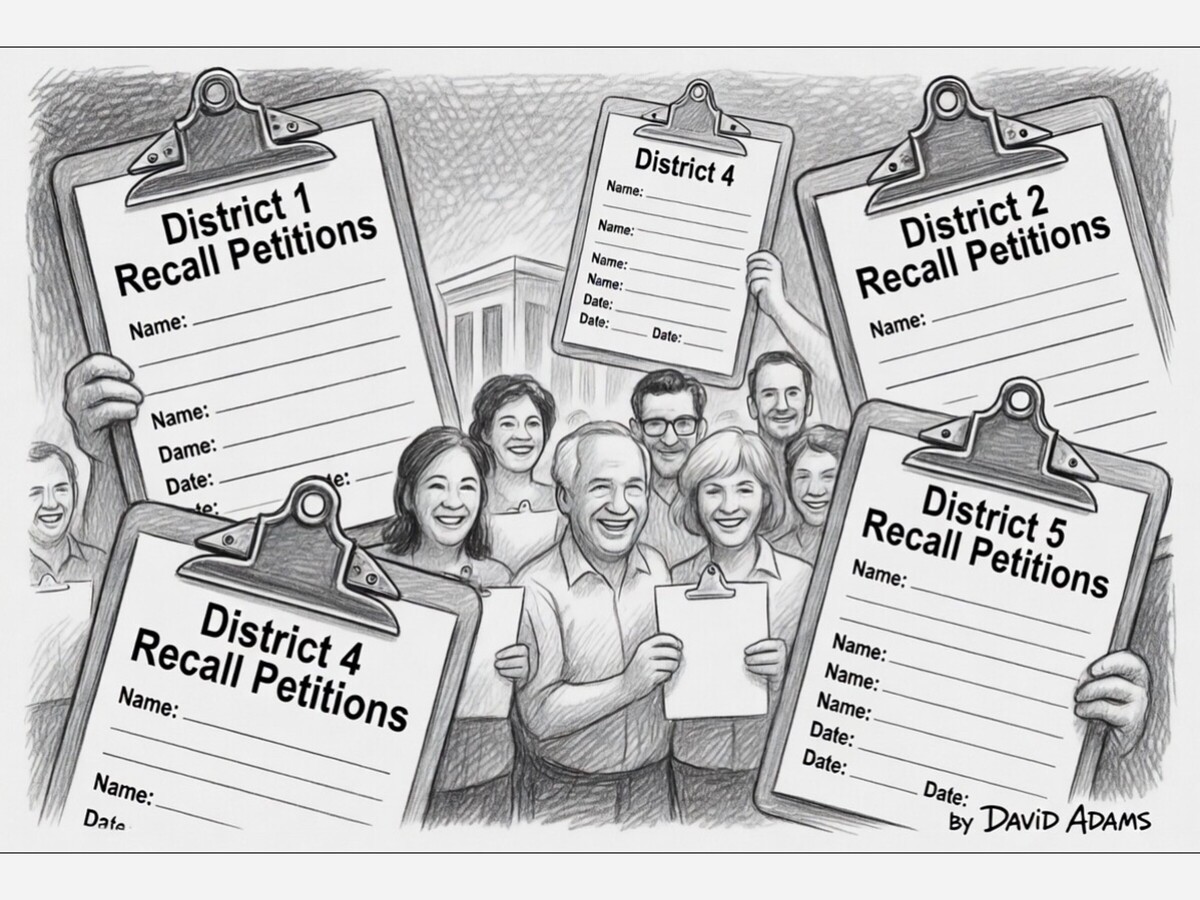



Alamogordo’s city government has spent much of 2026 in open crisis. On March 10, the City Commission voted 7-0 — unanimously — to move forward on a permanent contract for Acting City Manager Dr. Stephanie Hernandez. Six weeks later, on April 21 and again in an April 28 closed session, a four-commissioner bloc — Josh Rardin (District 4, Mayor Pro Tem), Stephen Burnett (District 2), Baxter Pattillo (District 1), and Al Hernandez (District 5) — reversed course, according to reporting by 2nd Life Media Alamogordo Town News. A sitting commissioner, Warren Robinson, later signed a sworn statement saying it was “obvious” to him the outcome had been “preplanned” before the closed session began.
What’s followed is now familiar to anyone tracking Alamogordo city government: ethics complaints filed with the state, a referral request to the Attorney General’s office, emergency court filings by Alamogordo Town News alleging Open Meetings Act violations, a $485,000 settlement, and — per an independent poll commissioned by the group Citizens for Transparency — unfavorability ratings above 60 percent for all four commissioners in the bloc, with Rardin registering the highest distrust of any seated official in two decades. That poll also found majority support for recalling at least two of the four.
Organizers are now reportedly moving on two fronts at once: individual recall efforts targeting each of the four commissioners, with a court filing on the first expected imminently, and a charter amendment establishing term limits, said to be in its final planning stages. Both efforts will live or die on the same organizing fundamentals that apply to any grassroots petition drive — but Alamogordo’s charter adds a wrinkle that makes this a genuinely harder organizing problem than a single citywide recall would be.
Why “First of Four” Isn’t a Figure of Speech
Under the Alamogordo City Charter, a recall of a district commissioner is not a citywide vote — it’s confined entirely to that commissioner’s own district. To recall Rardin, organizers need signatures from more than 20 percent of the registered voters who lived in District 4 at the time he was last elected. To recall Burnett, Pattillo, or Al Hernandez, that same 20 percent threshold has to be cleared separately in Districts 2, 1, and 5, respectively — four distinct petitions, four distinct signature counts, four distinct Notices of Intent filed with the City Clerk, each starting its own 120-day clock. A recall succeeds only if the “yes” vote in that district equals or exceeds the number of votes the commissioner originally received when elected.
That structure is exactly why a “first of four” court filing makes sense as a strategy rather than a stumble: rather than trying to run one undifferentiated citywide campaign, organizers are functionally running four separate district campaigns that happen to share volunteers, messaging, and infrastructure. It also explains why this is hard. Alamogordo has tried this before — a 2012 recall petition against Rardin, over an ethics violation involving a land sale, needed 525 signatures and was abandoned when it fell short. A four-district recall effort means clearing that bar, or something like it, four separate times simultaneously.
Sorting Each District Before Knocking a Single Door
The organizing fundamentals for petition work start with sorting residents into three groups, and in a district-by-district recall, that sorting has to happen four separate times, once per district.
Registration and standing. In each district, the first cut is simple: is this resident registered, and registered at their current address inside that specific district’s boundaries? A District 4 supporter who’s moved across town since Rardin’s last election no longer counts toward that petition’s threshold — a detail that matters enormously in a city where turnover between districts is common.
Persuasion. For the rest, the conversation has to be tailored to what actually motivated each district’s residents to get involved — whether that’s the reversed city manager vote, the pattern of executive sessions, the ethics complaints, or simply frustration that decisions affecting their district were made, in Commissioner Robinson’s words, before the public meeting even started.
Commitment. For supporters, the job is locking down specifics: which recall petition are they signing, on what date, at what location — and whether a ride or a scheduling conflict needs solving first.
Building (and Rebuilding) Four Volunteer Teams
Standard recruitment tools — house parties, small organizing meetings, online sign-ups, canvass shifts, and one-on-one meetings through personal networks — apply here, but with a twist: volunteers effectively need district captains. A recall drive organized only at the citywide level risks producing lopsided results — plenty of signatures in a sympathetic district, not enough in a closely divided one — so the recruit-confirm-action-debrief cycle has to be tracked separately for each of the four petitions, with district-level totals reported back so organizers know where to redirect volunteers as deadlines approach.
Going Where Each District Already Gathers
List-based tactics — door-knocking using the voter file, and phonebanking to confirm shifts and reach residents who are hard to catch at home — remain the foundation in each district. But “high-traffic” organizing matters just as much: setting up at Alameda Park events, outside grocery stores near each district’s population centers, or at community meetings like the ones already being held at venues such as Otero Arts, where city officials themselves have appeared this summer. These settings reach residents who may not be easy to find on a targeted list at all, which matters in districts where recent movers or infrequent voters could be the difference between clearing 20 percent and falling short, as the 2012 effort did.
The Hard Ask, District by District
A specific, time-bound ask still outperforms a vague one: “We’re collecting signatures for the District X recall petition outside the library or (other public free speech space) Saturday morning — can I count on you to sign and bring a neighbor from your street?” does far more work than “Do you support holding commissioners accountable?”
The same four-part structure applies — connect, give urgent context, ask directly and assume the yes, then hand the person a concrete plan, including asking them to bring others.
Rejection isn’t the end of the conversation. A resident who hesitates on a specific recall might still be a “yes” on the separate, lower-stakes ask of attending a public meeting on the proposed term-limits charter amendment — giving organizers a second, smaller door back in.
Listening Before Persuading — Especially With Skeptics
Not every Alamogordo resident who’s frustrated with the commission is automatically a “yes” on recall; some see it as disruptive, or worry about the cost and disorder of special elections in four districts at once.
For those conversations, the standard five-step model — listen, acknowledge, relate, connect, then ask — does more work than any single talking point about the April 21 vote or the Open Meetings Act.
The goal in a skeptical conversation isn’t winning the argument about what happened in that closed session; it’s building enough trust that the resident feels like the decision belongs to them, not just to the four commissioners or to the campaign asking for a signature.
Treating Filing Day Like Election Day
As each district’s petition nears its signature threshold, the same three-part discipline used for get-out-the-vote work applies to the courthouse steps: confirm who’s already promised to sign, make sure each supporter has an actual plan for when and where, and eliminate friction.
The Charter Amendment Runs on a Different Clock
Term limits aren’t available through the recall process itself — recalling a commissioner removes them from office, but it doesn’t change the rules for their successor.
That requires a separate charter amendment, and Alamogordo’s charter, unlike some jurisdictions, already provides a path: qualified electors can force a charter amendment to a public vote by gathering signatures equal to 20 percent of the average turnout across the previous four regular City elections (or 20 percent of the last regular election, whichever is greater) — a threshold that runs citywide rather than district by district, since it changes the rules for every seat, not just one.
That means the same volunteer infrastructure built for four separate district recalls can, in theory, consolidate into a single citywide push once the recall petitions are filed — a natural second phase for a volunteer base that doesn’t need to retire the moment the first petitions are turned in.
The Takeaway
None of this depends on outside money or professional campaign staff — Alamogordo’s charter was written assuming ordinary residents would use exactly these tools, and the city has watched a recall effort fall short before. What separates a repeat of 2012 from a different outcome in 2026 is less about the underlying frustration, which polling suggests is real and widespread, and more about whether organizers diversify their tactics across all four districts rather than concentrating effort in the friendliest one, treat every ask as specific rather than vague, and build volunteer teams deep enough to survive four simultaneous signature drives followed by a fifth, citywide one.
That’s the same math that applies to grassroots campaigns anywhere — Alamogordo’s charter just requires doing it four times before it can be done once more.

When and where was this "poll" taken? Was it just a select group of people? What happened to innocent until proven guilty in a court of law?
this article provides a good basic explanation of the structure available through the city charter for voters to take action in cases such as these. this procedure goes not allege that a crime has been committed - there will be no civil or criminal charges, nor a trial. what is disputed is the ethical behavior of the four commissioners - who have failed to adhere to the concept of refraining from acts that give the appearance of unethical behavior.
legal actions have already been pursued through the journalist's prior court filings.
That’s a fair question, and it’s important to clear this up.
A few basics:
So this isn’t about declaring someone “guilty.” It’s about asking:
Should the people of the district have the chance to vote on whether this person continues to represent them, after seeing the facts and hearing both sides?

an impressive guide, that shows the balance needed to be fair to all.


Overcast, with a high of 81 and low of 61 degrees. Overcast in the morning,



She lectures her expertise like she was running SpaceX. Home Service Contractors and Darnold Plumbing could get any of those things built in a month. These unqualified people use it to justify their lives. We have to work to pay off their excess spending.
Neither have the proper license try again!
He did the same thing when he ran against Rachel. He's a pathological liar who just keeps proving it over and over.
he senses trouble....and i smell blood - time to send him to private sector employment - maybe his oil & gas friends can find something for him to do.
Lets ask the editor.
sir, are you not involved in the campaign?


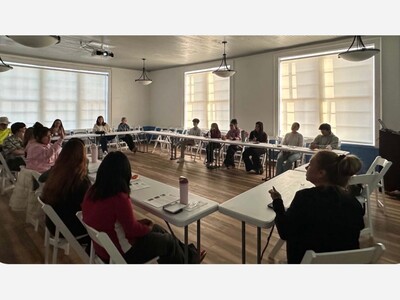
there is our future, kudos to both the students and the organizers.
Sounds overblown by the reporting of this party. On base we have something like this, but it's training leaders. Pic is a few kids with some volunteers who act to shape their opinions. If the schools were good enough the kids would learns this in a classroom.
Glad to hear that the base has a youth group. Now kids in Alamo, with no way to join that group, can also have a group where they can openly discuss their concerns, experiences, and work together to present solutions.
and, no, a PhD didn’t come up with this program. A very smart, educated woman suggested it.

the problems facing the republican party of new mexico pale in comparison with those of their national party - as the old saying - Meaning: Problems in an organization or society start at the top, with its leaders.
The fish rots from the head down
True. A prime example of this was the DNC failures in the 2020 election.
I have voted Republican in the past, but not this time. Our church group knows a few people who have tried to run or get involved and the old school fools won't let anyone they don't know get in at all. You can't solve any problem with the same people who created it. That's why we have terrible doctors here.