
 48° and Clear
Image
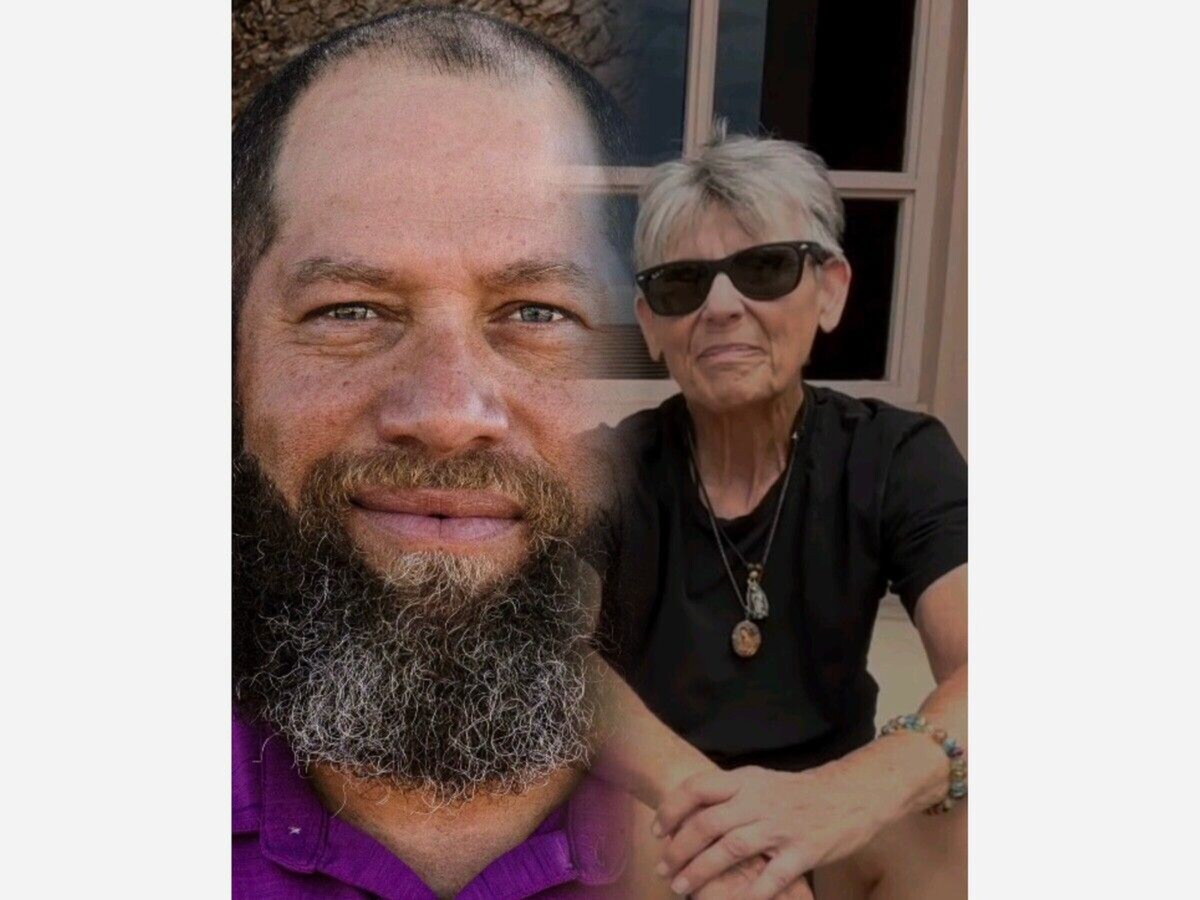
Recall case against Commissioner Burnett goes before a Judge Wednesday and Then Possibly to the Voters - AlamogordoTownNews.org



ALAMOGORDO — In New Mexico, a voter cannot simply circulate a recall petition against an elected official and take it straight to the ballot. State law places a judge in the path first.
Under the state Recall Act and NMSA Section 3-14-16, anyone seeking to recall a municipal officer must first persuade a district court that “sufficient facts and probable cause” exist for the recall to proceed. It is a screening step, and it is deliberately narrow.
The judge does not decide whether the official broke the law, does not decide whether the official should keep the seat, and does not remove anyone from office. The judge decides one thing: whether there is enough to let the process go forward.
If the court finds probable cause, the petitioner may begin gathering signatures in the official’s district. If enough registered voters sign, a recall election is held, and the voters decide. If the petitioner cannot collect the signatures, or if the judge finds the threshold is not met, the effort ends and the official stays in office.
The hearing exists so that no official can be forced into a recall on nothing at all — but the ultimate judgment, if the case clears the screen, belongs to the voters, not the court. At the hearing itself, both the petitioner and the official may present evidence and cross-examine witnesses.
The Burnett case
That threshold test is what brings Alamogordo City Commissioner Stephen W. Burnett before a district judge Wednesday morning. District Judge John P. Sugg is scheduled to hear the case, Murillo v. Burnett, No. D-1215-CV-2026-00626, at 9 a.m. Wednesday, July 29, at the Twelfth Judicial District courthouse in Alamogordo. The hearing is open to the public.
The petition was brought by Kim White Owl Murillo, a District 2 elector representing herself. Burnett, who is also appearing without a lawyer, has filed a written response asking the court to find no probable cause and deny the petition.
The two describe the same set of City records in sharply different terms — a divide that sits at the center of Wednesday’s hearing.
What the petitioner alleges
Murillo’s petition rests largely on the City’s handling of the recent city manager hiring, which she frames as a documented reversal of a public decision. According to her filings, the Commission voted 7-0 in open session on March 10 to enter a contract with then-Acting City Manager Dr. Stephanie Hernandez — the only candidate to pass the City’s scored interview process, which Murillo says rated Hernandez well above the passing threshold, while Robert Stockwell, later hired, was never scored at all.
Murillo alleges that no contract was ever offered to Hernandez. Instead, after a closed session on April 28, the Commission voted 4-3 to resolve the matter with a payment her filings put at roughly $485,000 gross, with Burnett in the majority and Commissioners Warren Robinson and Mark Tapley and Mayor Sharon McDonald voting no. She contends the nine-page contract drafted for Hernandez was then reused for Stockwell — pointing to a redlined draft in City files with Hernandez’s name struck through and Stockwell’s inserted, on terms she says were more favorable to him.
Central to her reply is a sequence she says Burnett’s response never addresses: that on June 12 Commissioner Baxter Pattillo emailed the full Commission the Stockwell contract, and that on June 16 he wrote again stating the version had already “gained the approval” of Stockwell and had been distributed to commissioners before the June 15 closed session. By the time that session — noticed for “City Manager recruitment and City Manager hiring” — was held, Murillo argues, a candidate-approved contract was already in every commissioner’s hands.
Murillo also points to a sworn statement from Commissioner Robinson, who was in the April 28 closed session and states under penalty of perjury that a four-member bloc had, in his account, decided the outcome before the session began and had no intention of offering Hernandez a contract. Robinson states he walked out; Burnett, one of the four, did not. A second sworn statement, from former Mayor Susan Payne, addresses the earlier 2025 search and states Stockwell was not part of the process the full Commission reviewed.
What the commissioner argues
Burnett’s response argues that the petition fails as a matter of law and fact. He contends that two of Murillo’s three grounds — misfeasance and malfeasance — require proof of an “improper or corrupt motive,” and that the petition offers only disagreement with a discretionary decision, which under New Mexico Supreme Court precedent cannot support a recall. He relies on CAPS v. Board Members and Arellano v. Lopez for that motive requirement.
On the open-meetings question, Burnett contends the operative decision to hire Stockwell was made in open session by public roll-call vote on June 15, after a closed session used to interview the candidate — a sequence he says the Attorney General’s compliance guidance permits. He argues the acts Murillo describes, including the recruitment of Stockwell, are attributable to other commissioners, not to him, quoting Pattillo’s public statement that the effort was “my solo legwork” and noting Mayor Pro-Tem Josh Rardin’s statement that he was the one who approached Stockwell in June of 2025.
Burnett leans heavily on Pena v. Rio Arriba County Commissioner, a 2025 New Mexico Supreme Court decision holding that an Open Meetings Act violation cannot be shown without a finding that a quorum — not a single member — made the challenged decision. He also cites the July 5 order in the related case, Edwards v. Alamogordo City Commission, in which the court declined to issue a temporary restraining order, that case is ongoing and contrary to Burnetts assertion no finding has been made as the next hearing is on August 12th in that case.
Where the arguments collide
Murillo’s reply argues that Burnett’s own record supplies the very quorum evidence Pena requires. She notes his response states that during a closed session “all seven members had reached a consensus to speak with Mr. Stockwell” — which she casts not as her characterization but as his own account of a collective, closed-door decision about a named candidate. Paired with the pre-meeting circulation of an approved contract, she argues, that is a quorum formulating public policy outside a meeting, not the lone-member conduct Pena found insufficient.
She also disputes Burnett’s use of the companion case. The July 5 order, she notes, decided only a request for emergency relief under a different legal standard, expressly says it does not resolve the merits, and was entered in a case to which she is not a party; the Commission’s motion to dismiss there remains undecided, with a hearing set for Aug. 12. And she argues Mayor McDonald’s testimony that she knew of no outside coordination proves only that McDonald — who voted no — was excluded from it, not that no coordination occurred among the members who voted yes.
Murillo further contends Burnett’s response was assembled before he had seen the Robinson and Payne statements — noting his own exhibit index says as much — and points out that Payne’s statement was filed on the public docket of the companion case on June 17, weeks before his response. Burnett will have the opportunity to respond at the hearing.
Where the two sides look at the same City records and describe what happened so differently, Murillo argues, that disagreement is itself what probable cause looks like. Burnett’s position is that the petition should not clear even that threshold, and that the matter amounts to a disagreement with lawful, discretionary votes.
Which view prevails is for Judge Sugg to decide Wednesday but more importantly he should let the the voters of District 2 decide.
Editor’s note: Alamogordo Town News publisher Chris Edwards is the petitioner in Edwards v. Alamogordo City Commission, the related Open Meetings Act case referenced in both parties’ filings. He is not a party to the recall case. This report is drawn from the parties’ court filings and public City records.


Received that crime flyer in the mail today. Wow! Mudslinging V2.0 by the blockheads as usual.

Couple of people around Santa Fe have told me her highness has been sucking up hard to Ant to get on to a staff job when his pending doom curtain closes here. Queens never learn to really be honest. It's just in their realm of mental health. They live in denial and have pent up retentive r.e.c.t.u.m.s.
His money would have been better spent listing all of his accomplishments while in office. Oh, wait……
Voted twice against the low-income utility rate bill (HB 91) and sponsored the failed 2026 tax on renewable generation (HB 113) which the state confirmed would have further raised PNM rates. We know who has you in their pocket Block. Stop the **** lies!

Sunny, with a high of 61 and low of 43 degrees. Sunny in the morning, clear in the afternoon and evening,


For those of the civilian public to understand. Every single Airman, marine, sailor and soldier whether Active duty or reserve or national guard has had explicit training on the UCMJ and illegal orders. This includes every “veteran for peace” It is political plain and simple.

Is there any chance that the Forest Service will allow Sunspot to remain open, after the demolition is completed?

Million-nine for the bakery, million for a theatre scam. These uneducated skells pass out money to sheis for what? They're not even good ideas. 3 mil and they don't know? Why doesn't we hire out side auditor like the FBI?
All that tax money. Is it true that Brien Caesar bought a four hundred k condo in wyoming last year? Heard, it's near Jackson. Someone put that stuff through. No wonder they change managers so often. Once a deals's done you don't have to stick around in this burg anymore.




Graphs lernt in grad school look like kinder. Has money from deals done too probably. Otherwise, would be working instead of lecturing us all.

The choice we have this year is between a sliperycoxsuker and an exabuser. Can one straight person step up for us to support?
I find it interesting that the rhetoric posted is eerily similar amongst all these brave individuals with their interesting stage names. Too bad they didnt use a good one like Biggus Dickus.