70° and Clear
Image



From "Autocratic Capture" to the "No Chapter on Failure" Principle — Ruth Ben-Ghiat's Framework, Applied to a City Commission Reversal and a Party Chair Who Declared Herself Above the Rules
By Chris Edwards | 2nd Life Media Alamogordo Town News | May 2026
Political scientist and historian Ruth Ben-Ghiat, NYU professor, Guggenheim Fellow, and author of the New York Timesbestseller Strongmen: Mussolini to the Present, opens her book with a premise that should alarm anyone who believes authoritarianism is a foreign phenomenon requiring foreign conditions: the playbook is universal, and it travels.
In Strongmen's foundational chapter, Ben-Ghiat lays out what she calls the "authoritarian playbook" in precise sequential terms. Social anxieties produce polarization. Polarization gives aspiring autocrats both their appeal and their incentive — an incentive, she writes, to actively exacerbate existing tensions rather than resolve them. From that polarized soil, strongmen — and increasingly, strongwomen — construct networks of loyalty in which "loyalty to him and his allies, rather than expertise, is the primary qualification for serving in the state bureaucracy, as is participation in his corruption schemes." She writes that "personalist rulers can be long-lasting rulers, because they control patronage networks that bind people to them in relationships of complicity and fear."
The crucial insight for American readers in 2026 — and for Alamogordo residents in particular — is what comes next in her analysis. Ben-Ghiat is explicit that this is not a phenomenon requiring a capital city or a national stage. In her LucidSubstack, launched in 2021 and now reaching hundreds of thousands of subscribers, she has consistently documented how "autocratic capture" — her term for the systematic seizure of institutions by loyalist networks — operates at every level of governance simultaneously. In her 2025 essay on Project 2025 and authoritarian governance, she described how the pattern at the federal level, "widespread purges to get rid of non-loyalists," is designed to "jump-start a remaking of government so the leader can steal and repress with impunity." The same logic, scaled down to the granular, operates in a commission chamber in Alamogordo, New Mexico.
In her Lucid essay "Corruption and Authoritarianism," she is even more direct: "Corruption is key to authoritarianism because for strongmen, public office has nothing to do with public service: rather, it is a vehicle for private enrichment, as well as escaping prosecution for crimes." And the mechanism for maintaining this system is not violence at the local level — it is patronage. "Authoritarians also create new patronage systems that offer jobs and opportunities for wealth, which help to overcome any moral hesitations some might have about collaborating. The core of the contract between the ruler and his enablers is the offer of power and economic gain in exchange for supporting his violent actions and his suppression of civil rights."
At a city commission level, that "contract" looks like this: commissioners who support the network's preferred candidates and block the network's threats keep access, influence, and the informal benefits that come with both. Commissioners who don't are marginalized. The reformer who cannot be "leveraged" — who insists on Open Meetings Act compliance, ethics training, and transparent process — breaks the contract by refusing to enter it. And so the network moves to eliminate her.
Ben-Ghiat closes her foundational chapter with a warning that applies with uncomfortable precision to what Alamogordo witnessed in the spring of 2026: "One society after another has experienced the costs of leaders who reward people for being their worst selves and retool state institutions to normalize corruption, propaganda, and violence. Far from 'draining the swamp,' they extend it, and the country suffers." The swamp doesn't drain. It annexes city hall.
In her Lucid essay on Project 2025 as an authoritarian governance model, Ben-Ghiat introduced a concept she calls the "passive purge" — a mechanism she documented at the federal level during Trump's first term, when, by "creating hostile workplaces for critics," the administration achieved an exodus of over 79,000 civil servants who retired or resigned rather than endure the political environment. She quoted retired Ambassador Nancy McEldowney describing the process as "a hostile takeover and occupation." The passive purge does not require firing anyone. It requires only making the position untenable.
What happened to Dr. Stephanie J. Hernandez in Alamogordo is a locally-scaled version of precisely this mechanism — and understanding it through Ben-Ghiat's lens makes the 49-day timeline between March 10 and April 28, 2026, not a political anomaly but a recognizable sequence.
On March 10, 2026, the Alamogordo City Commission voted unanimously, 7-0, to begin formal contract negotiations with Acting City Manager Dr. Hernandez for the permanent role. The vote was public, celebrated, and bipartisan. Commissioner Mark Tapley brought the motion. Commissioner Warren Robinson seconded it. Every commissioner in the room raised their hand. The community rejoiced.
Dr. Hernandez is not a stranger to this community. She is Alamogordo — a lifelong resident with a Ph.D., who had served as Director of Finance, then Assistant City Manager, then Acting City Manager for 28 consecutive months without the security of a signed contract. She introduced performance-based budgeting, secured grants for infrastructure improvements, built relationships with Holloman Air Force Base, and — critically — led Open Meetings Act and ethics training for the commission in 2024, with more planned for 2026.
That last point is central. Ben-Ghiat writes in Strongmen that authoritarian networks particularly target those who "uphold the integrity of facts, evidence, and inquiry." A city manager who trains commissioners in Open Meetings Act compliance is, in the network's calculus, a manager who is teaching the public how to hold the network accountable. That is not a service to the network. It is a threat.
After the March 10 vote, the passive purge began. Public records show special executive sessions were convened on April 7 and April 21, with additional closed sessions embedded in regular meetings. Sources told Alamogordo Town News these sessions were driven by Commissioners Josh Rardin, Stephen Burnett, and Alfonso "Al" Hernandez — using the justifications of "limited personnel matters" and "pending litigation" while, according to those sources, building a political case behind closed doors. No public explanation was offered. No community input was invited. This is what Ben-Ghiat means when she writes about the use of "semi-legal and legal tactics" to achieve outcomes that straightforward democratic process would not produce.
On April 28, Commissioners Rardin, Burnett, Al Hernandez, and Baxter Pattillo voted 4-3 to accept a financial settlement tied to an EEOC complaint filed by Dr. Hernandez — effectively ending her tenure. Mayor Sharon McDonald, Commissioner Tapley, and Commissioner Robinson voted against. Robinson walked out of the executive session rather than participate.
The settlement terms were not disclosed. No public comment was allowed. No open debate was permitted. IPRA requests have been filed. A legal probe is anticipated.
Ben-Ghiat writes in Strongmen that one of the most reliable markers of autocratic governance is this specific sequence: the democratic process is allowed to produce its result, and then the result is reversed through a mechanism that bypasses accountability. "Even if they hold elections," she writes in her Lucid essay "Is America an Autocracy Now?", strongmen "use intimidation and a mix of semi-legal and legal tactics to get the outcome they need." In Alamogordo, the commission held a vote — and then, six weeks later, used a closed-session process and an EEOC investigation mitigation to reverse it. The public was consulted and then overruled through a mechanism it was not permitted to evaluate.
Meanwhile, according to multiple sources including former government officials, the four-commissioner bloc is privately positioning former City Manager Robert Stockwell as the preferred replacement — a figure with a documented 1997 termination for personnel misconduct, a $124,000 settlement paid by Alamogordo taxpayers, and a subsequent 2019 resignation from California City following a performance evaluation. The phrase circulating to justify this preference — "institutional knowledge" — is doing work that Ben-Ghiat has named and analyzed. In Strongmen, she documents how patronage networks consistently prefer figures who are "legible to the network": people whose incentives, relationships, and obligations make them manageable from the inside. "Institutional knowledge," in this context, is not knowledge of how to serve the public. It is knowledge of how to serve the network. The two are not the same.
The city is now simultaneously without a city manager and a city attorney, who has also resigned. Ben-Ghiat's analysis of controlled instability is directly relevant: she has noted, in multiple Lucid essays, that authoritarian-adjacent actors often prefer institutional fragility because a city in perpetual crisis cannot build the accountability structures, public trust, or independent administrative capacity that would constrain the network's influence. Instability is not a cost of the machine's operation. It is one of its products.
To understand the full scope of what is happening in and around Alamogordo, you have to understand Amy Barela — not as a caricature, but as a case study whose trajectory maps with uncomfortable precision onto theories Ben-Ghiat has documented across a century of authoritarian actors.
Ben-Ghiat has identified a counterintuitive pattern she calls "seeking office as self-defense." At the Tanner Humanities Center lecture series, she described it this way: "Conventional politicians usually avoid seeking office while under investigation for possible wrongdoing. They expect journalism and opposition research to hinder their campaigns. In contrast, strongmen are driven to seek public office in such circumstances. For them, it serves as a form of self-defense. Given their desire to concentrate power in themselves and avoid accountability, this strategy makes sense for authoritarian rulers." She documented this pattern across Putin, Trump, Netanyahu, and Berlusconi.
Barela's situation in 2026 echoes this dynamic at the local scale, with a specific financial dimension that community observers have noted publicly: the county commissioner salary provides actual income; the state party chairmanship provides power but not a paycheck. Refusing to vacate the chairmanship when the rules require it is not primarily ideological — it is about preserving both levers simultaneously. The office provides the income. The chairmanship provides the power. Losing either costs something real.
Barela is not an accidental figure. She is a product of Otero County's deep-red conservative base who earned her position through genuine political work — years of organizing, door-knocking, and coalition-building that culminated in her 2022 election to the Otero County Commission. She took the seat previously held by Couy Griffin, the Cowboys for Trump co-founder removed for his role in January 6. In December 2024, she was elected Chairwoman of the Republican Party of New Mexico by the State Central Committee, receiving nearly three times as many votes as her closest challenger. Her stated agenda upon election: structural reform, "full transparency and participation," and building unity. She promised, in her own words, to be a leader who made the rules work for everyone.
Ben-Ghiat's Strongmen is instructive here: she documents how strongmen and authoritarian-adjacent figures consistently promise rule-based governance and transparency precisely as they are consolidating personal control. The rhetoric of accountability is often most loudly deployed by actors who intend to exempt themselves from it. Barela's promises of transparency upon becoming chair mirror this pattern — not in scale or consequence, but in logic.
The trigger arrived on March 10, 2026. Barela filed for re-election to her Otero County Commission District 2 seat at 9:06 a.m. Jonathan T. Emery — a retired Otero County Sheriff's deputy with 17 years of service, now an IT professional for the Tularosa Basin Regional Dispatch Authority — filed at 9:08 a.m. Two minutes. The Republican Party of New Mexico's Uniform State Rule 1-4-4 is unambiguous: if a state officer "files as a candidate for public office and there is another Republican who has filed for the same office, the state officer shall immediately vacate the party office." No exceptions. No carve-outs. No escape clause.
Barela declared the rule did not apply to her.
This is the moment that Ben-Ghiat's framework most precisely illuminates. In Strongmen, she writes about what she calls the "authoritarian playbook" trigger: when the rules of a democratic institution stand in the way of a power-holder's interests, the response is not compliance — it is reinterpretation. The party commissioned a Dallas-based outside firm to produce a review concluding Barela was "fully compliant" because she had filed before a challenger existed, a reading that required treating a two-minute time gap as legally dispositive while ignoring the subsequent reality of a contested primary. Ben-Ghiat documents this pattern specifically: autocrats and authoritarian-adjacent actors use institutional machinery — reviews, legal opinions, partisan interpretations — to launder what is essentially a raw assertion of personal privilege into something that looks like rule-following.
State Sen. James Townsend, National Committeeman for the RPNM, publicly backed the interpretation and posted a Facebook endorsement of Barela's commission candidacy — itself a potential violation of Rule 1-4-3, which prohibits party officers from endorsing one Republican candidate over another in a contested primary. A rule violation used to justify ignoring the original rule violation. Ben-Ghiat notes in Lucid that authoritarian-adjacent networks characteristically respond to challenges by layering additional violations, because each new violation expands the space of what is treated as acceptable. The norm degrades incrementally, and what would have been unthinkable in the first instance becomes routine after sufficient repetition.
The pushback was broad. Bernalillo County Republicans — the largest county organization in the state — issued a formal call for Barela's resignation on March 17, with First Vice Chair Mark Murton declaring: "The speed limit is 65 mph and you're going 85." Sierra County's full Republican board signed an open letter. Sandoval County joined. Reports indicated as many as a dozen county-level organizations demanded her resignation in some form. Former Alamogordo Mayor Susan Payne, herself a Republican, said the arguments Barela's allies were making seemed like "an effort to circumvent the rules."
Barela canceled two scheduled meetings with Sandoval County GOP Chair Robert Aragon, who believed negotiated resolution was possible. Her public response throughout: "I am not leaving."
Ben-Ghiat has a name for this refusal to learn from democratic rebuke. In her Tanner Humanities Center lecture, she stated: "The authoritarian playbook has no chapter on failure." Strongmen and authoritarian-adjacent actors, she explains, are "reluctant to learn from defeat" and when faced with pushback "resort to ever more extreme and risky schemes for holding" power rather than moderating their behavior. Two lawsuits followed: one in 2nd Judicial District Court in Albuquerque by five Republican county chairs, and one in 12th Judicial District Court in Alamogordo filed by Emery, gubernatorial candidate Duke Rodriguez, and lieutenant governor candidate Aubrey Blair Dunn, represented by prominent Ruidoso attorney Gary Mitchell. The Alamogordo lawsuit additionally alleged party officials violated rules by amplifying a candidate forum on official RPNM social media that excluded Rodriguez and Dunn while promoting other candidates — using the state party's institutional megaphone for one side of a contested primary.
The measurable structural damage is significant: the Republican Party of New Mexico fielded no candidates for U.S. Senate, state auditor, or state treasurer in 2026. A building contractor named Larry Marker is attempting a write-in Senate campaign simply to give Republicans a name on the fall ballot. Democrats publicly celebrated Barela's tenure as a gift to their 2026 prospects. Ben-Ghiat's Lucid observation applies with precision: "Far from 'draining the swamp,' they extend it, and the country suffers."
Ben-Ghiat is explicit in Strongmen and in multiple Lucid essays that authoritarian networks do not confine themselves to single institutions. "Wherever they rule," she writes, "a culture of corruption and 'brutalism and intolerance' spreads like blight to incentivize allies to help them dispense with their enemies and to encourage everyone else to adopt the self-censoring and compliant behaviors that make their colonization of" institutions possible.
Barela, in her dual role as Otero County Commissioner and state Republican Party Chair, exercised cross-institutional influence over Alamogordo city governance with no formal authority to do so — and did it in exactly the way Ben-Ghiat describes. According to reporting in 2nd Life Media's September 2025 retrospective on Alamogordo's decade of dysfunction, Barela sent a June 2025 email from a private account to then-Mayor Susan Payne, vaguely referencing "constituents' concerns" about Dr. Hernandez's role as acting city manager. The private account matters: it blurs the line between official communication and personal interference in ways that complicate transparency and public records compliance. Mayor Payne publicly questioned Barela's authority to comment on city hiring at all.
Barela also posted on social media, including under the alias "Justamy Junkyarddog," accusing city leaders of incompetence and moral failings — a tactic Ben-Ghiat specifically identifies in Strongmen and Lucid as characteristic of authoritarian-adjacent actors: using informal channels and pseudonymous or deniable communications to shape public narrative while maintaining the appearance of non-involvement. The attacks contributed, according to sources, to a sustained hostile climate that undermined Dr. Hernandez's standing before any formal hiring process had concluded — a textbook passive purge conducted at one remove.
Ben-Ghiat writes in Strongmen that "the core of the contract between the ruler and his enablers is the offer of power and economic gain in exchange for supporting his violent actions and his suppression of civil rights." At the local level, violence is not the currency — access is. Those who align with the network keep it. Those who don't lose it. Barela's influence over commissioners in her political orbit is the local expression of exactly this contract.
Ben-Ghiat has written extensively about what she calls the "fractal" nature of authoritarian behavior — identical logic operating simultaneously at every scale of governance, from the national to the granular local. What makes Alamogordo's spring of 2026 so analytically striking is that it offers a complete, simultaneous, three-tier illustration of this fractal.
At the national level: Ben-Ghiat has documented at length how the current federal administration mirrors the classic strongman playbook she traces from Mussolini forward — the "trifecta" she describes of pardons for loyalists, privatization of public functions to benefit networks, and purges of non-loyalists. The federal signal — that loyalty matters more than competence, that rules are obstacles to be reinterpreted, that reformers who prioritize accountability over access are threats — radiates outward and downward.
At the state level: Amy Barela, who rose to lead the New Mexico Republican Party on promises of transparency, deployed the same logic when her own interests were threatened. She declared rules ambiguous, commissioned supportive external interpretations, leveraged institutional resources for her own candidacy, refused compromise, and continues to refuse accountability regardless of cost to the party she leads. The party she promised to strengthen cannot field Senate candidates and is fighting itself in two simultaneous courtrooms.
At the local level: Four city commissioners reversed a unanimous public vote through private sessions, accepted a settlement that removed a qualified reformer without public debate, and are allegedly positioning a figure with documented past controversies as the preferred successor — while denying the public any opportunity to evaluate any part of this process.
The logic connecting all three levels is not partisan — members of both parties engage in this behavior when networks feel threatened. The logic is Ben-Ghiat's "personalist rule": the systematic prioritization of network interests over institutional obligations. As she writes in Strongmen: "Loyalty to him and his allies, rather than expertise, is the primary qualification for serving in the state bureaucracy, as is participation in his corruption schemes."
Ben-Ghiat also brings gender theory to her analysis in ways directly applicable to the Hernandez case. She identifies three core parts of what she calls authoritarian gender politics. First, institutionalized misogyny works to keep women subordinate — not through overt prohibition but through the accumulated weight of whisper campaigns, reversed decisions, hostile workplaces, and the constant implication that a woman's authority is provisional in ways a man's is not. Second, strongmen "flaunt their personal machismo and suffuse their politics with hyper-masculine displays." At the commission level, this translates into the specific dynamic of four male commissioners overruling the qualified female administrator and the female mayor who supported her — a vote whose gender composition is not incidental. Third, Ben-Ghiat notes that in authoritarian cultures, "taking what you want, and getting away with it, becomes proof of male authority." The 4-3 vote, conducted without public explanation and in the teeth of community opposition, functions in this framework as a demonstration that the network can act without consequence — and that demonstration is itself part of the point.
Ben-Ghiat's analysis of moral collapse is equally relevant. In her University of Michigan lecture in November 2025, she stated: "Autocracies hollow out people as well as institutions. They free citizens from the idea that they should tell the truth, attend to facts, and respect others as individuals with dignity and autonomy. Ultimately, authoritarianism requires you not only to betray others, but to betray yourself." The seven commissioners who voted 7-0 on March 10 and then split 4-3 on April 28 illustrate this precisely. Four of them betrayed a public commitment they had made six weeks earlier, in front of their community, on the record. They did so without public explanation. The moral collapse Ben-Ghiat describes is not abstract — it is measurable in the gap between those two votes.
Ben-Ghiat's Lucid also addresses the specific weaponization of formal accountability mechanisms against reformers. Dr. Hernandez's EEOC complaint — a federally protected mechanism for reporting discriminatory treatment — was not treated as an occasion for internal accountability. It became, instead, the instrument of her removal: settled in closed session, at undisclosed taxpayer cost, with no public debate. The mechanism designed to protect employees from network retaliation became the mechanism through which the network conducted its retaliation. This is precisely what Ben-Ghiat means when she writes in Strongmen that authoritarian systems "use a mix of semi-legal and legal tactics to get the outcome they need."
Ben-Ghiat has been explicit, in Strongmen, in Lucid, and in public lectures, that the destruction of democratic norms does not begin at the national level. It begins in the places people live — in the institutions closest to daily life, where network power is most intimate and most difficult to challenge, and where the absence of sustained public attention creates the darkness the network requires to operate.
In her review of the national situation in the American Federation of Teachers journal in fall 2025, she wrote that authoritarians "capitalize on polarization, resentment, and uncertainty to take power, and then they stay in power with a toxic mix of propaganda, corruption, machismo, and violence." At the local level, the violence is replaced by procedural maneuver. But the polarization, resentment, and uncertainty are deliberately cultivated, because a community that is anxious, exhausted, and divided cannot mount sustained accountability.
Alamogordo's decade of governance dysfunction — seven city managers in ten years, each departure more chaotic and costly than the last — is not an accident of bad luck. It is the accumulated product of a network that, in Ben-Ghiat's analysis, prefers institutional fragility. A city in perpetual leadership crisis cannot build the administrative capacity, the institutional memory, or the public trust that would enable meaningful reform. The Las Cruces comparison is instructive: in 1960, the two cities had nearly identical populations. Las Cruces built stable leadership, diversified its economy, and grew its civic culture. Alamogordo cycled through managers while infrastructure stalled and public confidence eroded. Ben-Ghiat's analysis of why stable, competent governance is a threat to the network — rather than a goal — explains this divergence more fully than any individual personality conflict.
She has also documented specifically, in her work on Project 2025 and in multiple Lucid essays, how the simultaneous erosion of multiple institutional positions — leadership vacuums in adjacent roles — is a deliberate strategy. With both the city manager and city attorney positions now vacant simultaneously, Alamogordo enters a period of institutional nakedness in which the network can most easily shape appointments. Ben-Ghiat calls this "autocratic capture": the seizure of institutional openings to install loyalists before accountability structures can be rebuilt.
The role of independent local journalism is something Ben-Ghiat addresses directly in Lucid and in public lectures, where she has consistently identified a free press as the primary structural counter to the dynamics she documents. She notes that authoritarian networks characteristically move to "shut down opposition media and domesticate what is left, so the opposition's message does not reach voters." At the local level, this doesn't require shutting down newspapers — it requires outlasting them. As local journalism has collapsed nationally, the informal oversight function that reporters once provided has largely disappeared, and networks that depended on that invisibility have flourished. Independent local reporting — the kind that files IPRA requests, attends commission meetings, names specific votes, and traces back-channel communications — is not a nice-to-have. In Ben-Ghiat's framework, it is the primary democratic check on exactly what Alamogordo is experiencing.
Ben-Ghiat has also noted, at the University of California Santa Barbara's Ross Distinguished Lecture in March 2025, that "polarization is just the start" — that authoritarian actors use manufactured division to paralyze democratic response. In Alamogordo, the polarization around Dr. Hernandez's tenure, stoked through whisper campaigns and social media attacks, served precisely this function: it made the commission's eventual 4-3 reversal appear to some as a natural product of genuine community disagreement, rather than what the record shows — a coordinated insider reversal of a unanimous democratic vote, accomplished through closed sessions and an undisclosed settlement.
Additional measurable costs of this pattern in Alamogordo deserve enumeration:
The voter-approved natatorium — an indoor swimming facility passed with more than 5,600 yes votes in November 2024 — was tabled by Commissioner Al Hernandez in March 2026. A democratic mandate, reviewed by network preferences, and deferred. Ben-Ghiat's observation that in autocratic systems elections have a different function when strongmen "game" the system applies here in municipal miniature: the community voted yes, and the commission decided to revisit the question.
An EEOC complaint filed by a city employee was processed not as an accountability trigger but as a political transaction — settled in closed session at undisclosed taxpayer cost, used to remove the complainant rather than address the substance of the complaint. The message this sends to every future employee who might consider exercising a federally protected right is unmistakable.
The cumulative settlement costs of the city's revolving-door management — including the 1997 Stockwell payout, subsequent manager settlements, and now the Hernandez settlement — represent a recurring taxpayer subsidy for network dysfunction. Ben-Ghiat writes in Lucid that authoritarian systems use public money as network currency: settlements silence accountability, and the bill goes to the public.
Ben-Ghiat does not end Strongmen or her Lucid essays in despair. She is, as she describes herself, "an optimist about human nature" who is "inspired by the courage and resolve of those who fight corruption and repression." In her Michigan lecture in November 2025, she stated: "Never underestimate the American people. The United States has the potential to defeat this nascent autocracy and come out of it with a stronger, more just, and more democratic democracy."
But she is equally specific about what resistance requires. In her review of the Istanbul 2019 mayoral race, she highlights how opposition candidate Ekrem İmamoğlu defeated an Erdoğan-backed candidate not through rage or tribalism but through what Ben-Ghiat calls "radical love" — reaching out to the strongman's own supporters with sincerity, competence, and a genuine commitment to the community they shared. She writes that "dialogue, solidarity, and love" are "what strongmen fear the most."
She is also specific, in Lucid, about the structural tools resistance requires: sustained independent journalism, IPRA and public records requests that force disclosure, community presence at public meetings, and — most importantly — the refusal to normalize what has happened. "Each time we show solidarity with others or support those who are protecting the rule of law, helping the targeted, or exposing lies and corruption," she has written, "we are standing up for democratic values of justice, accountability, equality."
For Alamogordo residents, that means demanding specific answers to questions the network prefers remain unasked:
On the Hernandez settlement: What is the full financial cost to taxpayers? When will IPRA responses make the settlement amount public? What specific conduct gave rise to the EEOC complaint that was settled rather than addressed? Who authorized the April 7 and April 21 closed sessions that sources describe as political staging grounds?
On Stockwell: If he is under consideration, what documented justification exists for overlooking a 1997 commission termination, a $124,000 settlement, and a 2019 performance-related resignation? Who is communicating with him, and are those communications subject to IPRA?
On the commission bloc: What specific legal justification exists for the April 7 and April 21 closed sessions? Were Open Meetings Act requirements followed? What accountability mechanisms exist for commissioners who reverse a unanimous public vote through a closed-session process with no public explanation?
On Barela: What is the full extent of her communications with members of the Alamogordo City Commission regarding Dr. Hernandez? Are those communications — including the June 2025 private email and subsequent back-channel contacts — subject to IPRA? What is the status of the two lawsuits seeking her removal as RPNM Chair?
On the natatorium: When will the commission revisited the voter approved project the financing pack to be changed or delays would have been forthcoming. Only pressure from independent news coverage and public outrage did it move forward. What specific fiscal concerns justify delaying a measure that passed with more than 5,600 votes?
On the pattern: Why has Alamogordo had seven city managers in a decade while comparable cities built stable leadership? What is the cumulative taxpayer cost of those departures? What structural reforms to the commission's hiring and oversight processes would reduce the risk of another decade of the same?
These are not hostile questions. They are the questions any citizen of a functioning democracy has both the right and the responsibility to ask of the people who govern them. Ben-Ghiat's first Lucid essay, written five years ago, outlined "the dangers of strongmen and how they manipulate power to escape accountability." Five years on, her newsletter remains, in her words, "a place for big-picture thinking, including how to resist effectively and protect democracy."
That resistance does not activate at the national level first. It activates in the places we live. In the commission chambers where we show up or don't. In the IPRA requests we file or don't. In the newspaper subscriptions we maintain and the local reporting we support or allow to die. In the elections where we vote for accountability or accept the machine's preferred story that instability is inevitable and reformers are naive.
Ben-Ghiat writes that "keeping hope alive is an act of resistance." It is also, in Alamogordo in the spring of 2026, the most politically consequential act available to every resident who believes their city deserves better than seven managers in a decade, closed sessions in place of public debate, and a taxpayer-funded settlement used to remove the most qualified candidate the city has produced in years.
Alamogordo is not just a city with a governance problem. It is a demonstration — in miniature, in real time, with names and vote tallies attached — of how democratic norms erode, and how communities choose, or fail to choose, to stop that erosion.
The choice is still open. Ben-Ghiat reminds us: the authoritarian playbook has no chapter on failure. But neither does the community that refuses to accept it.
This analysis draws from public records, commission vote tallies, and IPRA filings; reporting by 2nd Life Media Alamogordo Town News including the September 2025 Hernandez tenure retrospective, the March–May 2026 Barela controversy coverage, and post-vote reporting of April 28–May 3, 2026; coverage by the Albuquerque Journal, Source New Mexico, and the Santa Fe New Mexican; and Ruth Ben-Ghiat's Strongmen: Mussolini to the Present (W.W. Norton, 2020/2021); her Lucid Substack essays including "Corruption and Authoritarianism" (May 2025), "Project 2025 as Authoritarian Takeover" (November 2024), and "Is America an Autocracy Now?" (April 2025); her November 2025 Davis, Markert, and Nickerson Lecture at the University of Michigan; her March 2025 Ross Distinguished Lecture at UC Santa Barbara; her Tanner Humanities Center lecture at the University of Utah (September 2024); and her report submitted to the House Select Committee investigating January 6.
2nd Life Media Alamogordo Town News remains committed to transparent, independent local coverage. Follow updates on KALH Radio and our site.

This is a fantastic article Chris. Thank you for your research and for pulling all these strands together.
I have been noticing some usage of the Communist Manifesto playbook here in Otero county and the state as a whole.
The irony is that Chris is describing a power struggle within the GOP. Calling it "Communist" actually hides the real issue, which is Authoritarianism, leaders ignoring rules to keep power. That is a threat to everyone, regardless of which party or economic system they prefer.
anything that does not conform with today's conservative world view is automatically "communist"...

The "mayor" has an office? Everyone sees straight through your P.R. circus. Your lap dog , Old McDonald, is just as half-blind and limited as the rest of us poor ******** scrambling in the real world.
Jones, I hope you get some help with your anger management issues soon.

Sunny, with a high of 103 and low of 73 degrees. Sunny for the morning, overcast in the afternoon and evening, clear overnight.
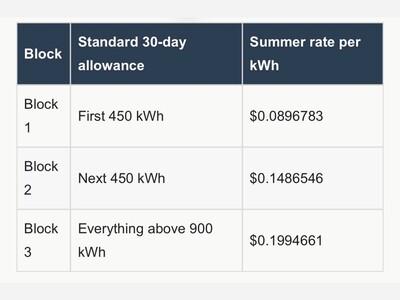
a worthwhile attempt to explain an unfortunate situation, that was combined with a billing system not easily understood. and, yet another opportunity to state that both electrical power generation and public water reserves are limited resources - and data centers s
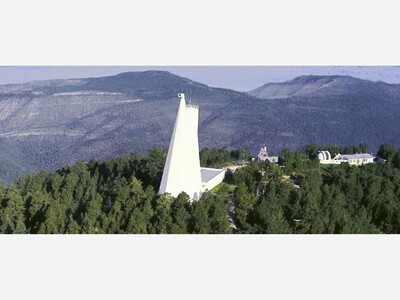
still hopeful that there can be some arrangement that would allow the existence of the facility to continue.

I say bring back the Piggly Wiggly.




Great article, but I think there is some evidence that the large bills people are receiving are not just due to estimated usage. Some people have reported that part or all of their bill was calculated at a higher pricing tier, as if two months' worth of usage was treated as if it occurred in one month.