
Image



Alamogordo, NM (April 7, 2026) – Recent public support from Senator Jim Townsend for Republican Party of New Mexico Chair Amy Barela amid sharp calls for her resignation has spotlighted deep fractures within the state GOP. But this isn’t just garden-variety party infighting. It raises a sharper question: Is the clash between northern/urban and southern/rural Republicans part of a larger struggle — one where secession talk serves as both symptom and tool to widen the divide between “Trump Country” southeast New Mexico and the progressive strongholds of Albuquerque and Santa Fe?
The immediate dispute is straightforward on paper. Barela, an Otero County Commissioner and state party chair, filed for re-election in a contested primary. Party rules appear to require her to step down from the chairmanship in such cases to maintain neutrality. Bernalillo County Republicans and several other county organizations have demanded her resignation, calling it a clear violation that undermines trust and fairness. Yet Barela has refused, backed by figures like Senator Townsend (R-Artesia), who has defended her record of “tireless work” and pushed back against what some southern voices see as overreach by northern establishment figures. A third-party review commissioned by the state party cleared her of any obligation to resign, but the bitterness lingers, with accusations of coups, rule-twisting, and misplaced priorities flying publicly.
This isn’t happening in a vacuum. Jeff Tucker’s recent Albuquerque Journal column powerfully captures the deeper grievances driving southeast New Mexico’s frustration. He catalogs a long list of perceived attacks from Santa Fe: the Immigrant Rights Act targeting detention centers in Otero County, blocks on Holtec in Eddy County, EV mandates, royalty hikes on oil, cannabis rules that ignored local opt-outs, gun control, abortion funding, and especially the 2021 gerrymandering that split southeastern counties across congressional districts to dilute their voice. Tucker frames these as cultural warfare — urban progressives imposing values on rural, oil-patch conservatives who feel their way of life is under siege. His biblical call of “Let my people go” resonates because many in Lea, Eddy, Chaves, and Otero counties genuinely believe Santa Fe treats them as cash cows for the state’s general fund (via oil and gas revenues) while disrespecting their priorities.
The numbers back the structural imbalance Tucker and others highlight. Bernalillo County dominates legislative representation: roughly 20 House seats touch the county, with only 2 held by Republicans; in the Senate, 17 seats touch it, with just 3 Republican. Large, Democratic-leaning urban counties wield outsized influence, passing policies that rural conservatives see as disconnected or hostile — from lockdowns that pushed events into Texas to environmental rules hitting the Permian Basin hard. Southeast New Mexicans shop, recreate, and seek medical care in West Texas more than Albuquerque. They feel the “unified cultures” in the state pledge is a fiction.
Enter the secession (or “annexation”) movement. Texas House Speaker Dustin Burrows has directed a committee to study the constitutional, fiscal, and economic implications of adding contiguous New Mexico counties — especially oil-rich Lea and nearby areas — to Texas. New Mexico lawmakers like Reps. Randall Pettigrew and Jimmy Mason have pushed resolutions for local referendums on independence. While actual border changes face massive legal hurdles (requiring congressional approval and state consent), the discussion itself amplifies the north-south rift. Tucker notes it could be a “win-win” in theory: New Mexico sheds conservative “Trump Country” and its fossil fuel revenues (and associated methane debates), while Texas gains population and energy resources.
Is the Barela fight a microcosm or even a deliberate wedge in this bigger contest? Critics of the infighting argue it distracts from the real enemy — one-party Democratic dominance in Santa Fe. Supporters of Barela, often rooted in southern and rural counties, see the push against her as northern Republicans flexing muscle, prioritizing procedural purity over winning elections in a tough state. Opponents counter that ignoring rules erodes the party’s credibility precisely when it needs unity to challenge urban Democratic strongholds and grow beyond its current legislative minority.
The urban-rural divide is real and not unique to New Mexico, but here it carries extra weight because of the economic stakes. Southeastern counties generate a huge share of the state’s oil and gas revenue — money that funds programs elsewhere — yet feel their culture, economy, and values are marginalized. Persistent Democratic control of Bernalillo-heavy districts makes flipping the Legislature an uphill battle, reinforcing the sense of disenfranchisement that fuels secession chatter.
Whether the Barela controversy is intentionally or coincidentally widening that wedge matters less than the underlying disease: a party struggling to bridge its own regional and cultural factions while facing a structural disadvantage against urban progressive power. Secession talk, even if mostly symbolic or a pressure tactic, keeps the grievances alive and the divides raw. It forces the question of whether New Mexico Republicans can forge a statewide vision that respects rural realities or will remain fragmented along the very north-south lines that make “unified cultures” feel like a punchline.
True change won’t come from more infighting or fantasy border redraws. It requires recruiting and winning in those Bernalillo-touching districts, building coalitions that honor conservative principles without alienating potential voters, and addressing legitimate rural concerns through legislation rather than exit strategies. Senator Townsend’s defense of Barela and the broader southern pushback highlight real tensions worth debating openly — but the ultimate test is whether New Mexico’s Republicans can turn frustration into electoral gains instead of letting wedges drive them further apart.
The people of southeast New Mexico have legitimate grievances. So do those working to strengthen the GOP statewide. Airing them honestly, without personalizing every procedural dispute, is the only path forward. Otherwise, the real “taskmasters” in Santa Fe will keep laughing all the way to the next session. Is there something really sinister at play here? Time will tell, you decide?
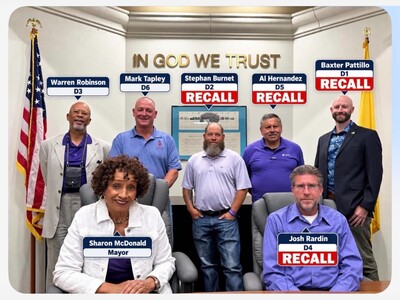

With a Smokey-Mayor, we prove, once again, White Is Right, and we ain't going away for some race bullying.
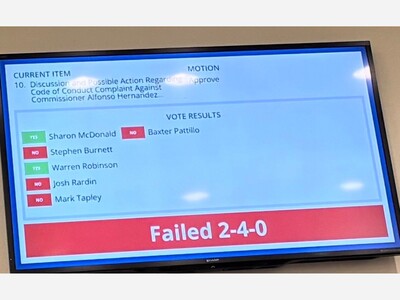
One more time, ATN gets it wrong. Now they have to find someone else besides Kim Night Owl Pampers to impeach the four commissioners ELECTED to run our city. Clearly, a landslide is coming, and the two rogue actors will be out.
and they'll be goosestepping right along - shades of ceausescu...

Light rain shower, with a high of 65 and low of 61 degrees. Light rain shower during the morning, moderate or heavy rain shower in the afternoon, light rain shower in the evening,
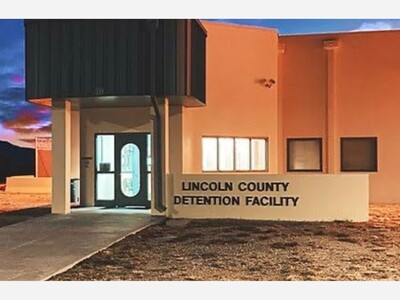
when jails and prisons are farmed out to operators who are in that business to turn a profit, it should come as no surprise when decisions are made that favor their profit over their legal requirements.




once again; complete transparency should be expected with any entity that enjoys status as a natural monopoly.
Absolutely
another opportunity to watch the voting block...


well stated, sir.
Thank you for the transparency this town deserves. Your due diligence is much appreciated. 🌿