
 45° and Clear


Image
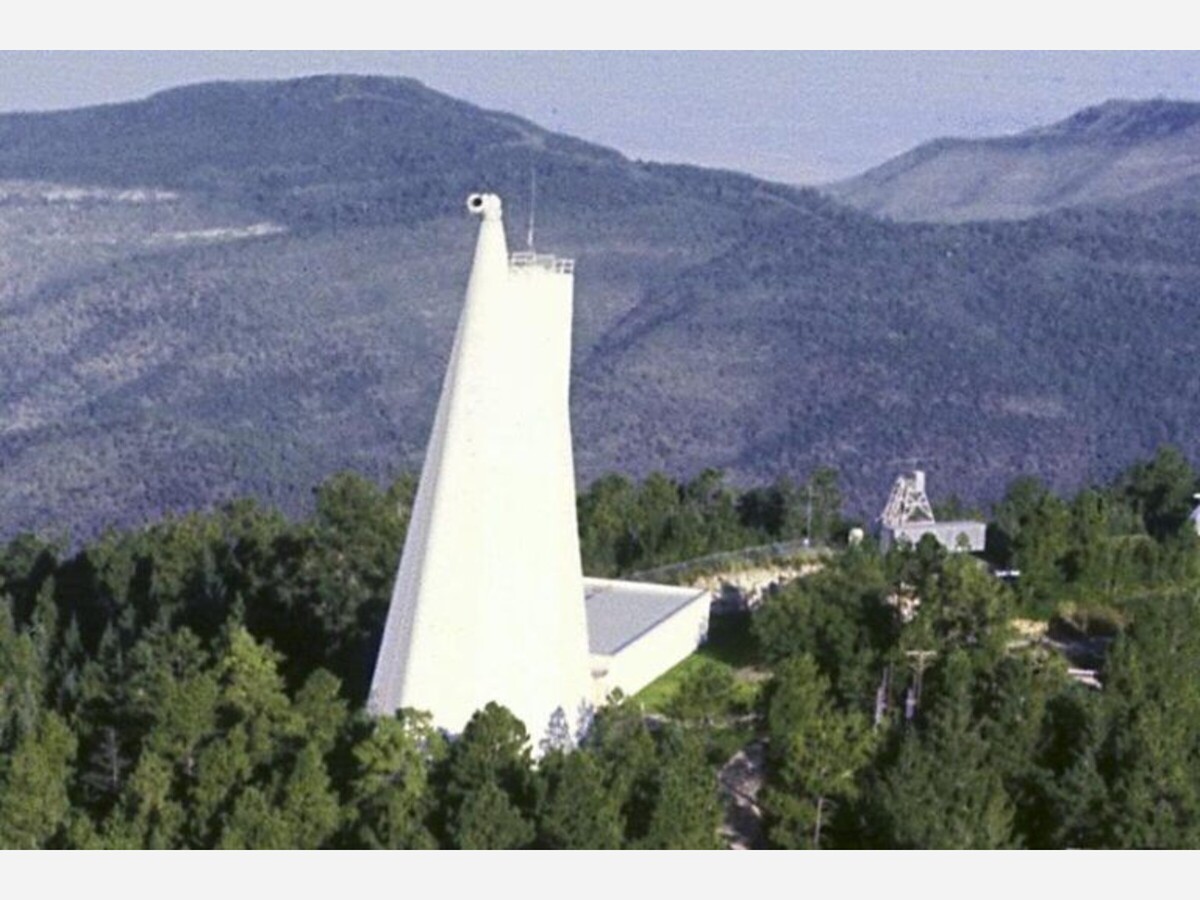
AlamogordoTownNews.org ATN Science Report by David Dooling: Why Use Mercury, a Toxic Liquid Metal, to Study the Sun?
Why use mercury, a toxic liquid metal, to study the Sun? The answer is at the heart of the Dunn Solar Telescope and Sunspot Solar Observatory.
Sunspot started as one of the first space weather forecast stations, established in 1947 by the U.S. Air Force after World War II showed how vulnerable radio communications were to solar events. Sunspot started with several small patrol telescopes.
But scientists needed to understand the fine details of how sunspots, prominences, and other features grew and erupted, or simply faded away. And that meant a telescope with a long focal length to produce sharp images of small regions on the Sun.
The focal plane in any camera or telescope is not really a plane. It’s actually a small section of an imaginary curve. Longer focal length gives a bigger curve and a “flatter” image that is sharp from edge to edge.
But a long focal length would heat the air between mirror and science instrument and create turbulence blurring the view. Put the telescope inside an evacuated tube? It would sag as it tilted to follow the Sun.
To solve that, Richard Dunn, Sunspot’s director in the 1960s, came up with an unusual solution: Hang the entire tube straight up and down. Top it with a heliostat, two mirrors that rotate and tilt to reflect the Sun’s image down to the primary mirror. It then focuses the image to science instruments halfway up the tube. Next, attach a 40-foot-wide circular platform that hosts several instruments and rotates to keep the image stable as the Sun crosses the sky.
This is where mercury comes into play. The entire telescope hangs from several bearings holding 13 tons of mercury. These make rotation so smooth that a person could stand with one foot on the main floor and one on the turntable and slowly rotate all 250 tons (half a million pounds!) of telescope. The mercury also served as the vacuum seal at the top of the telescope. Because mercury vapor is toxic, the bearing was sealed by silicone oil, and air inside the Dunn was always monitored.
The 4-meter Liquid Mirror Telescope that operated at the old observatory outside Cloudcroft used mercury as its primary mirror. Rotating its container like a centrifuge made the mercury slosh ever so gently towards the edges and form a curved mirror. This was not the case with the Dunn.
The Vacuum Tower Telescope, as it was then called, opened in 1969 and immediately became the world’s leading high-resolution solar telescope. A few years later a change in Air Force funding required closing Sunspot. The solar community rallied, the National Science Foundation took over in 1976, and Sunspot became the National Solar Observatory. Closure seemed likely in later years as newer telescopes — some inspired by the Dunn’s design — were built.
In the 1990s, engineers developed adaptive optics, or AO, which correct much of the distortion caused by the atmosphere. This let the Dunn observe much sharper than before. Advanced AO developed at the Dunn allowed design of the 4-meter (13-ft) Daniel K. Inouye Solar Telescope (DKIST) atop Haleakalā, Maui. An important feature in DKIST is a 50-ft turntable based on the Dunn.
The Dunn was no longer frontline, but still valuable. And it was aging. In January, the mercury bearing leaked. Although the Dunn could be upgraded to operate without rotating, the site’s age and budget pressures led the NSF to choose demolition and remediation. How ironic that one of the features that made it so valuable now is the cause of its demise.
To learn more about the Dunn’s role in solar physics, read Dunn Solar Telescope: A 50 Year Retrospective at the National Solar Observatory web site.
The author served as education officer at Sunspot during 2002–12 and, yes, he actually rotated the Dunn several times when doing public tours.

thank you for your insights - i have suspected that leaking mercury was at the basis for deciding to close the facility...and i imagine that the structural challenges of repair/replacement would be "astronomical".
still, it's sad to consider that it will be demolished.
Received that crime flyer in the mail today. Wow! Mudslinging V2.0 by the blockheads as usual.
Lacks proper education. Illegitimate kids, toxic relationships, social work survivor, homeless lady, owning a non-profit advocacy? Uh, you're supposed to get better, not run for office on that stuff. We won't vote for her because she's not qualified. Word of advice: SALAD, honey.

Sunny, with a high of 61 and low of 44 degrees. Sunny in the morning, clear during the afternoon and evening,



For those of the civilian public to understand. Every single Airman, marine, sailor and soldier whether Active duty or reserve or national guard has had explicit training on the UCMJ and illegal orders. This includes every “veteran for peace” It is political plain and simple.

Couple of people around Santa Fe have told me her highness has been sucking up hard to Ant to get on to a staff job when his pending doom curtain closes here. Queens never learn to really be honest. It's just in their realm of mental health. They live in denial and have pent up retentive r.e.c.t.u.m.s.
His money would have been better spent listing all of his accomplishments while in office. Oh, wait……
Voted twice against the low-income utility rate bill (HB 91) and sponsored the failed 2026 tax on renewable generation (HB 113) which the state confirmed would have further raised PNM rates. We know who has you in their pocket Block. Stop the **** lies!
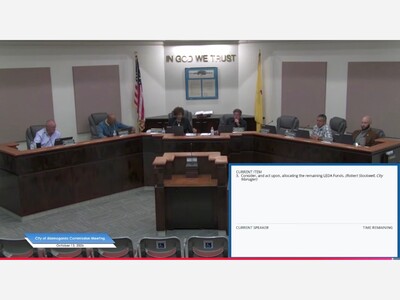
Million-nine for the bakery, million for a theatre scam. These uneducated skells pass out money to sheis for what? They're not even good ideas. 3 mil and they don't know? Why doesn't we hire out side auditor like the FBI?
All that tax money. Is it true that Brien Caesar bought a four hundred k condo in wyoming last year? Heard, it's near Jackson. Someone put that stuff through. No wonder they change managers so often. Once a deals's done you don't have to stick around in this burg anymore.

Is there any chance that the Forest Service will allow Sunspot to remain open, after the demolition is completed?