
 76° and Overcast



Image
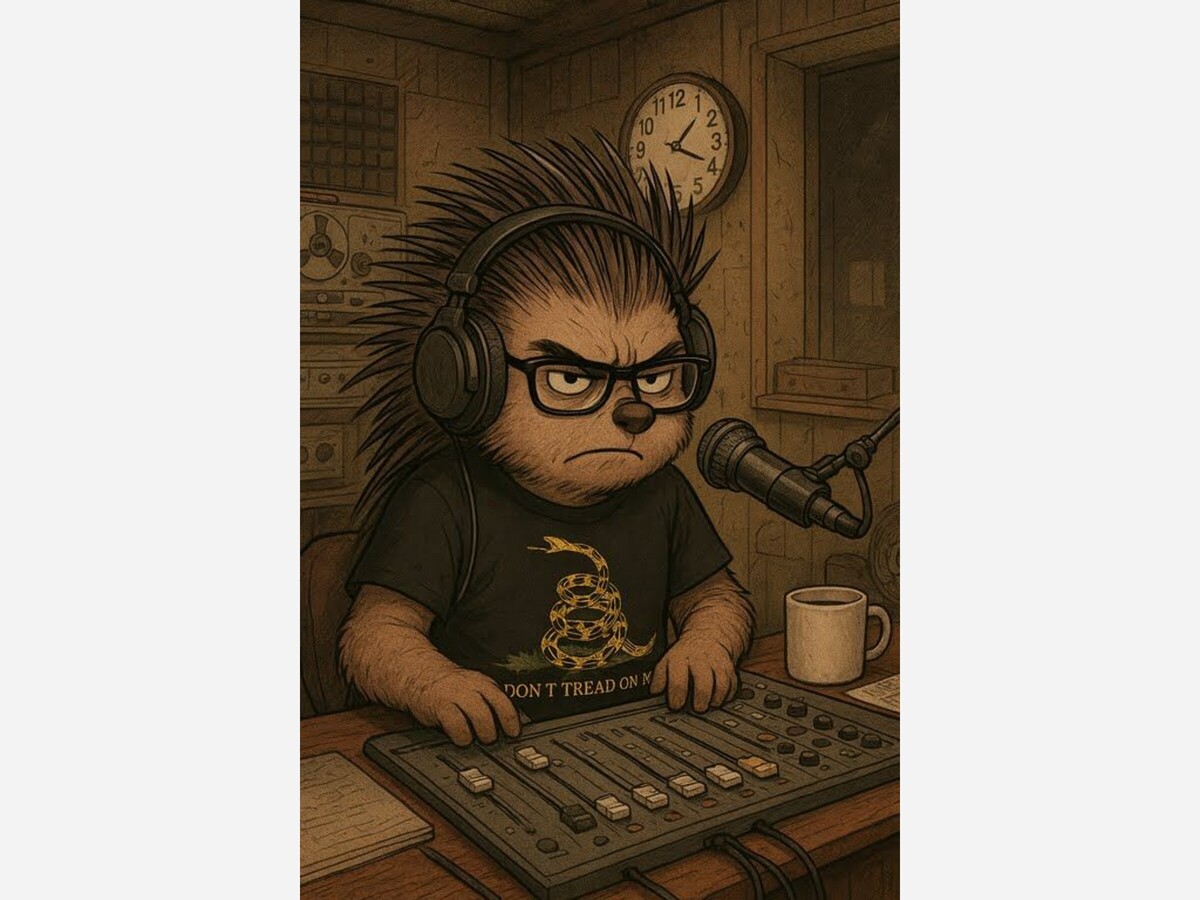
In the heart of the Tularosa Basin, Anthony Lucero has become one of the region’s most enduring and influential media figures—championing investigative journalism, civic accountability, and community storytelling through KALHRadio.org and affiliated platforms such as AlamogordoTownNews.org, and NewMexicoConservativeNew.com. At a time when many legacy media personalities are retiring or retreating from controversial topics, Lucero’s presence has grown more essential than ever.
Rural journalism across the United States faces mounting challenges: sharp declines in advertising revenue, widespread newspaper closures (with the U.S. losing nearly a third of its newspapers since 2005), consolidation by large chains, staffing shortages (journalist employment dropping over 75% in recent decades), and the emergence of "news deserts"—counties with little to no local reporting. In 2025, nearly 80% of news deserts were in predominantly rural counties, often poorer and less educated, such as Otero County and much of New Mexico, leaving millions without reliable information on local government, schools, and community events. These gaps contribute to reduced civic engagement, increased misinformation, declining trust in media, and weakened community cohesion, as residents turn to fragmented social media or national outlets that overlook hyperlocal issues.
This matters profoundly: Without sustained local oversight, public accountability erodes, corruption risks rise, voter participation declines, and communities lose the shared narratives that foster connection and informed decision-making. In rural areas like the Tularosa Basin, where broadband access can be limited and legacy outlets fade, the void is especially acute—making independent, persistent voices critical to democracy's health.
A major driver of Lucero’s expanding influence the last two years has been his partnership with written media 2nd Life Media brands. The news entities operate under a distinctive hybrid structure in which 2nd Life Media Inc., a New Mexico for‑profit corporation, owns and licenses the brands, domains, and trademarks—including AlamogordoTownNews.org, NewMexicoConservativeNews.com, the47thVoice.com, Block12.org, and Streaming KRAZY KALHRadio.org —to the Southwestern Trails Cultural Heritage Association (STCHA), a 501(c)(4). (STCHA), as a 501(c)(4) nonprofit manages the platforms in alignment with its mission of civic engagement, cultural heritage, and public‑interest journalism. This corporate‑nonprofit partnership preserves editorial independence, ensures long‑term brand stability, and provides a sustainable framework for investigative reporting in a rural market, offering a model increasingly studied by other communities seeking to rebuild local news ecosystems without relying on shrinking legacy outlets.
This collaboration has created a powerful hybrid ecosystem—radio broadcasts paired with digital print journalism—that amplifies stories, deepens investigations, and ensures that critical reporting reaches both local listeners and statewide readers. Lucero’s on-air interviews and exposés often evolve into Chris Edwards’ long-form articles, providing documentation, historical context, and citations that strengthen the factual foundation of KALH’s reporting. Together, they have built a unified voice for transparency in an era of shrinking local media.
Lucero’s reporting on Tularosa Municipal Schools stands as a defining example of this synergy. He conducted extensive coverage of staff turnover, administrative decisions, and actions by the previous superintendent, including allegations of censorship and concerns raised by parents, teachers, and students who were interviewed and aired. The district responded with a cease-and-desist letter accusing KALHRadio.org of harming its reputation, and sponsors were pressured via a series of letters mailed by the then superintendent. Lucero did not back down, and Edwards’ written reporting preserved the details, timelines, and community reactions.
The superintendent has since resigned, underscoring the long-term impact of the need for transparency and the 4th estate in rural communities. Through it all, Lucero has remained a steadfast voice for the people of the Tularosa Basin, prioritizing transparency and public interest.
Lucero’s influence extends beyond education reporting. In 2025 and into 2026, he solidified his role as a high-profile interrogator of political leaders, blending investigative depth with independent-leaning commentary. During the November 2025 municipal elections in Alamogordo, his probing interviews with mayoral candidates—including Richard Cota—spotlighted questions about temperament, potential conflicts of interest involving family members in city government, and unresolved policy positions. His coverage fueled public debate and intensified voter engagement.
Statewide, KALHRadio.ord became a required stop for New Mexico gubernatorial hopefuls. Lucero challenged Ken Miyagishima on his “tough-on-crime” platform—coining the “Blue Dog Democrat” label that Miyagishima later embraced on air—while also hosting exclusives with candidates such as Gregg Hull and Belinda Robertson and others. His interviews gave Otero County voters direct access to diverse viewpoints and elevated the region’s political relevance.
Lucero has alsojoined in a variety of investigative series, The Quiet Coup, which examines alleged efforts by Alamogordo’s “old guard” to reclaim influence after the 2025 elections and critiques of the “Alamogordo Syndicate”legacy media and insider political elites.
His audience’s loyalty has repeatedly shaped the local media landscape. In 2021, after commentary on the Couy Griffin recall led to a brief suspension from KALHRadio.org, public backlash—through calls, messages, and demands—resulted in his swift reinstatement. The episode demonstrated the power of community support and the central role Lucero plays in local discourse.
Lucero’s credibility is reinforced by significant recognition, including being named the 2022 New Mexico Farm and Livestock Bureau Media Person of the Year for his rural and agricultural reporting. His work with USA Radio News which has expanded his reach to a national audience across hundreds of stations, amplifying his voice far beyond the Tularosa Basin.
A Hybrid Media Blueprint for Rural America
How the Lucero–Edwards Model Is Redefining Local Journalism
Across the United States, rural communities are grappling with shrinking newsrooms, retiring legacy broadcasters, and a widening gap in civic information. The partnership between Anthony Lucero’s KALHRadio.org and Chris Edwards’ online print network has emerged as a compelling model for how small markets can rebuild a resilient, modern local-news ecosystem.
Why This Model Works
• Cross-Platform Reinforcement — Radio delivers immediacy; digital print delivers permanence. By pairing Lucero’s live interviews and breaking coverage with Edwards’ long-form reporting, the partnership ensures stories reach audiences in multiple formats and remain accessible long after the broadcast ends.
• Community-Driven Accountability — Rural governments often operate with limited scrutiny. This hybrid model creates sustained oversight: Lucero asks the hard questions on air, while Edwards documents the facts, timelines, and public records that give investigations staying power.
• Scalability for Small Markets — The model doesn’t require a large newsroom. It relies on collaboration, shared mission, and complementary strengths—making it replicable for rural towns with limited budgets but strong civic needs.
• A Counterweight to Media Decline — As newspapers both print and online shutter and radio hosts retire, rural communities risk losing their watchdogs. The Lucero–Edwards partnership fills that void with a consistent, independent voices that refuse to shy away from controversy or corporate out of area ownership directives.
• Local Roots, National Reach — Lucero’s syndication through USA Radio News and Edwards’ statewide digital footprint demonstrate how rural journalism can punch above its weight. Local stories gain regional and national visibility, elevating issues that might otherwise be ignored.
A Template for the Future:
The Tularosa Basin’s hybrid media ecosystem shows that rural journalism doesn’t have to fade. With strategic collaboration, cross-platform storytelling, and a commitment to accountability, small communities can build a modern, resilient press that informs, empowers, and protects the public.
The Lucero Factor: In the face of an unrelenting storm battering local journalism—legal threats, sponsor pressure, political pushback, and the quiet disappearance of so many traditional print and online outlets—Anthony Lucero stands firm. He does not merely report the news; he defends the very possibility of it continuing in small-town America.
Every broadcast, every interview, every preserved timeline is an act of quiet defiance against erasure. His partnerships in media both nationally and locally have forged a lifeline: radio’s immediacy fused with digital permanence, creating a hybrid force greater than the sum of its parts. Together they have shown that rural communities do not have to accept silence. They can fight back with persistence, collaboration, and unapologetic truth-telling.
Lucero’s story is larger than one station or one basin. It is proof that when legacy voices fade and corporate consolidation tightens its grip, a single committed broadcaster—supported by loyal listeners, strategic allies, and an ironclad belief in accountability—can still keep the public square alive. His voice reaches not only across the Tularosa Basin but into homes tuned to USA Radio News stations nationwide, reminding a broader audience that local journalism is not a relic; it is a frontline necessity.
As long as Anthony Lucero refuses to look away, the people of Alamogordo, Tularosa, Cloudcroft, La Luz and beyond will never be left in the dark.
In an age when so many lights are going out, and so many insiders attempt toshut the spotlight of transparency to darkness, his signal burns brighter than ever—a beacon of resilience, a call to civic courage, and living evidence that one determined voice, amplified by community trust and innovative partnerships, can still protect democracy where it matters most: right here, at home.

Sources
The State of Local News 2025 Report, Medill Local News Initiative, Northwestern University (localnewsinitiative.northwestern.edu/projects/state-of-local-news/2025/report)
"Rural Journalism at Risk," Center for Media at Risk (ascmediarisk.org/takeaways/rural-journalism-at-risk)
"Dozens of rural newspapers shut down in latest disappearance of local journalism," PBS NewsHour (pbs.org/newshour/show/dozens-of-rural-newspapers-shut-down-in-latest-disappearance-of-local-journalism)
"Reasons for the Decline of Local Newspapers," Close Up Foundation (closeup.org/the-decline-of-local-newspapers)
"Local Journalism Collapse Deeper Than Previously Known," PRsay / Muck Rack and Rebuild Local News (prsay.prsa.org/2025/07/17/local-journalism-collapse-deeper-than-previously-known-study-suggests)

Cloudy, with a high of 89 and low of 73 degrees. Overcast for the morning, sunny during the afternoon, cloudy overnight.

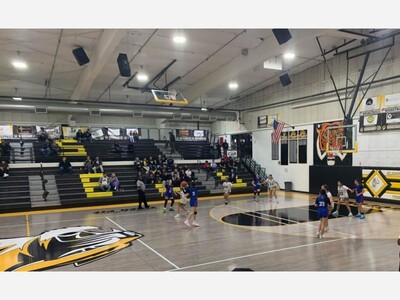







So, 1 down 3 to go. Keep slinging until the doodoo sticks?