Image
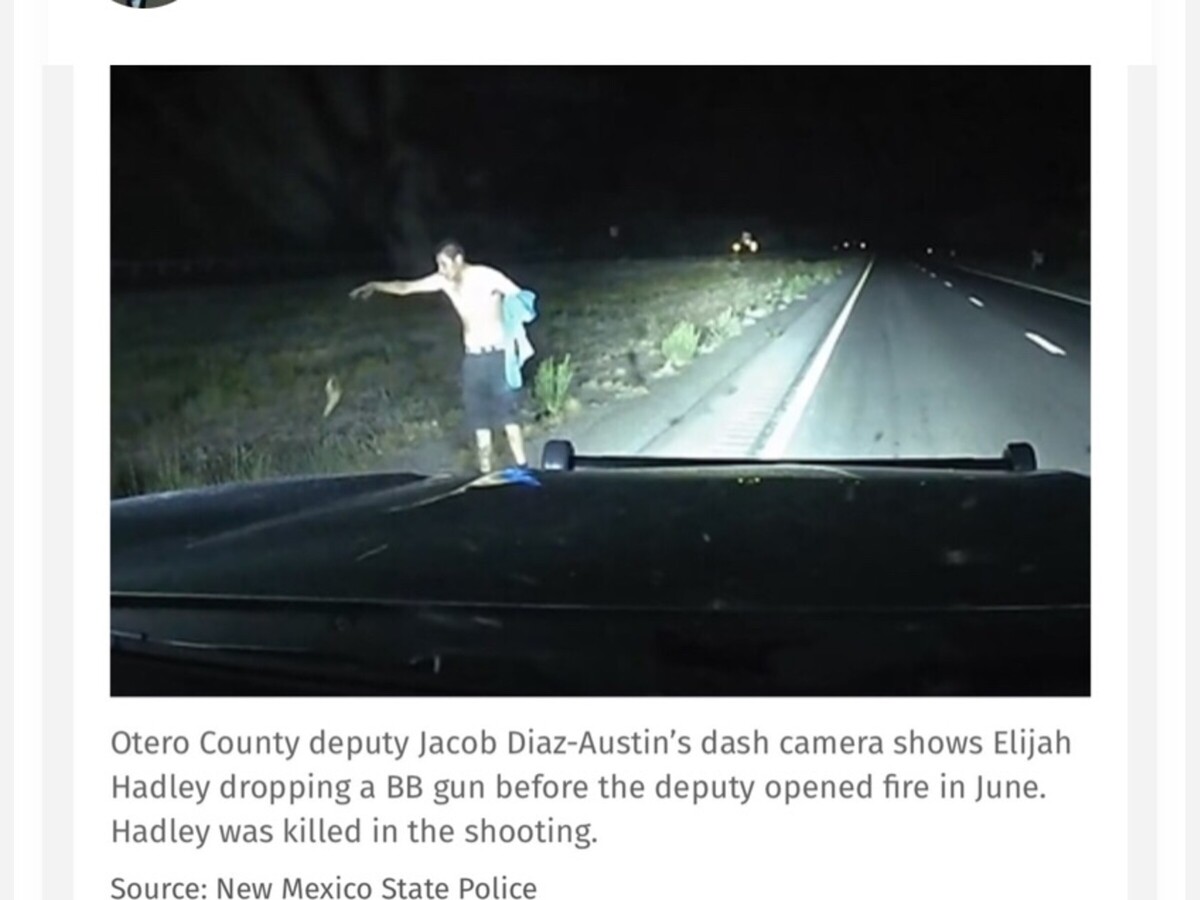



Alamogordo, NM – January 8, 2026 – The Twelfth Judicial District Court has confirmed a key Motion Hearing in the high-profile first-degree murder case against former Otero County Sheriff’s Deputy Jacob Diaz-Austin, scheduled for January 16, 2026, at 4:00 PM before Judge Angie K. Schneider. This follows recent docket updates and builds on pretrial developments reported earlier this week by 2nd Life Media Alamogordo Town News.
As detailed in 2nd Life Media’s January 5 coverage of recent pretrial motions – including disputes over toxicology evidence, replica firearms, and potential testimony from Diaz-Austin himself – analysts noted rulings appearing to favor the prosecution. The upcoming hearing is anticipated to tie up remaining loose ends ahead of the jury trial set for March 16, 2026, at 8:30 AM, with a pretrial conference/docket call on March 12.
Key issues expected on the January 16 agenda include:
• Potential rulings on the prosecution’s Daubert motions challenging the reliability and admissibility of defense expert witnesses, often used in use-of-force cases to scrutinize scientific or technical testimony.
• Resolution of disputes surrounding a newly disclosed defense witness added December 31, 2025, which was flagged in prior hearings.
• A defense motion to exclude certain hearsay statements.
The case stems from the June 25, 2024, fatal shooting of 17-year-old Elijah Hadley, a member of the Mescalero Apache Tribe, along U.S. Highway 70. Prosecutors allege Diaz-Austin committed willful and deliberate first-degree murder; the defense has maintained claims of self-defense
What is a Daubert Motion?
A Daubert motion is a pretrial legal motion filed by one party (prosecution or defense) to exclude or limit the testimony of an opposing party’s expert witness. It challenges whether the expert’s opinions are reliable and relevant enough to be presented to the jury.
The name comes from the 1993 U.S. Supreme Court case Daubert v. Merrell Dow Pharmaceuticals, Inc., which established a new standard for admitting expert testimony in federal courts. This standard replaced the older “Frye” test (general acceptance in the field) with a more flexible approach focused on scientific validity.
Many states, including New Mexico (where this case is being heard), have adopted the Daubert standard or a similar one for both civil and criminal cases.
Why File a Daubert Motion?
Expert witnesses often provide key opinions in trials—such as on ballistics, use of force, forensics, psychology, accident reconstruction, or medical issues. A Daubert motion argues that the expert’s testimony is “junk science” or unreliable, and allowing it would unfairly influence the jury.
In criminal cases like murder trials involving law enforcement, common Daubert challenges include:
• Defense experts on police use of force (arguing the shooting was reasonable).
• Prosecution experts on forensic evidence (e.g., trajectory analysis or blood spatter).
• Any specialized testimony that goes beyond common knowledge.
In your mentioned case, the prosecution plans to file Daubert motions to challenge certain defense witnesses, likely experts supporting a self-defense claim or critiquing the state’s evidence.
The Daubert Standard: Key Factors
The judge acts as a “gatekeeper” under Federal Rule of Evidence 702 (or state equivalents) to ensure expert testimony is:
1. Relevant: It must “fit” the case and help the jury decide a key fact.
2. Reliable: Based on sufficient facts/data, reliable principles/methods, and reliably applied.
The Supreme Court provided a non-exclusive list of factors to assess reliability:
• Whether the theory/method can be (and has been) tested.
• Whether it has been subjected to peer review and publication.
• The known or potential error rate.
• Existence of standards controlling the technique’s operation.
• General acceptance in the relevant scientific community (still considered, but not decisive).
Later cases (General Electric Co. v. Joiner and Kumho Tire Co. v. Carmichael) expanded this to all expert testimony (not just scientific—includes technical or experienced-based expertise).
The Process: Daubert Hearing
1. A party files the motion, detailing why the expert fails the standard (e.g., flawed methodology, lack of qualifications).
2. The judge may hold a Daubert hearing (separate from trial) where:
• The expert testifies.
• Both sides question them.
• Evidence (reports, studies) is presented.
3. The judge rules: Admit fully, limit parts, or exclude entirely.
4. This often happens in pretrial motion hearings—like the upcoming January 16, 2026, at 4:00 PM hearing in this case.
Excluding an expert can significantly impact a case, as it removes critical support for one side’s arguments.
In summary, Daubert motions help ensure only sound expert evidence reaches the jury, promoting fairness. In high-stakes cases like this one, they’re a common tool for both sides to shape the trial narrative.
Amid ongoing proceedings, tensions outside the courtroom persist
Family members and supporters have alleged harassment, including reports that Native Americans attending hearings were required to remove cultural jewelry and items identifying them as Mescalero Apache. Tribal members have further claimed intimidation tactics by Otero County Sheriff’s Department personnel during courthouse entry screening. The Sheriff’s Office has denied these allegations, stating that standard security protocols are applied uniformly and without bias.
These concerns echo earlier reports from mid-2025, when the Hadley family cited similar intimidation in a motion requesting a venue change, highlighting perceived challenges to a fair trial in Otero County.
Community advocates continue to call for transparency and accountability, urging public attendance at hearings – likely via Google Meet for remote access, as in previous sessions – to monitor proceedings.
The jury trial remains on track for March, with additional pretrial dates including a plea hearing/docket call on February 16, 2026.
This update draws from New Mexico court records, prior 2nd Life Media reporting (including January 5-6, 2026, articles on pretrial rulings), and regional coverage. Developments will be monitored closely as the case approaches trial.

another well written and useful explanation of the technical aspects that will govern this highly contentious trial. while suits alleging use of excessive force have become more common....in my eyes, this particular case combines several fairly unique aspects.
again, my thanks for keeping the public informed.



Sunny, with a high of 105 and low of 76 degrees. Sunny in the morning, clear in the afternoon and evening,





Congrats to SHERIFF YAZZA!
Thanks for being on top of this, in light of all the other problems at the County: namely the state auditors findings and Project Jupiter. Both are indicative to me that a new County Manager won't resolve the long-term tightly woven ball of problems this county has, including the Commissioners themselves. I've got