66° and Overcast
Image




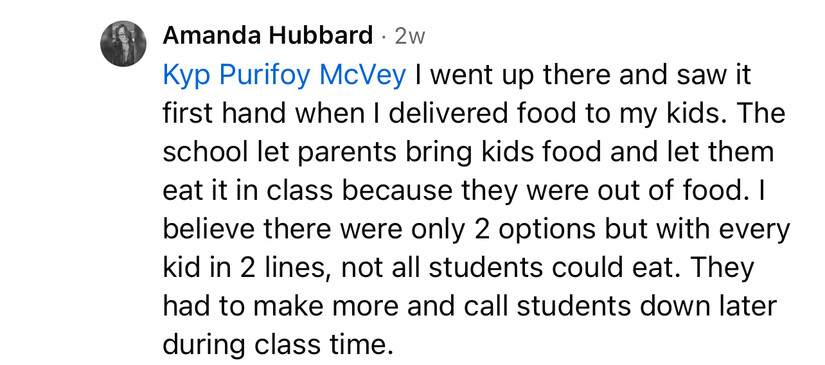
ALAMOGORDO, N.M. — What began as a minor cafeteria disruption at Alamogordo High School the week before Thanksgiving was not considered newsworthy by the AlamogordoTownNews.org editorial board. The incident, in which some students were delayed in receiving meals and others claimed they were unable to eat when popular food stations ran out, was addressed quickly by staff and explained to families in a letter.


The matter might have ended there. Journalist Chris Edwards made a brief personal remark on social media — “This did not happen when Judy Rabon was president” — but no formal news story was published.
It was APS School Board Member Shannan T. Wright who escalated the issue. By forwarding internal emails to Edwards’ non-media employer, Wright violated a cease-and-desist directive that had instructed APS officials to address Edwards only through his professional media contact at ChrisEdwards@KALHRadio.org. Wright’s use of a private server to conduct school board business further raises questions about transparency and ethics.
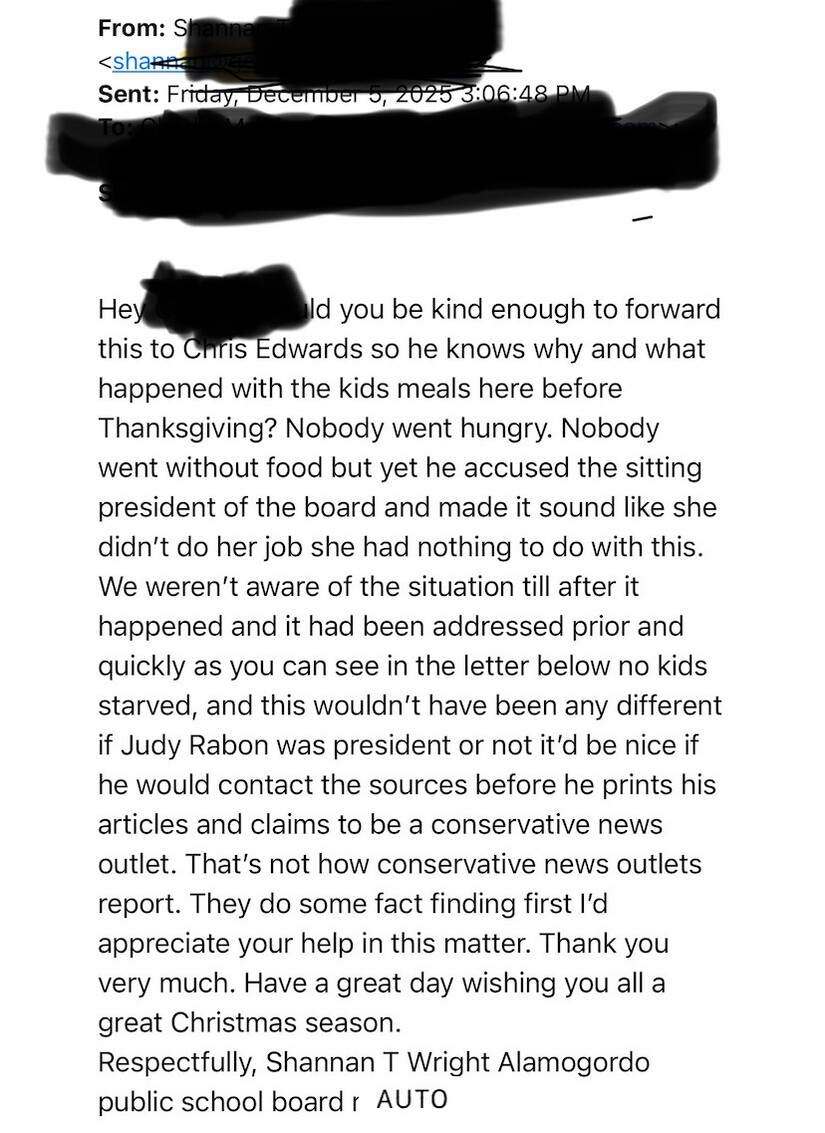
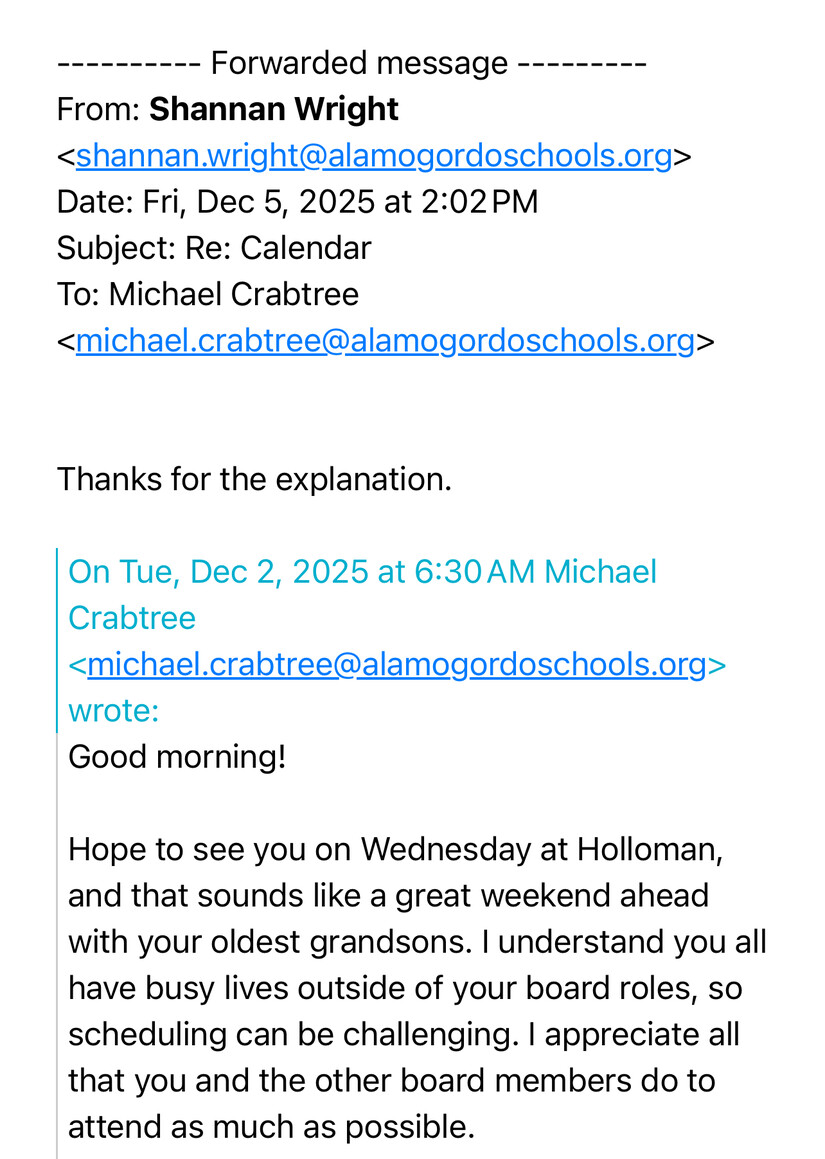
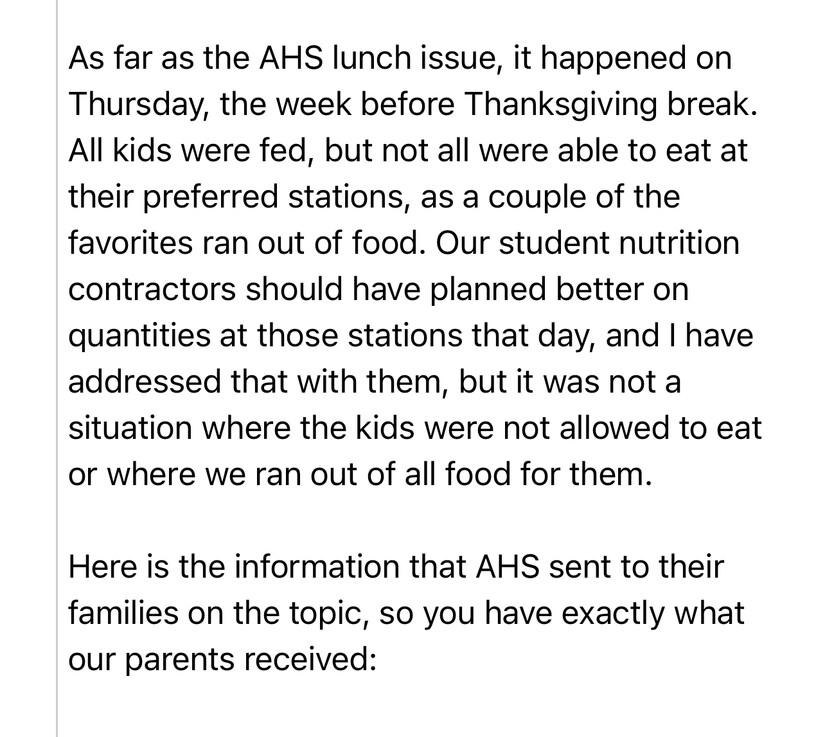


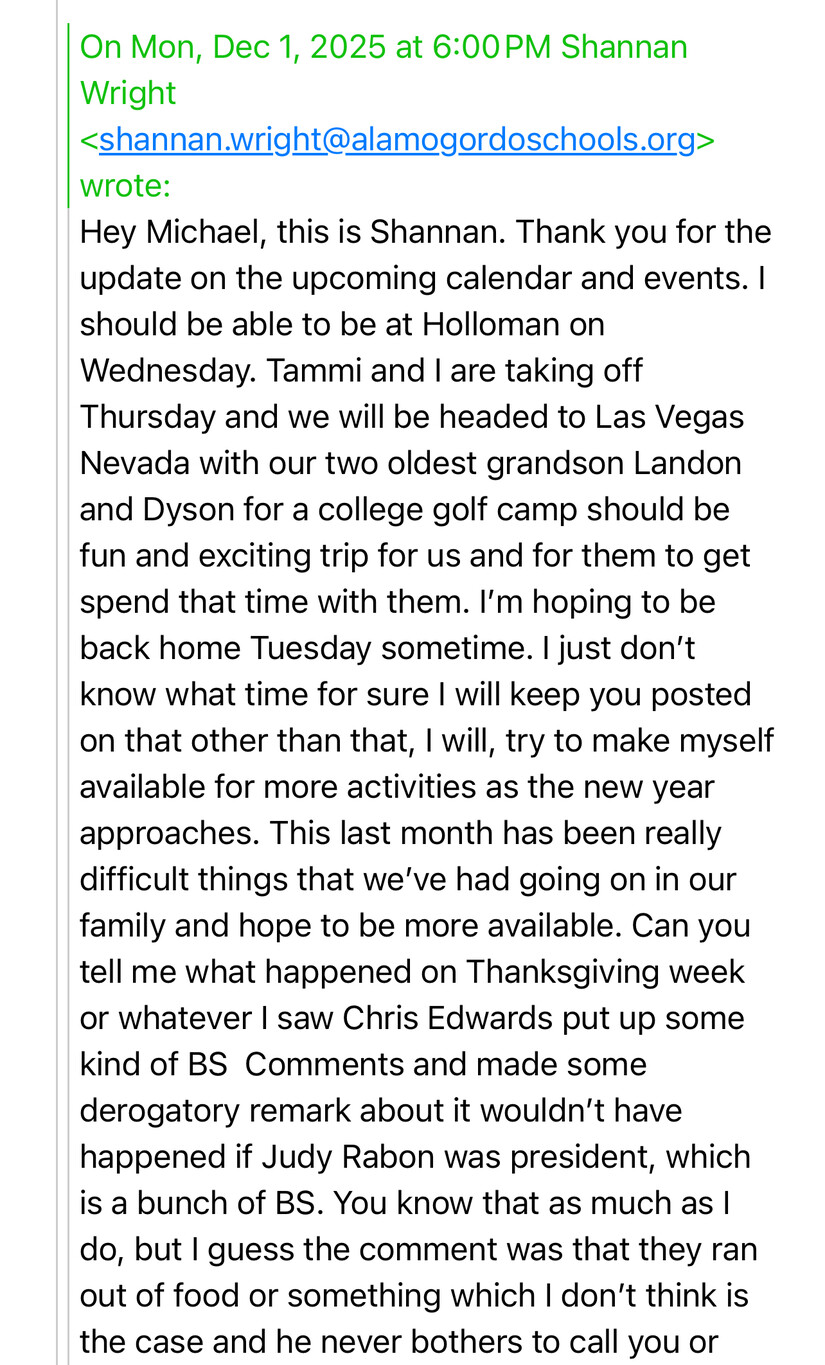

In effect, Wright’s actions transformed a non-story into a controversy. Instead of focusing on the operational hiccup already resolved by APS staff, the spotlight shifts to governance: the conduct of a sitting board member, the boundaries of ethical communication, and the responsibilities of public officials to respect directives and maintain transparency.
This episode also underscores the role of the press — and the unique position of 2nd Life Media AlamogordoTownNews.org, NewMexicoConservativeNews.com, and KALHRadio.org. These platforms operate under the Southwestern Trails Cultural Heritage Association, a registered 501(c)(4) social-welfare nonprofit. Unlike traditional 501(c)(3) charities, a 501(c)(4) may engage in unlimited issue advocacy and limited candidate-related speech, provided such activity does not exceed 49.5% of its operations.
That distinction matters. As a press organization, the entity is committed to civic accountability, transparency, and community betterment. As a 501(c)(4), it is also empowered to challenge entrenched political structures and expose ethical lapses — even when those lapses involve sitting officials.
The numbers tell the story: across thousands of published pieces, 30% of coverage has focused on public schools, most highlighting student athletics, teacher successes, nutrition programs success. and positive outcomes. Only 2% has focused on school board activities, transparency, and accountability. Yet it is precisely in those rare moments — when governance and ethics collide — that the press fulfills its watchdog role.
The question now is not whether students ate lunch that day. Most did. The question is whether Alamogordo’s school board leadership is upholding the standards of transparency, accountability, and ethical conduct expected of public servants. And whether the press, operating within its rights as a 501(c)(4), will continue to shine a light on those moments when power and responsibility fall out of balance- it will!

Chris, let me see if I understand this.
1.you raised a question in your capacity as a news official.
2. An APS school official used a private email to contact your non news employer.
Thats par for the course in this town.
Too bad she didn't start her whining with “posting as a private citizen”…
Thank you for bringing this up. Too many “people in power” act like the quickest way to silence you is by doing something like that or attempting to shame or embarrass in a public forum. Keep the good work up and continue to shine the light where the roaches hide!
It’s not a she it was Mr Shannon T Wright


Overcast, with a high of 79 and low of 61 degrees. Overcast in the morning,
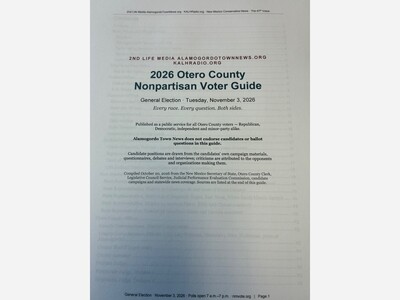
an impressive guide, that shows the balance needed to be fair to all.


He did the same thing when he ran against Rachel. He's a pathological liar who just keeps proving it over and over.
he senses trouble....and i smell blood - time to send him to private sector employment - maybe his oil & gas friends can find something for him to do.
Lets ask the editor.
sir, are you not involved in the campaign?
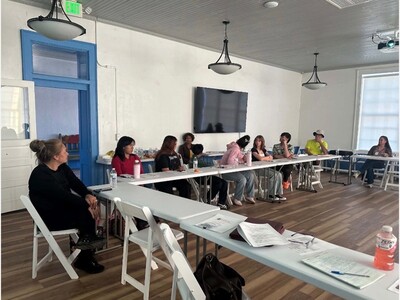
there is our future, kudos to both the students and the organizers.
Sounds overblown by the reporting of this party. On base we have something like this, but it's training leaders. Pic is a few kids with some volunteers who act to shape their opinions. If the schools were good enough the kids would learns this in a classroom.
Glad to hear that the base has a youth group. Now kids in Alamo, with no way to join that group, can also have a group where they can openly discuss their concerns, experiences, and work together to present solutions.
and, no, a PhD didn’t come up with this program. A very smart, educated woman suggested it.
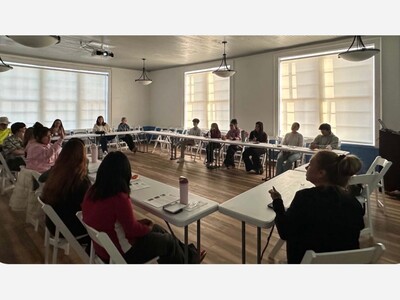

the problems facing the republican party of new mexico pale in comparison with those of their national party - as the old saying - Meaning: Problems in an organization or society start at the top, with its leaders.
The fish rots from the head down
True. A prime example of this was the DNC failures in the 2020 election.
I have voted Republican in the past, but not this time. Our church group knows a few people who have tried to run or get involved and the old school fools won't let anyone they don't know get in at all. You can't solve any problem with the same people who created it. That's why we have terrible doctors here.