80° and Overcast

When Procedure Becomes Power: Questions Raised by Amy Barela’s Agenda Maneuver By Gary Person


By Gary Person
At the May 20, 2026 meeting of the Otero County Commission, a routine operational item involving the Sheriff’s Office became the center of a highly unusual procedural dispute.
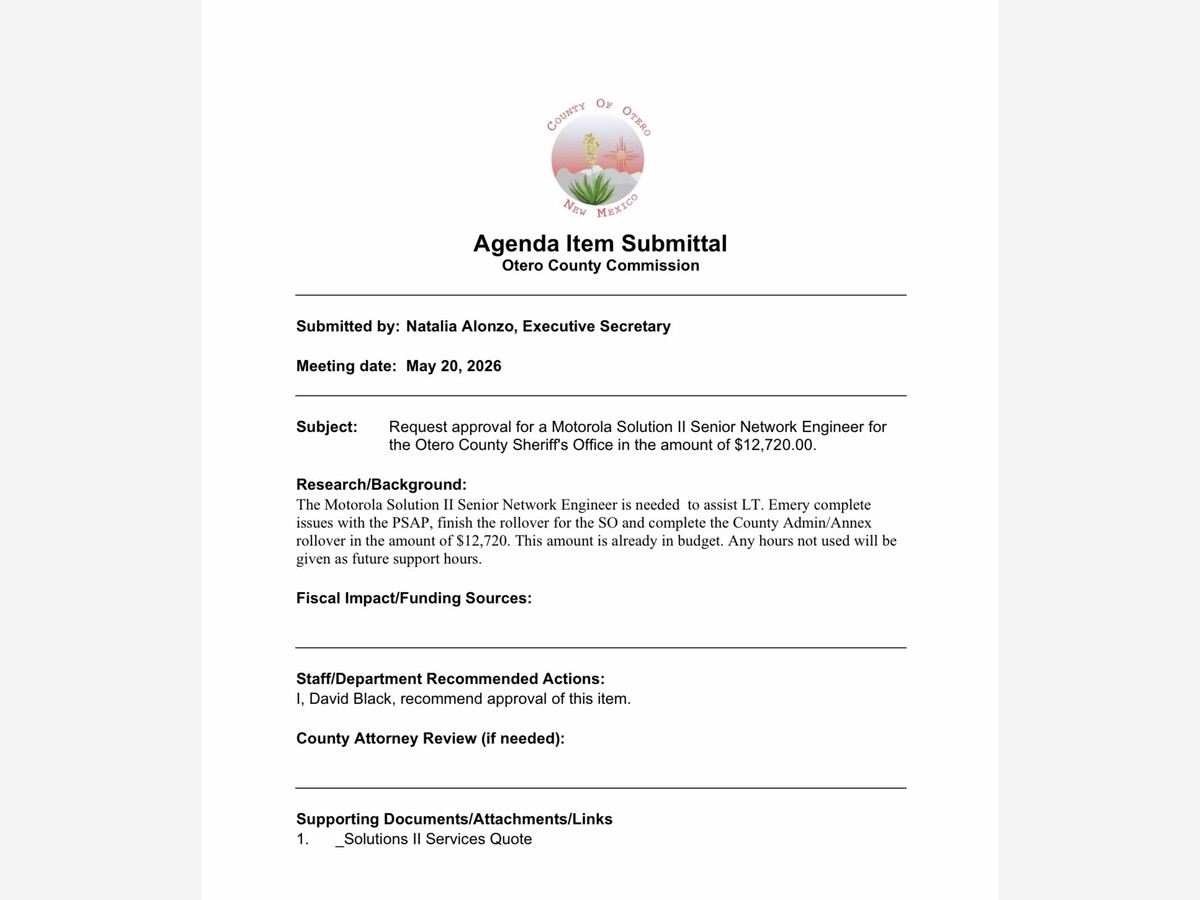
At timestamp 34:56, during discussion of the Consent Agenda, Commissioner Amy Barela moved Item 18 out of the Consent Agenda and into New Business. The item involved approval of a $12,720 Motorola Solutions II Senior Network Engineer request for the Sheriff’s Office. The meeting can be viewed here: https://www.youtube.com/watch?v=R6WxtBWrCp4&authuser=0
The official agenda identified the matter as a consent item:
“CA18 Request approval for a Motorola Solution II Senior Network Engineer for the Otero County Sheriff's Office in the amount of $12,720.00.”
The supporting agenda packet described the request as operational and already budgeted. According to the submission:
“The Motorola Solution II Senior Network Engineer is needed to assist LT. Emery completed issues with the PSAP, finished the rollover for the SO and completed the County Admin/Annex rollover in the amount of $12,720. This amount is already in the budget.”
The accompanying Motorola Solutions quote further confirms the request involved professional network support hours and project management services connected to the county’s communications and rollover systems.
The political context surrounding the item is difficult to ignore. Lt. Jonathan Emery is Commissioner Barela’s opponent in the Otero County Commission District 2 race.
That fact alone does not establish wrongdoing. Commissioners unquestionably possess the procedural authority to remove items from a consent agenda for separate discussion. However, elected officials are also expected to avoid circumstances that create the appearance that governmental authority is being exercised for political advantage rather than legitimate public purpose.
The appearance concerns intensified during the subsequent discussion of Item 18.
At timestamp 41:48, the Commission moved onto the item.
At 42:48, Vice Chairman Gerald Matherly raised concerns regarding available time.
At 42:52, Lt. Emery Stated "it's not going to get done"
That statement is significant because it reasonably creates the appearance that the outcome — delaying or preventing completion of the item — may have been anticipated before substantive discussion occurred.
Consent agendas exist specifically to streamline approval of routine, noncontroversial, budgeted administrative matters. Removing an item from consent is entirely appropriate when a commissioner identifies unresolved fiscal concerns, legal concerns, public policy concerns, or material questions requiring deliberation.
However, when a routine operational item tied to emergency communications infrastructure is removed from consent and subsequently characterized as “not going to get done,” reasonable members of the public may question whether the procedural maneuver was motivated by legitimate governmental concerns or by political considerations connected to the commissioner’s electoral opponent.
Importantly, the underlying request did not involve speculative spending or a new unbudgeted initiative. The documentation expressly stated the funds were already budgeted and that the services were necessary to address PSAP issues and complete sheriff’s office and county rollover operations.
This matters because PSAP-related systems directly affect public safety communications infrastructure. Delays involving emergency communications projects are not merely political abstractions; they can affect operational continuity and governmental readiness.
The core issue is therefore not whether Commissioner Barela possessed the authority to remove the item from the Consent Agenda. She clearly did.
The issue is whether the circumstances surrounding the action create a reasonable appearance that governmental procedure was used in a manner influenced by political rivalry.
Public trust in government depends not only on compliance with procedural rules, but also on confidence that those rules are exercised impartially, consistently, and in furtherance of legitimate public interests rather than personal or political disputes.
When elected officials take actions affecting matters connected to their own political opponents, heightened scrutiny is inevitable. And when those actions are accompanied by statements such as “it’s not going to get done,” the public is left to determine whether the process reflected ordinary oversight — or something more political in nature.