Image
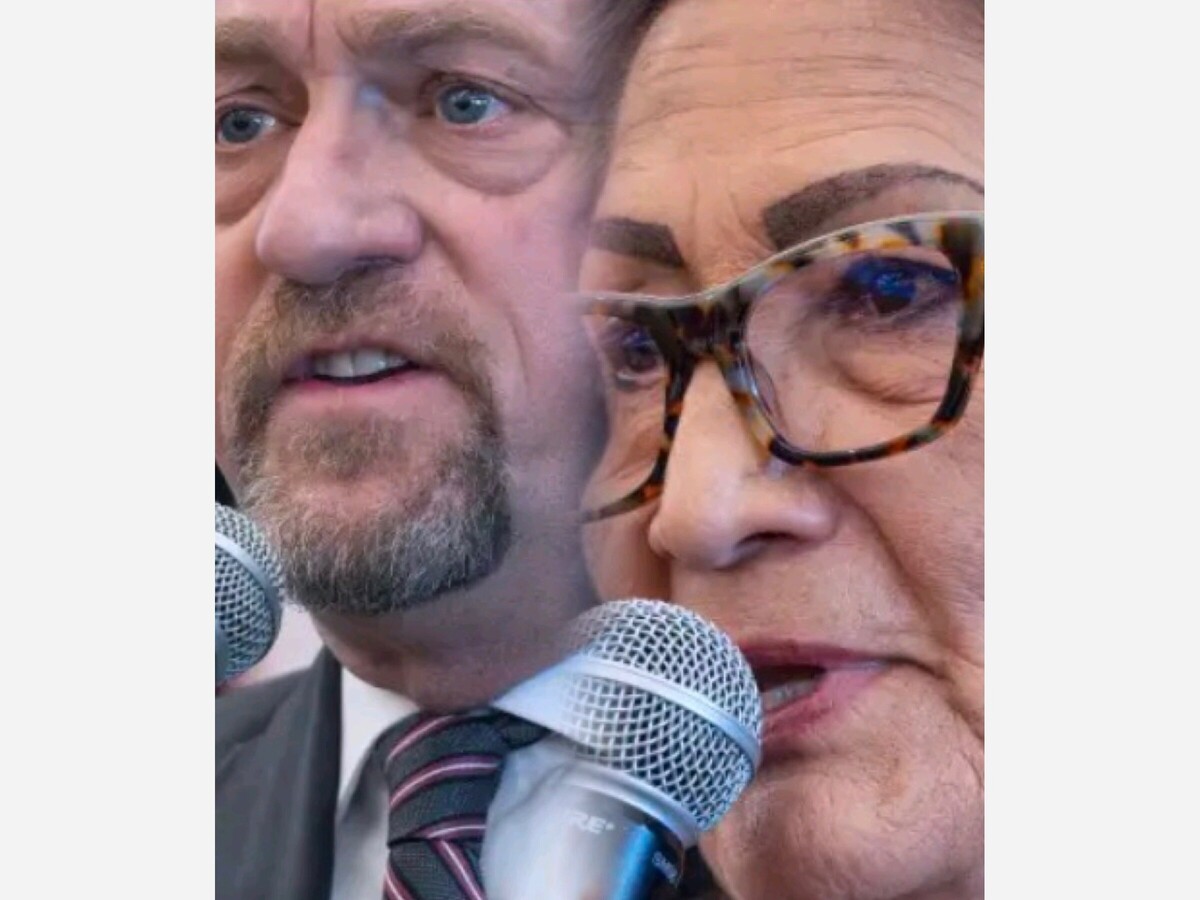
Civility Reigns as Haaland and Hull Trade Visions — Not Barbs — at Albuquerque Forum - AlamogordoTownNews.org



ALBUQUERQUE, N.M. — With roughly 70 days until New Mexicans choose their next governor, Democrat Deb Haaland and Republican Gregg Hull shared a stage Tuesday at the Albuquerque Convention Center for their first major joint appearance since the June primaries — and delivered something increasingly rare in American politics: an hour of policy talk without a single personal attack.
The luncheon forum, hosted by the New Mexico chapter of the Commercial Real Estate Development Association (CREDA) and moderated by KRQE-TV anchor Jessica Garate, drew an estimated 600 attendees, many from the state’s commercial real estate and business community. Because the event was structured as a forum rather than a debate, neither candidate had the chance to rebut the other — a format both seemed content to honor, shaking hands and sharing a lighthearted moment afterward.
What Each Candidate Pitched
Hull leaned into taxes and crime. The former Rio Rancho mayor earned his biggest applause of the afternoon when he renewed his call to eliminate New Mexico’s personal income tax and rework the gross receipts tax system. He cast himself as a consensus-builder focused on growth and economic competitiveness, and took a subtle dig at Albuquerque’s crime problem by noting that locked retail display cases are far more common there than in neighboring Rio Rancho — arguing communities must enforce existing laws more aggressively. He also backed additional state spending on water infrastructure, pointing to declared water emergencies in Angel Fire and other drought-stricken communities.
Haaland centered affordability. The former congresswoman and U.S. Interior secretary returned repeatedly to the cost-of-living squeeze, invoking her own past reliance on food stamps. Her most concrete proposal: partnering with the State Land Office to build affordable housing on state trust land, potentially funded by tapping New Mexico’s permanent funds — which were recently valued above $75 billion, ranking among the world’s 30 largest sovereign wealth portfolios. She also promoted geothermal energy development and broader renewable expansion, and pledged continued financial relief for residents facing high gas and grocery prices.
According to KOB 4’s coverage, the candidates received topic areas but not the questions in advance, answers were timed, and both fielded a question on bipartisan cooperation — each pointing to their résumés, Haaland as a former member of Congress and cabinet secretary, Hull as a business owner and Rio Rancho’s longest-serving mayor. The Santa Fe New Mexican noted the questions ranged widely, from crime to weaning the state off oil and gas revenue, and observed that the candidates didn’t always answer directly.
Alamogordo Town News Analysis: Who Came Out Ahead?
On substance, edge to Hull — for this room. Speaking to a commercial real estate audience, Hull’s message was tailor-made: tax elimination, faster development, tougher crime enforcement, and “embracing growth.” His applause line on the income tax suggests he read the audience well. For a candidate trailing badly in money and name recognition, a strong showing before business leaders — a constituency that can write checks — was exactly what he needed.
On strategy, edge to Haaland. As the perceived frontrunner with a massive financial advantage — more than $13.8 million raised through July versus Hull’s roughly $945,000 — Haaland’s job Tuesday was simply to avoid mistakes, and she did. Her housing-on-trust-land proposal gave her a concrete, memorable policy plank, and her willingness to discuss tapping the permanent funds was arguably the boldest idea floated all afternoon, though it invites scrutiny from fiscal conservatives who guard those funds closely.
The verdict: Call it a narrow win for Hull on performance — he needed a breakout moment more and connected with the room in front of him — but a strategic win for Haaland, who protected her frontrunner status without giving her opponent an opening. The civil, no-rebuttal format ultimately favored the candidate with the lead, and nothing that happened Tuesday appears likely to reshape the race’s fundamentals: Haaland’s fundraising dominance and the state’s Democratic lean.
The two will meet again under sharper conditions in a televised debate scheduled for mid-October on KOB-TV. Early voting begins Oct. 6; Election Day is Nov. 3.

wow, you mean that two opposing party candidates spoke at length without making insulting racist/sexist/cultural remarks? nothing like - they're eating the dogs and cats? simply amazing....


Patchy rain nearby, with a high of 75 and low of 57 degrees. Patchy rain nearby in the morning,


Love your shop in Las Cruces! Haven’t been to the one here in Alamo yet.
Hi Troy,
What do you think of the manga Jaadugar: A Witch's Life in Mongol (Tomato Soup). It's now an anime from Saru Science/Crunchyroll.
Enjoy!



Thank you Sheriff!

She lectures her expertise like she was running SpaceX. Home Service Contractors and Darnold Plumbing could get any of those things built in a month. These unqualified people use it to justify their lives. We have to work to pay off their excess spending.
Neither have the proper license try again!
Hey Rube! I think the point is expertise. A 'proper licesne' is always the thinking of those educated by The Machine. Let the free market rule, not the paper pushers.