61° and Light rain shower
Image
New Mexico Supreme Court Opens 2026-2027 Term with Diverse Docket - AlamogordoTownNews.org



Santa Fe — The New Mexico Supreme Court begins its new term this week with a diverse 45-case docket that reflects the state’s most pressing legal issues, from utility regulation and consumer protection to criminal procedure and insurance law.
The court will hear oral arguments in three cases on September 4, marking the official opening of the 2026-2027 term. Those cases—involving a major utility’s modernization plans, medical malpractice settlement authority, and criminal procedure in mental health cases—signal the breadth of issues the justices will grapple with over the next year.
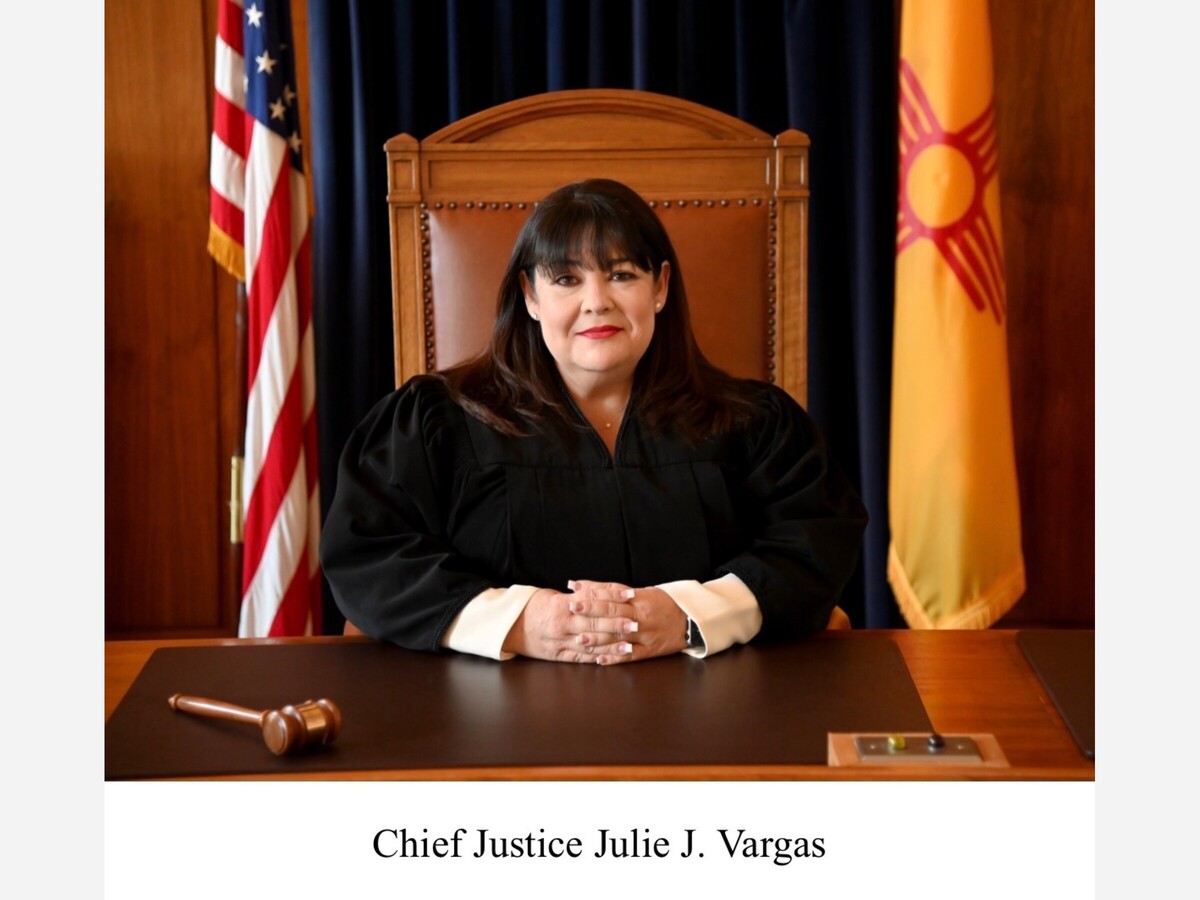
“The Court’s term system ensures a timely resolution of cases. This benefits the parties in the case as well as trial courts, which may need to conduct further proceedings after legal issues are decided on appeal,” said Chief Justice Julie J. Vargas in a statement, underscoring the institutional importance of the court’s structured approach to managing its caseload.
A Full and Diverse Docket
Justices will consider 45 cases during the term, with decisions expected by July 15, 2027. The court has scheduled oral arguments to take place in September, October, and December, with cases assigned no less than four weeks in advance.
The 2026-2027 docket encompasses a mix of criminal cases, civil disputes, administrative law challenges, insurance matters, and property disputes. Of the 45 cases, approximately two-thirds involve criminal appeals, including matters of sentencing, evidence, jury instructions, and constitutional protections. The remaining cases touch on regulatory authority, healthcare law, insurance, real property, and municipal governance.
The workload continues the court’s steady pace from the previous year. The justices completed the 2025-2026 term last month, having issued opinions and other dispositions in 65 cases—a testament to the court’s efforts to keep New Mexico’s appellate docket current and prevent case backlogs that could delay justice for litigants and strain the lower courts.
Opening Day Cases Set to Address Key Issues
Utility Regulation and Consumer Protections
The first case addresses Public Service Company of New Mexico’s plan to install smart meters for its electric customers. The devices would transmit energy use data wirelessly to the utility, eliminating the need for meter readers to manually check consumption—a technology upgrade that promises cost savings and efficiency gains for the utility but has raised concerns among consumer advocacy groups.
The case, New Mexicans for Utility Safety v. N.M. Public Regulation Commission (S-1-SC-40723), challenges state regulatory approval of the smart meter program. The dispute goes beyond the technology itself, raising fundamental questions about the Public Regulation Commission’s authority to approve major utility infrastructure investments, the scope of consumer input in regulatory decisions, and whether adequate safeguards exist for data privacy and security.
The case could have significant implications for how New Mexico’s utilities modernize their grids in coming years and may establish precedent for how much discretion regulators have in approving utility technology upgrades without additional legislative oversight. Consumer advocates argue the case tests whether regulatory processes adequately protect ratepayers’ interests; utilities contend that modernization is essential for grid efficiency and reliability.
Medical Malpractice and Insurance
The second case, Murphy v. N.M. Superintendent of Insurance (S-1-SC-40815), addresses a narrower but consequential question about how New Mexico’s medical malpractice liability system functions. It examines whether the state’s insurance superintendent has authority to refuse payment of court-approved settlements from the state malpractice fund—and whether the Medical Malpractice Act permits lump sum payments for future medical expenses in negotiated settlements.
The case touches on the delicate balance between protecting patients injured through medical negligence, ensuring affordable malpractice insurance for healthcare providers, and preserving a functioning litigation system. The specific legal question about lump sum payments for future care may seem technical, but it has practical implications for how plaintiffs structure settlements and what financial security they receive for ongoing medical needs stemming from malpractice.
If the court rules that the superintendent can reject settlements or that lump sum structures are not permitted, it could complicate settlement negotiations and potentially force more cases to trial, affecting both healthcare providers and injured patients.
Criminal Procedure and Competency Restoration
The third opening day case, State v. Carter (S-1-SC-41150), addresses one of criminal law’s most challenging intersections: the rights of defendants found incompetent to stand trial and the limits of government authority to hold someone in psychiatric treatment indefinitely.
The case involves the state’s appeal of a dismissed criminal case following a six-year period in which a defendant was committed to the New Mexico Behavioral Health Institute. The commitment was intended to restore the defendant’s competency to stand trial—a fundamental due process requirement that defendants understand the charges against them and can assist in their own defense.
The district court in Bernalillo County determined it no longer had jurisdiction over the defendant once the commitment period expired, even though proceedings were pending to determine whether the defendant had actually been restored to competency. The commitment period was deliberately capped at the maximum sentence the defendant would have faced if convicted, reflecting New Mexico law’s protection against indefinite commitment for incompetent defendants.
The supreme court’s decision will clarify the balance between the state’s interest in prosecuting crime and individuals’ constitutional protections against prolonged commitment in psychiatric facilities. The case raises questions about what happens when treatment programs do not achieve competency restoration within the statutory timeframe, and whether the state retains prosecutorial authority in such circumstances.
This case reflects broader national debates about the criminal justice system’s handling of mentally ill defendants and the extent to which involuntary hospitalization can substitute for criminal trial.
Themes Across the Full Docket
Beyond the opening day cases, the 2026-2027 docket reveals the diversity of legal challenges facing New Mexico. Criminal cases dominate the calendar, addressing issues ranging from sentencing to evidence to jury instructions—a reflection of the appellate court’s central role in ensuring the state’s criminal justice system operates fairly and consistently.
Civil and regulatory cases address insurance authority, property disputes, municipal governance, employment matters, and healthcare provider liability. Several cases examine the scope of administrative agencies’ power and whether they have exceeded their statutory authority—recurring questions about the balance between government efficiency and individual legal rights.
The presence of cases involving medical malpractice, insurance disputes, and healthcare provider liability suggests ongoing tensions in New Mexico’s healthcare economy. Cases involving municipal and county governance indicate that local government authority—from city planning to property assessment—continues to generate appellate litigation.
Timeline and Court Operations
The court operates on a structured term system designed to keep cases moving through the appellate process. The new term is projected to conclude with all decisions issued by July 15, 2027, giving lower courts the certainty they need to manage their dockets and providing litigants with timely resolution of appeals.
Cases will be assigned oral argument dates no less than four weeks in advance, allowing attorneys and parties adequate time to prepare. Any case not scheduled for oral argument will be decided based on the written briefs submitted by the parties—a practice that keeps dockets manageable while ensuring thorough review.
Public Access and Transparency
The court will livestream oral arguments of all cases, with schedules and briefs posted on its website at supremecourt.nmcourts.gov. The public access to arguments and filings reflects modern transparency practices that allow New Mexicans to observe their highest court at work.
The court also will hear expedited appeals when necessary, providing flexibility for time-sensitive matters that require faster resolution than the regular calendar permits.
As the 2026-2027 term begins, the New Mexico Supreme Court faces a docket that touches on some of the state’s most pressing legal questions: how to balance regulatory efficiency with consumer protection, how to ensure fairness in the criminal justice system, and how to adapt state law to technological and social change.



Patchy rain nearby, with a high of 79 and low of 57 degrees. Patchy rain nearby in the morning, thundery outbreaks in nearby for the afternoon, light rain for the evening, patchy rain nearby overnight.



Love your shop in Las Cruces! Haven’t been to the one here in Alamo yet.
Hi Troy,
What do you think of the manga Jaadugar: A Witch's Life in Mongol (Tomato Soup). It's now an anime from Saru Science/Crunchyroll.
Enjoy!



Thank you Sheriff!

She lectures her expertise like she was running SpaceX. Home Service Contractors and Darnold Plumbing could get any of those things built in a month. These unqualified people use it to justify their lives. We have to work to pay off their excess spending.
Neither have the proper license try again!
Hey Rube! I think the point is expertise. A 'proper licesne' is always the thinking of those educated by The Machine. Let the free market rule, not the paper pushers.
He did the same thing when he ran against Rachel. He's a pathological liar who just keeps proving it over and over.
he senses trouble....and i smell blood - time to send him to private sector employment - maybe his oil & gas friends can find something for him to do.
Lets ask the editor.
sir, are you not involved in the campaign?