
Image
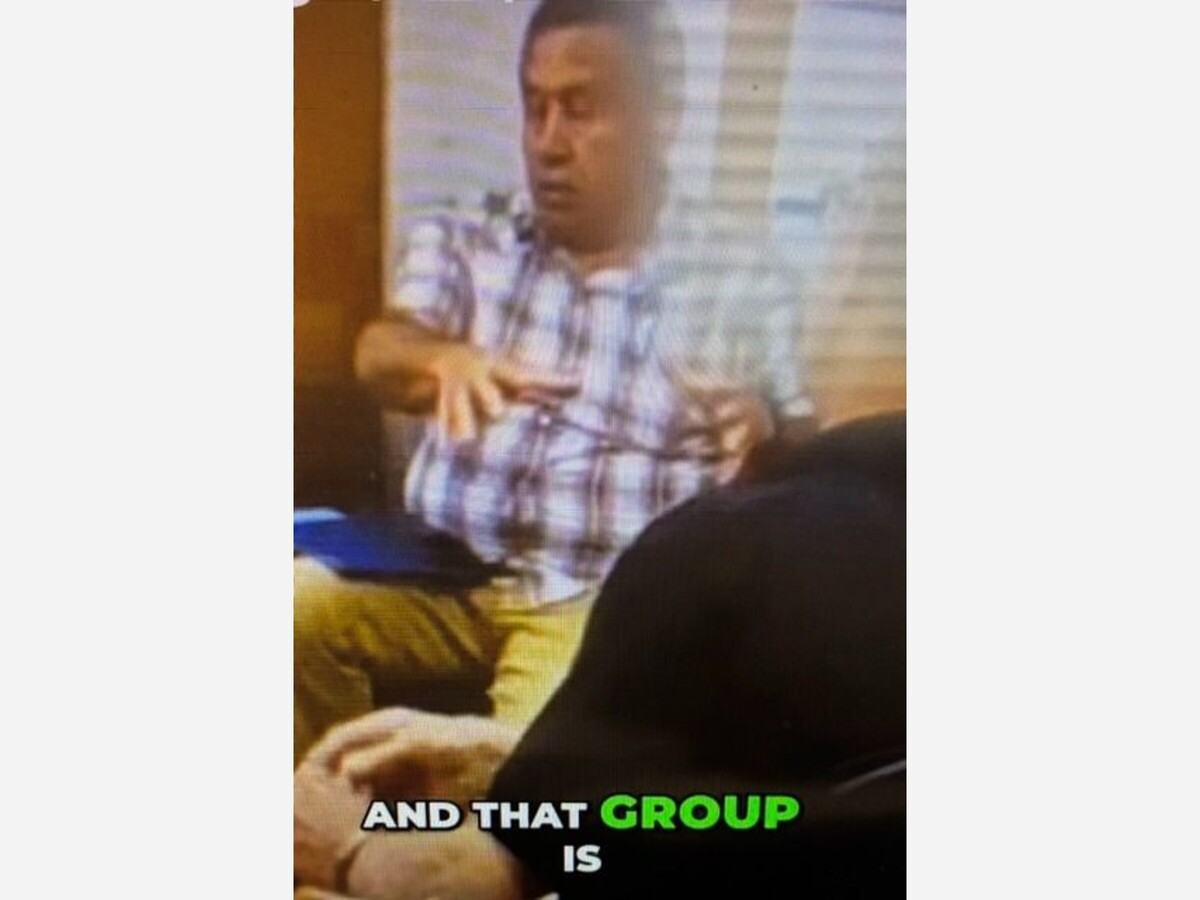



There is a particular weight to what an elected official says from a public dais. The setting is not a coffee shop or a comment thread. It is a seat of government, on the record, where a commissioner speaks as a steward of public trust rather than a private citizen. That weight is what makes Alamogordo District 5 Commissioner Al Hernandez's remarks at the June 4 Airport Advisory Board meeting worth examining closely — not for their volume, but for what they reveal about how at least one member of city leadership understands his own job.
Attending as a guest, Hernandez delivered an extended critique of how Alamogordo communicates with its residents and sets its spending priorities. Along the way he took an adversarial, at times dismissive, tone toward nearly every independent check on city government: organized labor, engaged residents, the press, and members of the city's own elected leadership. But the deeper problem runs underneath all of it. Again and again, Hernandez described the failures of "the city" as though he were not himself part of the body that governs it.
A union official, called "stupid"
Discussing public pressure over roads and recreation spending, Hernandez singled out a city union representative and, after flagging that he was about to say it plainly, called her getting "stupid."
He framed the union as the source of the trouble: "The union is driving that. The union is causing the issue. The main union representative — she's the one, I don't know if she doesn't understand how city budget works." His complaint was that the union had shifted from advocating for golf course employees to demanding road repairs — "We don't need to spend money at the golf course, we need to fix our roads"
— a reversal he said would "create some problems."
Set the politics aside and the conduct alone is striking: a seated commissioner Hernandez, from a public meeting representing the city leadership, calling a city employee and leader labor representative stupid and questioning her grasp of the budget. Whatever one makes of the union's positions, a personal insult delivered by an elected official in an official setting is now part of the public record.
"Everything else the city does"
The most revealing moment came as Al Hernandez described how the city chooses which roads to fix. He reached for an analogy:
"It's like with everything else the city does. So you got a house that half of the roof is gone, and you got a house that drug users are living in and nothing wrong with it — they're going to tear this house down and leave this one. That's the same thing with our roads. We got roads that are impassable and they're being ignored, and then we got our main roads like First Street, 10th Street and Indian Wells that they're not even considered."
It is a vivid critique, and a fair frustration. But listen to the framing: "everything else the city does," "they're being ignored," "they're not even considered." The city, in Hernandez's telling, is a separate actor that ignores the right roads and considers the wrong ones. Elsewhere he made the same move about recreation spending — that quality-of-life cuts would keep coming "because somebody screwed up."
Somebody. They. The city. Never the commission. Never himself.
A dismissal of the engaged public
Hernandez extended the same posture to residents who follow city business closely, characterizing them as a small, impossible-to-satisfy faction — roughly 15 people, in his telling, for whom nothing the city does is ever right, because they change their minds midstream.
It is a remarkable thing for an elected official to say out loud. The residents who attend meetings, read the agendas and ask hard questions are not an obstacle to good government; in most civic traditions they are the point of it.
The press, and a telling admission
Hernandez then turned to the press and the transparency advocates he sees as part of the problem, naming the mayor and this publication's publisher directly:
"One of the things that's really missing in the city is that there's no communication. You know, they talk about transparency — the mayor, Chris Edwards and that group is talking about transparency, but they're not telling anybody anything."
It is the same move once more: a communication gap located in "the city," and the blame placed on others — here, a fellow elected official and the local press — for failing to close it. He went on to describe how he believes residents are misled:
"...you get that one person that everybody follows and says, 'Oh, this guy's God, and he's telling me the truth' — when if you really look at it, it's like, how do these people even believe that crap? ... Unless you call somebody that actually knows — and that's the hard part — I don't get any phone calls saying, 'Hey, I read this, can you explain this to me.' I don't get those phone calls."
It is a candid moment, and an unintentionally revealing one. Hernandez frames the public as credulous, the press as unreliable, and himself as the keeper of the real answers — answers residents would have if only they would call him. But the burden he describes is backward. A commissioner who wants residents to understand city decisions does not wait by a silent phone. He has the dais, the agenda, the public-comment period, he could call the press and issue statements to the journalist, he has our direct number, he has the standing to put information in front of the public without being asked. The communication he says is missing is, in large part, his to provide.
Whose job is this, really?
This is the heart of it. In a commission form of government, "the city" is not a separate entity that acts upon residents. The commission sets the priorities. The commission adopts the budget. The commission directs the city manager, approves the grant applications, and decides which projects move and which wait. The roads that go ignored and the roads that get fixed are not accidents of weather — they are the product of choices made by a body of which Hernandez is a voting member.
If the commission wished to reallocate money, re-sequence the road list, direct staff to communicate differently, or pursue different grants, it has the authority to do so. That direction belongs to the commission as a whole — and Hernandez is part of that whole. The "somebody" who screwed up, in his telling, sits at the same table he does. The responsibility he keeps assigning to "the city," to the union, to the engaged residents and to the press is, in substantial part, his own to carry. He owns it. He does not get to narrate it from the outside.
The defensible core
None of this is to say part of his diagnosis is wrong. Alamogordo does explain its spending poorly to the average citizen. Residents do often learn about projects secondhand. Via social media or via Alamogordo Town News for depth. The road list genuinely does appear to skip heavily used corridors and the worst roads. Clearer communication about funding sources — the differences between general funds, restricted funds, grants and outside money — would reduce frustration, educating the public is key.
Engaging with the city leadership when at a budget meeting instead of ignoring their presentations and playing on the phone disrespecting the staff efforts to build consensus on projects
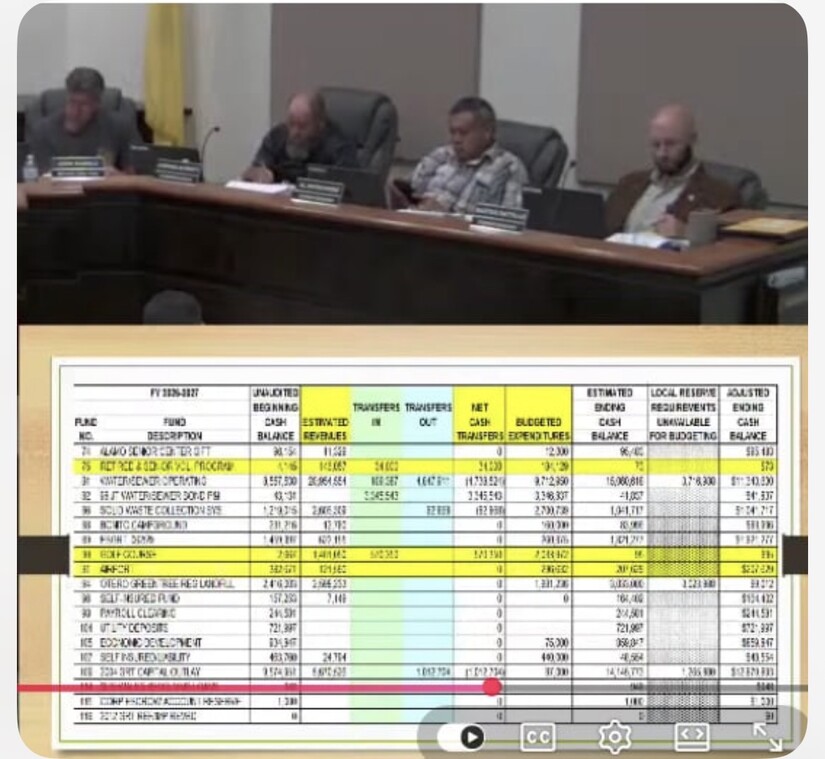
The key to that is to build a relationship with the press that fosters education such as the monthly forums held before the public with 2nd Life Media and Alamogordo Town News/KALHRadio.org. On that, others on the airport board agreed, and the Chair rightly encouraged residents to attend meetings and seek information directly.
The problem is not the diagnosis. It is that a commissioner advanced it by belittling labor, dismissing engaged citizens, and faulting the press and the mayor — while declining to name the one office plainly responsible for fixing what he described: his own.
What the official record leaves out
The minutes adopted by the board describe the episode in far softer language, noting only that Hernandez "made critical comments regarding union-related public statements" and "expressed concern that union messaging was contributing to public criticism and confusion." They contain no personal characterization of the union official and no reference to the remarks naming the mayor or this publication. The minutes are the version most residents will ever read. The recordings are the version of what was said.
Public meetings exist precisely so residents can judge for themselves how their representative’s reason and conduct themselves. On June 4, the record speaks clearly enough and you can hear for yourself at
The harder, better path
Transparency is not a slogan to be claimed by one side and denied to another. It is a discipline of leadership. It means owning decisions in public — explaining not only what the commission chose but why, where the money came from, and what was traded away — rather than narrating the city's shortcomings as though from the outside.
It means treating the press not as an adversary to be lectured but as a channel to the very residents an official says he wants informed.
And it means treating differing opinions — from a union, from a dozen engaged citizens, from the mayor — not as confusion to be managed or insults to be returned, but as the ordinary friction of self-government, which a leader is expected to absorb and answer with patience rather than contempt.
Commissioner Hernandez plainly cares about this community and is frustrated by its dysfunction, and that frustration could be an asset.
But it will only build something if the tone changes — from finger-pointing to convening, from hostility toward dissent to collaboration with it, from "the city," "they" and "somebody screwed up" to "we decided, and here is why."
Al Hernandes holds the seat (for now), the platform and the standing to lead that way, and residents would be far better served if he did.
Good governance is not the work of waiting by a silent phone for the public to call and ask. It is the work of picking up the one already in your hand reaching out to the press and people whom you may disagree — and choosing to inform, to listen, and to own the decisions that are, after all, your own.
Disclosure: 2nd Life Media / Alamogordo Town News publisher Chris Edwards was named in Commissioner Hernandez's remarks and is a plaintiff in pending Open Meetings Act litigation involving the city. This report relies on recordings of the June 4 meeting and the board's adopted minutes.

Hmm. Elected city officials making comments “as a private citizen”. A trend that started with former city officials here and is reminiscent of lawsuits going on in Los Angeles right now.


Sunny, with a high of 81 and low of 61 degrees. Sunny in the morning, patchy rain nearby during the afternoon and evening, clear overnight.


Having the Sierra Club endorse you is like drinking the runoff from a lithium mine they spent a decade blocking—then calling the metallic taste “sustainability.” This phoney has a really bad dye job.
Just because you do not like someone does not make them phony.
kinda like not liking the blue kool aid so you hate all the kool aid. Besides doesn’t the editor have a vested interest in her campaign?




as per occam's razor, the simplest explanation for stonewalling a request this basic and straight forward, is that transparency will cast a bad light on lincoln county, and/or the entity they pay to run their jail.
The Albuquerque Journal (9/20/26, page C3) has a column written by Jacob Candelaria that is titled "A blacklist for people who ask too many questions". Basically, in 2025, our NM Legislators were debating House Bill 139 would have let any public body petition to have a person designated as "vexatious", and person's



like 99% of his fellow republicans, block is a servant to the oil & gas industry - a principal constituent of their party.