
Image
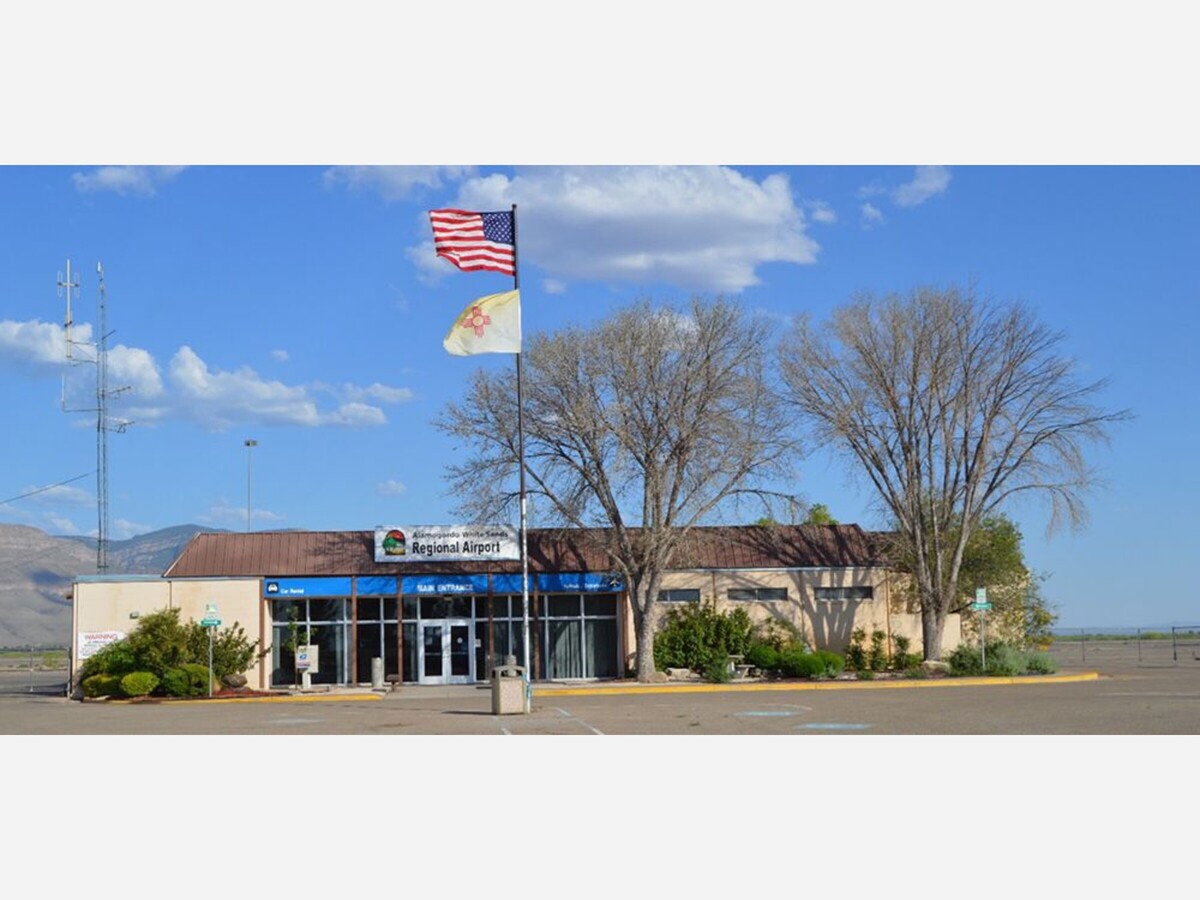
nside the Fence Line, Alamogordo's Airport Board Plays the Long Game - 2nd Life Media AlamogordoTownNews.org



At the Alamogordo-White Sands Regional Airport, the work that matters most rarely makes noise. It happens in a conference room off the terminal, on the first Thursday of the month, where a handful of board members, the airport manager and a consultant on a video calls trade updates on grading specifications, federal funding cycles and the condition of the anchor points that hold airplanes to the ground.
Taken one meeting at a time, it can read as routine. Taken together, the Airport Advisory Board's May 7 and June 4 sessions sketch something more ambitious: a small general-aviation field methodically positioning itself for a decade of growth — and beginning to treat that growth as an economic engine for the city, not just an aviation project.
Several pieces have moved from discussion to done.
The City Commission has approved a $109,000 state grant for the airport's aging electrical vault, a 1950s-era structure the airport manager says can hold no more equipment. Rather than spend it in isolation, the board is folding the vault design into the larger runway rehabilitation so the engineering and construction happen once, together — a decision that stretches the grant further and minimizes downtime on the field.
The maintenance backlog is shrinking. The West Ramp sinkhole has been filled. Crews patched holes cut into the perimeter fence. A service agreement is in place to restore network connectivity for the airport's automated weather system, with parts on the way. And in a low-cost move that builds standing among neighboring fields, the city approved a government-to-government transfer of a spare weather-system component from Alamogordo's storage to Sierra Blanca Regional in Ruidoso — installed there the same day.
The triennial 5010 airfield inspection is complete, with positive preliminary marks for threshold maintenance and mesquite clearing handled by airport staff. Lease renewals, already reviewed by the city, are going back out to tenants. The request for a decommissioned T-38 Talon for a future static display has been submitted to the National Museum of the U.S. Air Force, with receipt confirmed. And the cost-estimate process for the runway design is underway: an independent firm has been engaged to review Delta Consultants' design plans and produce a baseline figure the city can measure bids against.
The runway rehabilitation is the centerpiece, and its direction is now set even as the dollars come together. Working with Cheryl Rodriguez of Delta Consultants, airport manager Troy Orr and the board are advancing a design that brings the main runway to FAA C2 standards — significant safety-area grading and pavement-strength work, with a grooved surface for jet operations recommended pending the FAA's final say. The south threshold will be rebuilt first; the north threshold follows when the parallel taxiway is moved.
The scope has grown with ambition. What began years ago as a roughly $8 million item now sits in the mid-twenty-millions and could reach the fifties depending on final scope. The funding plan is deliberate rather than anxious: FAA entitlement and apportionment dollars are in play now, and coordination with the state aviation office is aimed at landing grants in late 2026 or early 2027, programmed across two construction cycles. Asked whether bundling the projects risks the whole package, Rodriguez told the board the team is ready to pivot if needed.
A structural tailwind arrives Oct. 1, when New Mexico gains its own dedicated FAA Airport District Office, splitting off from the joint arrangement it shared with Louisiana. For a field that has long competed for a sliver of regional attention, a New Mexico-focused office is a real advantage.
The board's clearest pivot is on air service, and it's the piece most directly tied to local commerce. Instead of chasing a large carrier out of the gate, the plan now targets 30-to-50-seat regional operators — the model Contour built at Sierra Blanca, where new direct flights to Denver were seeded with a state rural air-service grant. Establish demand first, then grow into bigger aircraft.
To get there, the board is tightening its homework. Early market-study quotes came back wildly inconsistent — $9,000 to $70,000 — so Orr and Community Services Director Eileen Flint concluded the original scope of work was too broad and went looking for sharper models from fields in Carlsbad, Hobbs, Roswell and Farmington. Vice Chair Lance Grace is coordinating with aviation consultant Mike Boyd on demand analysis, and the board is leaning on Delta to refine the request for proposals.
Underneath it all sits a deliberate bet on Part 139 certification. The board is candid about the chicken-and-egg problem — certification requires air service, and air service requires certification — but treats certification as worth pursuing for what comes with it: access to far larger federal funding pools and commercial opportunities beyond passenger service, including cargo and shipping operations, parts manufacturing and industrial tenants. An Airport Emergency Plan, a Part 139 prerequisite, is being compiled now.
That is where the airport's plans intersect with the city's economic future. A field with scheduled service and room to grow is a recruiting tool — for the business traveler who would otherwise drive to El Paso, for employers weighing a Southern New Mexico location, and for the regional development already stirring around the area's test-track investment. The board has also kept smaller commercial threads alive: getting the airport's former food-service space market-ready for a vendor, and revisiting the prospect of a café lease.
The board keeps returning to a simple truth — none of this works unless the public shows up. The next stretch is built to draw them in, and much of it routes activity straight to local businesses and the Chamber of Commerce, where newly promoted office manager Adam Hoppes is now a fixture at the table.
The community-building isn't only about events. The local EAA chapter has purchased a Zenith 750 Cruiser kit — a two-seat metal airplane arriving this summer — and plans to involve area students in the build, a hands-on STEM exhibit in the making. Save-the-date flyers are already circulating through Chamber meetings, with the state offering help on advertising costs.
None of this guarantees a jet on the apron or a boarding gate by next year. But across two meetings, the picture is of a board that understands exactly how long the runway in front of it is — and is walking it one funded, signed, scheduled segment at a time.
What's notable is how outward-facing the effort has become. The airport is increasingly framed not as a standalone facility but as infrastructure for the whole community: a draw for visitors, a channel for downtown foot traffic and Chamber engagement, a recruiting argument for employers, and a long-term bet on Alamogordo's place in a region that is starting to move. Chair Manuel Gonzales Jr. has widened the circle to match that ambition — welcoming the public and the media to the table and pulling more of the business community into the planning.
It is patient work, done mostly out of public view. But the trajectory is unmistakably forward after decades of neglect, and the city and its citizens and business community stands to be the beneficiary in the longrun.

the smartest maintenance expenditures are spent looking to the future, not repairing the past. kudos for the forward thinking/planning, hope it bears fruit.
Amazing, airport is budgeting time and expense into a project that will likely never materialize. This was attempted before. No airline or charter service would commit to Alamogordo service. The airport needs letter of commitment before spending more money. They also need to redefine the expensive manager position and repurpose the expensive building and parking lot. The airport is also imposing a new lease that will effectively eliminate all middle class taxpayers from the airport leaving only the ultra rich


Sunny, with a high of 81 and low of 61 degrees. Sunny in the morning, patchy rain nearby during the afternoon and evening, clear overnight.


Having the Sierra Club endorse you is like drinking the runoff from a lithium mine they spent a decade blocking—then calling the metallic taste “sustainability.” This phoney has a really bad dye job.
Just because you do not like someone does not make them phony.
kinda like not liking the blue kool aid so you hate all the kool aid. Besides doesn’t the editor have a vested interest in her campaign?




as per occam's razor, the simplest explanation for stonewalling a request this basic and straight forward, is that transparency will cast a bad light on lincoln county, and/or the entity they pay to run their jail.
The Albuquerque Journal (9/20/26, page C3) has a column written by Jacob Candelaria that is titled "A blacklist for people who ask too many questions". Basically, in 2025, our NM Legislators were debating House Bill 139 would have let any public body petition to have a person designated as "vexatious", and person's



like 99% of his fellow republicans, block is a servant to the oil & gas industry - a principal constituent of their party.