
Image
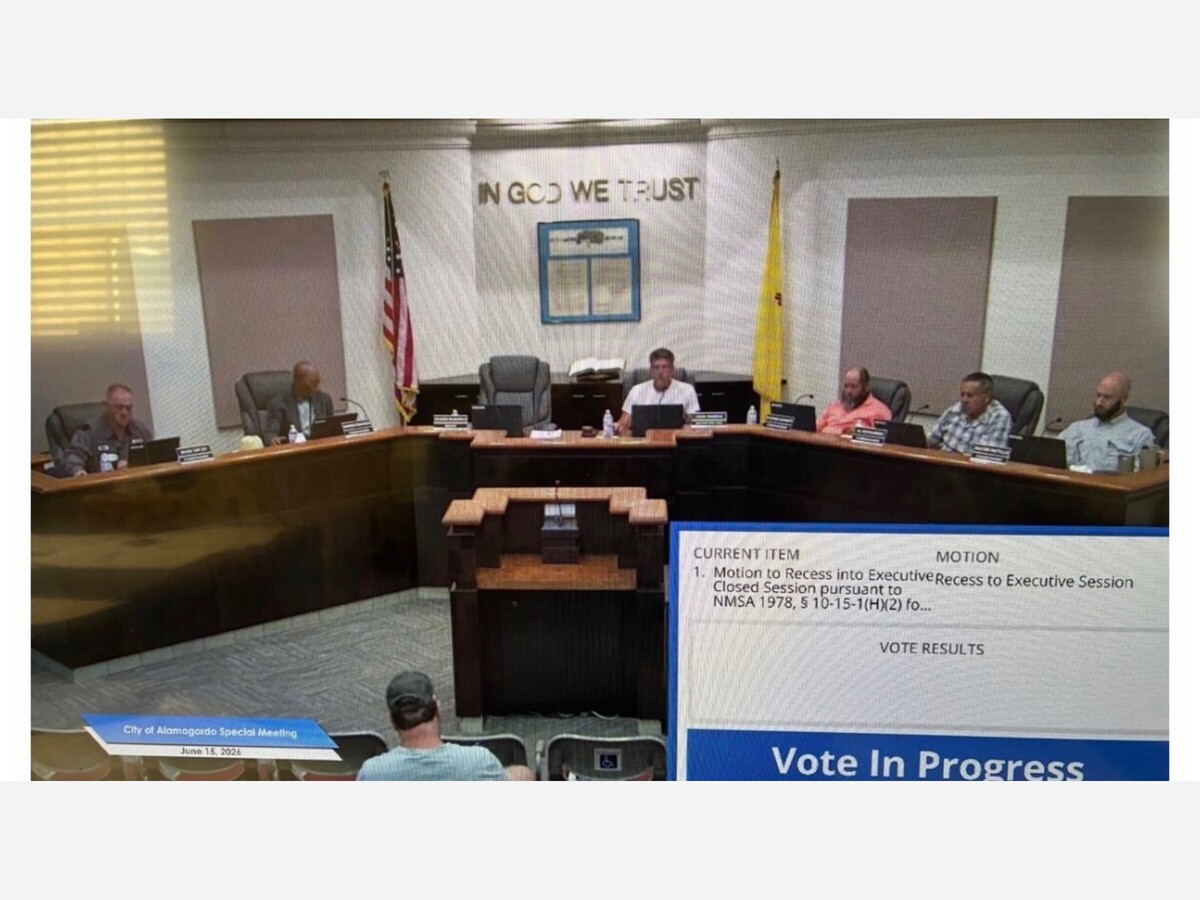



The Stockwell Vote and the Contract timeline, and the questions it raises? A resume appears unsolicited, a draft employment contract for former City Manager Robert Stockwell surfaces at City Hall ahead of a Commission vote. Unanswered Questions the public deserves to know…
Stockwell’s resume arrived June 12; a copy of the draft contract was in the city’s hands before June 15; the Commission held its executive session vote on the matter June 15. Three days between a resume showing up and a fully drafted contract reaching a closed-session vote. Before residents are asked to accept this as settled business, here’s what hasn’t been answered:
Who delivered the resume on June 12, and who delivered the draft contract that was already with the city before the June 15 vote?
A contract that detailed doesn’t get written from a standing start in three days — the groundwork was done before either document became public. Was the resume submitted through any posted application process, or handed over privately? Who brought the draft contract in, and on whose authority did it exist before the Commission, as a body, had taken any public action to authorize hiring Stockwell at all?
When did this recruitment actually start, and who authorized it?
Stockwell has reportedly acknowledged that recruitment discussions began as far back as July 2025 — nearly a year before the June vote. Yet according to sworn testimony from the former mayor, the Commission as a body never voted to initiate that recruitment. Under New Mexico’s Commission-Manager government, the Commission can only act collectively, by vote; individual commissioners can’t recruit or commit the city to a candidate on their own. If recruitment ran for almost a year with no public vote, who was conducting it, under what authority, and why wasn’t it disclosed?
Who was Stockwell competing against, and where was this position advertised?
No one has explained who else was considered. Was a call for resumes or applications issued for this round, and if so, when and where was it posted — the City’s website, a state municipal league listing, a search firm, local papers? To be clear: if Stockwell won a genuinely open, advertised, competitive process, that’s a legitimate outcome and he should get the job. The objection isn’t to Stockwell — it’s that no visible process has shown residents a pool ever existed. A city can’t claim “best candidate” without showing who the other candidates were.
Why does the contract pay $180,000, include a car allowance on top of a city-supplied vehicle, and guarantee at least $90,000 in severance?
The city’s last public solicitation ended in a unanimous 7-0 vote toward a roughly $165,000 contract for Dr. Stephanie Hernandez — a contract that, by multiple accounts, was never even presented to her before the Commission reversed course. Stockwell’s draft contract reportedly starts about 9 percent above that. On top of the base pay: a car allowance despite the city already providing him a vehicle (a redundant benefit by any normal reading), and a severance floor of $90,000 for a candidate with a documented history of contentious exits — a 1997 termination, a failed 2016 rehiring attempt, a 2019 resignation under pressure from a different city. What changed since the Hernandez rate was set, who approved these specific terms, and why does a candidate who bypassed the competitive process cost the city more than the one who went through it?
What date did calls with the city’s contracted counsel about a Stockwell contract begin, and who initiated them?
Someone instructed counsel to draft this agreement, which means there’s a paper or phone trail with real dates. Residents are entitled to the date of the first contact, who placed it, and whether it came from the full Commission acting in a properly noticed meeting — or from one or two commissioners reaching out on their own.
Was every commissioner part of those conversations — and can the Commission hide behind attorney-client privilege if they weren’t?
This is a legal question, not just an optical one. The Commission’s attorney represents the Commission as a body acting through its vote — not individual members acting alone. If the full Commission never authorized this work, conversations between counsel and only some commissioners weren’t properly “client” communications to begin with, and privilege protects the entity, not a subset that acted without authorization. Layered on top: New Mexico’s Open Meetings Act bars “rolling” or “walking” quorums — a series of less-than-quorum conversations that add up to a majority deciding public business outside a noticed meeting. The Act’s closed-session exception for attorney conversations applies to pending or threatened litigation, not personnel recruitment or contract drafting, so it likely offers no cover here even if a closed session had been properly called. If a quorum’s worth of commissioners were briefed one or two at a time, that’s a rolling quorum — a public meeting that never happened in public. It also raises exposure for counsel: an attorney who drafts a binding personnel contract on direction from less than the full, authorized body risks having acted outside the scope of representation, which is its own professional responsibility question, separate from whatever the commissioners face.
Is that counsel still under contract with the city, and why wasn’t this presented in open session the way other legal work has been?
If counsel is no longer providing services to the city, residents deserve to know why — a resignation or non-renewal in the middle of a controversial personnel matter shouldn’t be discovered rather than disclosed. And if counsel is still retained, why did the city present its Desert Lakes Golf Course contract questions and its natatorium bond opinions in open session, but route a city manager’s employment contract — arguably more consequential than either — straight to consent?
Why was this contract placed on the consent agenda, and why does Baxter Pattillo’s name appear next to it?
Consent agendas exist for routine, uncontested items — minutes, grant acceptances, standard resolutions. A city manager’s contract is the single most consequential personnel decision a commission makes; burying it on consent strips out the individual discussion and roll-call scrutiny a contested hire this size demands. Agenda items are typically attributed to whoever requested their placement. If Commissioner Pattillo requested this placement, residents are entitled to hear him explain, in open session, why he believed it belonged among routine approvals rather than on the regular agenda.
The ethics question this raises
A procedural move can be entirely lawful and still be a legitimate ethics concern. Routing a contested personnel decision through the same mechanism used for meeting minutes has the practical effect of minimizing debate and reducing the chance any one commissioner has to publicly explain their vote. Residents who’ve watched this Commission’s handling of the city manager search — closed sessions, a reversed 7-0 vote, and now a contract placed where it draws the least attention — are entitled to ask whether this is one more instance of a pattern, and whether it’s designed to limit who has to answer for it. That impression may or may not reflect what actually happened; only the commissioners involved can settle it, on the record, before the vote — not after residents have to dig for it.
New Mexico’s Open Meetings Act and Governmental Conduct Act exist because how a decision gets made matters as much as what gets decided. None of this is an accusation that a crime occurred. It’s a list of facts that don’t add up, and a city government’s job when facts don’t add up is to explain itself in public — not let silence, or a procedural shortcut, do the explaining instead.
This isn’t just our opinion — what the law and recent enforcement say
A consent agenda is routine and legal. That’s true as far as it goes — but “legal in principle” and “appropriate for this item” are different questions.
Specificity. New Mexico’s own Open Meetings Act guidance requires agenda items be written with enough detail that an average person can understand the subject and anticipate that a vote may occur. A generic consent-line entry for a city manager’s contract doesn’t meet that bar by any reasonable reading.
Invalidation is a real remedy. OMA penalties include invalidating the action taken, attorney fees to a prevailing plaintiff, and criminal penalties. New Mexico’s Court of Appeals has already invalidated a public body’s settlement approval over defective notice, even though the underlying closed-session discussion was permitted (N.M. State Inv. Council v. Weinstein) — proof that a substantively defensible vote can still be thrown out if the process around it was broken.
This county was just cited for this exact pattern. Weeks ago, the New Mexico DOJ formally notified the Otero County Commission that it violated the OMA by rushing a decision through under an “emergency” label that didn’t hold up — the situation was a known, predictable deadline, not a true emergency. Attorney General Raúl Torrez put it plainly: “The Open Meetings Act is not optional.” Same underlying problem here: a procedural label used to move a consequential decision through with less scrutiny than the public is owed.
Other states have wrestled with this too. Florida’s courts have upheld consent agendas as lawful in principle (Grapski v. City of Alachua), but Florida’s own AG has advised bodies to postpone controversial items rather than push them through without adequate notice. Pennsylvania courts require agenda language specific enough to show “a specific, discrete matter” the board intends to act on, not vague catch-alls. Missouri courts have held a public body’s action can be voided entirely where a violation was purposeful and the public interest in enforcement outweighs the public’s interest in the action taken.
On attorney-client privilege specifically — a caveat.
We found no New Mexico court ruling or AG opinion deciding this exact fact pattern. What follows are governing principles and analogous opinions other jurisdictions’ bar associations rely on — evidence this is a recognized issue:
• A municipal attorney’s client is the body, acting through its duly authorized vote — not individuals officials acting alone.
• Only the governing body, not an individual member, can invoke or waive the privilege on the city’s behalf.
• New Mexico’s own closed-session exception for attorney meetings is limited to pending or threatened litigation (Board of Cnty. Comm’rs v. Ogden) — contract drafting isn’t litigation, so the exception likely doesn’t apply here regardless.
• Acting on direction from less than a properly authorized body can itself expose an attorney to State Bar discipline.
None of this proves intent. It proves “we followed our own consent-agenda rules” isn’t, by itself, an answer to whether the public’s right to scrutinize this decision is respected.
Call to Action: Show up Tuesday. Speak.
This gets resolved when commissioners answer these questions on the record, in front of the people who pay their salaries — not on social media.
Before and during Tuesday’s meeting:
• Attend in person. 6:30 p.m. sign up to speak before 6:30; Donald E. Carroll Commission Chambers, 1376 E. Ninth Street.
• Sign up for public comment before the meeting starts — arrive early. Comments typically run three minutes per speaker.
• Ask the questions above, by name, on the record: who delivered the resume and the draft contract, and on what dates; who authorized recruitment in 2025; who else applied and where it was posted; why the pay, car allowance, and severance terms exceed what was previously advertised; when calls with counsel began and who initiated them; whether every commissioner was included in those calls; whether counsel is still retained, and if not, why; who requested consent-agenda placement, and why.
• Press the legal points directly. Ask whether commissioners were briefed one or two at a time rather than together in a noticed meeting — and make clear the Commission can’t invoke attorney-client privilege to cover conversations the full body never authorized.
• Request the documents. File an IPRA request for the recruitment communications, the consent-agenda placement request, and any correspondence referencing Stockwell since July 2025.
• Ask for the item to be pulled from consent for individual discussion and vote — and ask publicly why it wasn’t pulled before tonight.
• Bring a neighbor. A packed room asking the same questions is harder to wave off than a quiet one.
Local government runs on the assumption that nobody’s watching closely enough to ask follow-up questions. Tuesday is the chance to prove that assumption wrong.



Sunny, with a high of 81 and low of 61 degrees. Sunny in the morning, patchy rain nearby during the afternoon and evening, clear overnight.



Having the Sierra Club endorse you is like drinking the runoff from a lithium mine they spent a decade blocking—then calling the metallic taste “sustainability.” This phoney has a really bad dye job.
Just because you do not like someone does not make them phony.
kinda like not liking the blue kool aid so you hate all the kool aid. Besides doesn’t the editor have a vested interest in her campaign?




as per occam's razor, the simplest explanation for stonewalling a request this basic and straight forward, is that transparency will cast a bad light on lincoln county, and/or the entity they pay to run their jail.
The Albuquerque Journal (9/20/26, page C3) has a column written by Jacob Candelaria that is titled "A blacklist for people who ask too many questions". Basically, in 2025, our NM Legislators were debating House Bill 139 would have let any public body petition to have a person designated as "vexatious", and person's



like 99% of his fellow republicans, block is a servant to the oil & gas industry - a principal constituent of their party.