Image
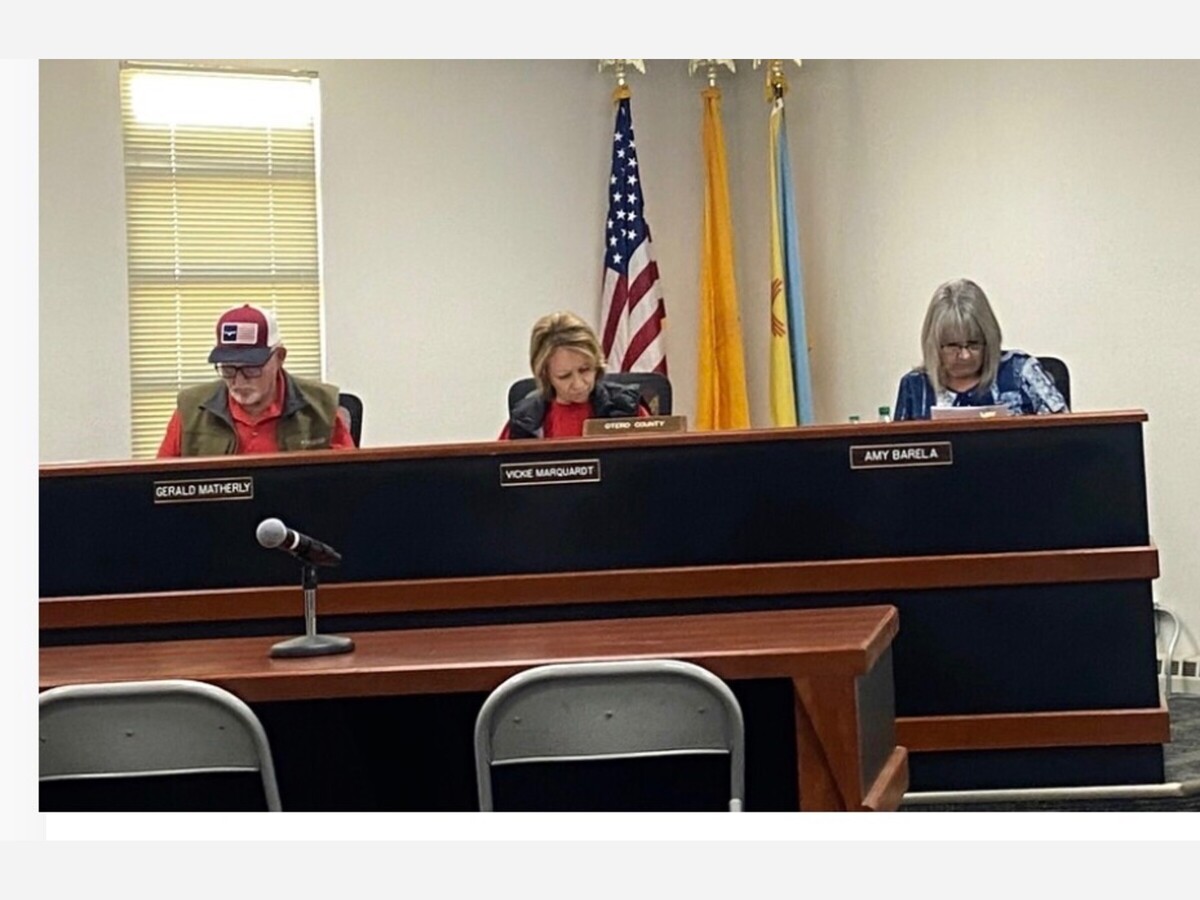



Alamogordo, NM — Otero County officials opened their March 31, 2026, special budget work session with a sobering admission: the county faces a $3.3 million deficit in the general fund for the Fiscal Year l even before factoring in the potentially enormous costs from ongoing prison-related litigation and the pending civil rights lawsuit brought by the family of Elijah Hadley.
The County Finance Director presented the initial budget overview, revealing that revenue data incorporated only February figures, with March data still pending and the fiscal year not ending until June 30, 2026. This early snapshot already shows a significant shortfall, raising immediate concerns among attending citizens about the accuracy and completeness of the projections.
In an effort to gain clearer insight, the County Attorney had supplied the finance department with an AI-powered accounting software program designed to analyze budgets, uncover inconsistencies, identify expenditure padding, and suggest opportunities to refine revenue estimates. The AI tool indicated potential to close part of the gap by adjusting historically conservative revenue projections upward and trimming areas where departments routinely underspend.
However, the County Attorney was not part of the formal presentation team and the county finance director appeared uncertain when answering several detailed questions from commissioners during the session. This left some participants and citizens uneasy, as the massive shortfall emerged from incomplete data just months into the review process.
The county has allegedly traditionally budgeted conservatively — underestimating revenues while padding expenditures — a practice that has often resulted in departments coming in under budget. Yet the mandatory three-twelfths reserve (equivalent to three months of operating expenses) remains off-limits for balancing the current-year gap.
Salaries Frozen for Most Staff, But Raises Approved for Elected Officials
In response to the shortfall, salaries for all county staff are frozen in the proposed FY27 budget, with no general increases planned. Department heads had requested adjustments in many cases, but those have been set aside amid fiscal constraints. Some departments may still offer limited incentive pay tied to professional certifications.
Elected officials, however, will receive salary increases to bring their compensation in line with levels established in the 2018 amendment. Healthcare costs during the ongoing open enrollment period are expected to have a near net-zero overall impact, with some plans decreasing in cost while others rise.
Huge Tax Increase Looming as Budget Crisis Deepens
As the budget crisis looms, residents face the strong likelihood of a significant tax increase in the coming months. With the general fund deeply in the red and additional pressures from litigation and potential revenue shortfalls, commissioners and staff are confronting the reality that higher property taxes, gross receipts tax (GRT) adjustments, or other levies may be needed to avoid deep service cuts. Past discussions have referenced possible hikes in the range of 5–10% or more to help stabilize finances, though no specific rate was finalized in the work session all the while elected officials to include commissioners get a raise.
Past Audits Raise Questions on Accounting Practices and Accountability
Compounding public unease are findings from recent independent audits that have highlighted questionable accounting practices and lacking accountability in county financial management. Audits have repeatedly pointed to material weaknesses in internal controls over financial reporting, significant year-end adjustments (including corrections totaling over $1.9 million in one recent period), and issues with oversight of investments, grants, receivables from the Otero County Prison Facility, and unearned revenue. These persistent concerns have placed Otero County’s finances on the radar of state oversight bodies for several years, fueling citizen skepticism about how effectively taxpayer dollars are being managed during the current shortfall.
Critical Capital Needs vs. Budget Constraints
Departments highlighted urgent capital outlay requests amid aging infrastructure and rising operational costs:
• Detention Center: Replacement of outdated kitchen equipment, medical equipment upgrades (including vital signs monitors and laptops), and heating/cooling system improvements. A significant transfer of $7.3 million (up $1.3 million from last year) covers core contracts and insurance, with medical and liability costs driving increases.
• IT Department: Replacement of an unreliable 1998 Chevy Blazer and ongoing software/maintenance contracts, including Microsoft 365 and Tyler Technologies (with a new $16,380 procurement module for online bidding and invoice processing to enhance efficiency and prevent fraud).
• Road Department: Equipment needs reduced somewhat from prior years, but flood repairs and new public safety facilities add pressure. The shop budget was cut by $400,000, with fuel costs expected to rise. FEMA funding for past damages remains pending.
• Animal Services: Two side-by-side vehicles for field work (one trailer request scaled back) and part-time staffing to address overcrowding and workload. Long-term discussions include exploring an in-house veterinarian.
• Emergency Services: Sandbagging equipment (reduced to one unit), with security camera upgrades currently on hold.
• Other areas: Solid Waste seeks three roll-off containers ($21,600) and a $203,000 fence at Eagle Ranch land to combat illegal dumping. The Treasurer’s office requested modest security upgrades, including internal cameras ($3,500).
Several capital items were approved, such as detention kitchen equipment, certain road and animal services vehicles, and the Tyler software. Others—including a full security camera system, IT vehicle replacement, and some road/Rifle Range upgrades—were deferred pending further quotes, grant decisions, or budget clarity.
Grants, Rising Costs, and Staffing Challenges
Many departments lean on grants for salaries, overtime (e.g., Stone Garden for law enforcement), and equipment, though FY27 funding remains uncertain for some. Operational expenses face inflationary pressures in utilities, fuel, insurance, and maintenance contracts. The Sheriff’s Office deals with complex overtime under collective bargaining, while vacancies exist in some areas (often tied to internal promotions at the detention center). Proposals include freezing non-essential hiring temporarily.
Solid Waste continues to require subsidies ($1.514 million in expenses), with challenges in tire disposal and no viable recycling revenue stream. Public relations budgets shift toward digital/Zoom formats to cut travel costs.
Looming Litigation Risks Add to the Peril
The $3.3 million deficit does not yet incorporate risks from ongoing prison-related litigation tied to the Otero County Processing Center (a key revenue source via ICE agreements and operations) or the civil suit from the family of Elijah Hadley, the 17-year-old fatally shot by a sheriff’s deputy during a 2024 welfare check. That lawsuit, filed in federal court, alleges civil rights violations and seeks damages. Additional prison-related legal and operational uncertainties could push the county deeper into the red.
Balancing Strategies Under Consideration
Commissioners and staff discussed several paths forward, aided in part by the new AI analysis:
• Boosting revenue projections based on historical patterns and AI insights.
• Cutting “padding” in budgets where departments routinely underspend.
• Maximizing grants and delaying non-essential capital projects.
• Flat budgeting with targeted increases only for known cost drivers like fuel and insurance.
• Potential vacancy freezes.
The process remains fluid, with further refinements expected as March revenue data arrives and grant outcomes clarify. No general salary increases for staff are planned until the deficit picture improves.
Outlook: Essential Services at Risk on the Fiscal Cliff
Otero County officials face the complex task of sustaining public safety, infrastructure maintenance, and core services while navigating economic uncertainties, inflation, litigation exposure, and the prospect of tax hikes on residents. The session underscored reliance on conservative yet adaptable budgeting, with heavy dependence on external funding and internal efficiencies — now supplemented by AI tools — against a backdrop of past audit concerns that have eroded public confidence in financial accountability.
Continued collaboration between commissioners, department heads, and staff will be critical in the coming weeks to deliver a balanced FY27 budget. Residents can monitor developments through county meetings and the AgendaSuite portal.
This situation highlights broader challenges for rural New Mexico counties balancing growth in demands against constrained revenues and oversight issues. Updates will follow as the budget advances toward adoption.
This article is based on the official summary and transcript of the March 31, 2026, Otero County Commissioners Budget Work Session, along with publicly available audit information and prior budget analyses.



Sunny, with a high of 81 and low of 62 degrees. Sunny for the morning, patchy rain nearby in the afternoon and evening, clear overnight.



Having the Sierra Club endorse you is like drinking the runoff from a lithium mine they spent a decade blocking—then calling the metallic taste “sustainability.” This phoney has a really bad dye job.
Just because you do not like someone does not make them phony.
kinda like not liking the blue kool aid so you hate all the kool aid. Besides doesn’t the editor have a vested interest in her campaign?





as per occam's razor, the simplest explanation for stonewalling a request this basic and straight forward, is that transparency will cast a bad light on lincoln county, and/or the entity they pay to run their jail.
The Albuquerque Journal (9/20/26, page C3) has a column written by Jacob Candelaria that is titled "A blacklist for people who ask too many questions". Basically, in 2025, our NM Legislators were debating House Bill 139 would have let any public body petition to have a person designated as "vexatious", and person's