63° and Patchy rain nearby
Image
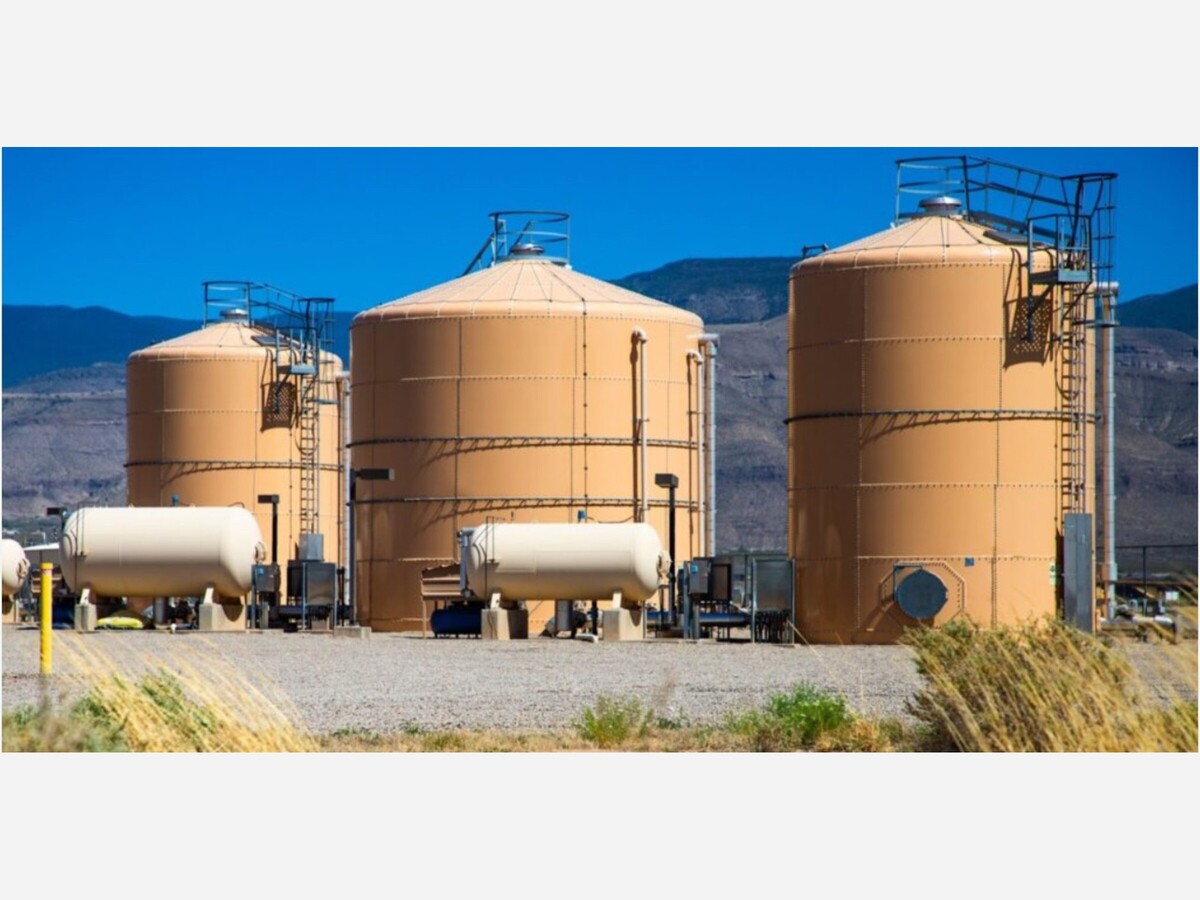
Brackish Groundwater National Desalination Research Facility- Special 2nd Life Media Report- AlamogordoTownNews.org



NEW THREE-PART SERIES “Desalination in Depth” by Journalist Chris Edwards, NewMexicoConservativeNews.com and AlamogordoTownNews.org (2nd Life Media Affiliated Brands)
As Alamogordo faces ongoing drought threats and reliance on finite surface water, our in-depth investigation exposes the realities behind the city’s multi-million-dollar brackish water desalination plant—a project rooted in forward-thinking planning but hampered by past decisions that left it largely idle and the present city leadership cleaning up the sins of the past...
The City of Alamogordo’s reverse osmosis (RO) desalination plant, a multi-million-dollar investment in drought-resistant water supply, was never intended to serve as the community’s primary water source. Designed explicitly as a “peaking facility” to operate during high-demand periods—typically peak summer months—the 1 million gallons per day (MGD) plant is designed to only supplement the city’s superior surface water and conservation efforts.
Acting City Manager Stephanie J. Hernandez, Ph.D., emphasizes that the facility’s current inactive status stems from infrastructure challenges inherited from earlier planning decisions and prior administrations. “The facility was built in a location that is not financially feasible for producing water to operate outside the need to meet demand,” she noted, highlighting that the most significant ongoing cost involves pumping each gallon multiple times before it reaches beneficial use. “North of Tularosa would have been a better location.”
Today’s acting city manager and leadership, and the commissioners sworn in for 2026 along with Mayor Sharon McDonald, are now tasked with making this long-envisioned project viable and fixing past failures in planning by prioritizing the construction of a dedicated transmission pipeline from the Snake Tank well field. Without this critical 24-inch pipeline—approximately 16 miles in total— because of the plant's location, the plant cannot access a reliable supply of brackish groundwater, rendering it inactive despite its potential treatment capacity.
The project’s roots trace back to 2000, when the city applied to the New Mexico Office of the State Engineer for brackish water appropriations amid concerns over population growth, drought, and limited new surface or fresh groundwater sources. An Environmental Impact Statement, required due to federal land involvement, was completed in 2004, leading to a Bureau of Land Management Record of Decision in 2012. The plant became minimally operational due to a lack of available brackish water linked to it thus it has seen limited use due to these infrastructural gaps.
Currently, only one mile of pipeline exists, with only one of up to ten permitted wells equipped. This configuration limits potential output to about 1 MGD under peaking operations.
Annual idle costs remain modest—approximately $11,933 for basic utilities (electricity ~$7,074, water ~$3,115, gas ~$1,744)—plus preventive maintenance, inspections, and security managed by existing staff.
Debt service on associated loans totals around $127,216 for FY2026, funded via gross receipts tax allocations.
Looking ahead to move the project forward under Mayor Susan Paynes tenure the city secured a $12 million Water Trust Board loan for the next five-mile segment, currently in design with right-of-way clearing and Department of Transportation coordination underway.
Construction is anticipated in the third quarter of 2026 with the cooperation of the NMDOT.
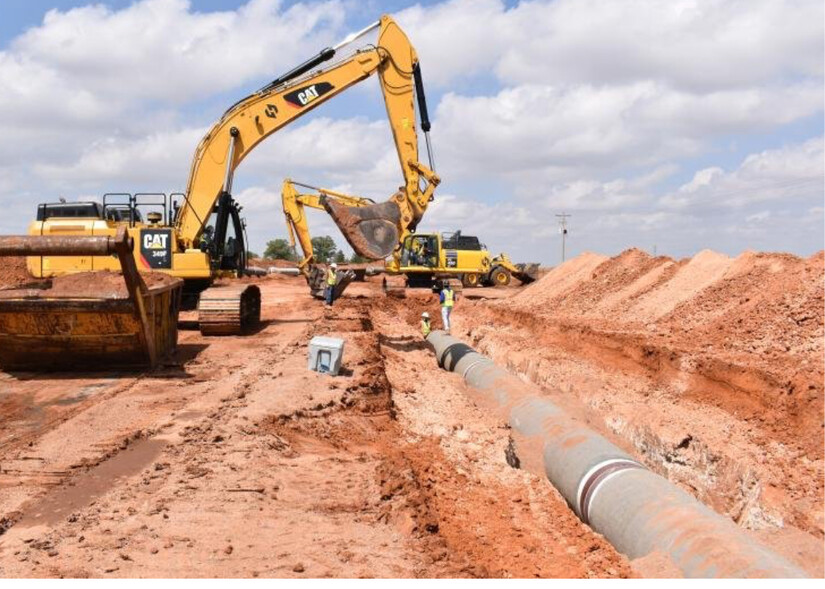
Remaining phases—another five miles (in design, unfunded) and a final six miles (not yet in design)—will extend timelines well beyond the next two years, meaning no operational changes are expected short-term.
Hernandez explained that recent state grants for desalination were not pursued, as efforts focus on pipeline completion first: “Until that pipeline is completed, pursuing additional funding for the RO plant itself would not be practical, as the plant cannot operate without the required transmission infrastructure.”
Produced water from reverse osmosis is inherently more expensive than conventional sources due to intensive energy demands, chemical usage, membrane replacements, and operational oversight—exacerbated by the plant’s remote siting. Surface water continues as Alamogordo’s lowest-cost option, with per-capita use reduced from 260 gallons daily in the 1990s to 165 through conservation
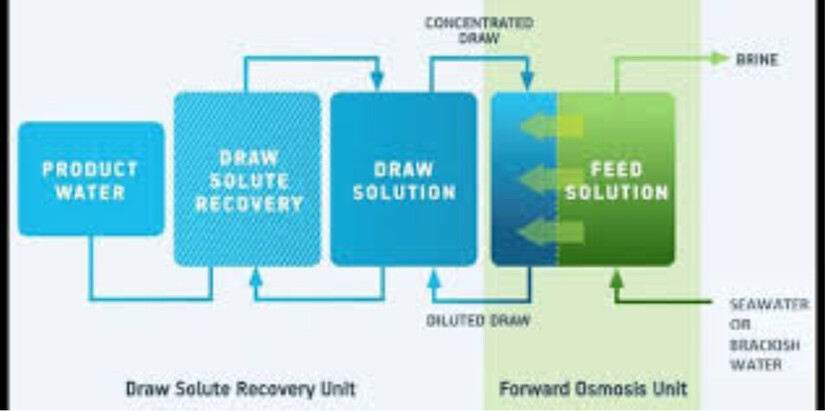
Ultimately, completing the pipeline and equipping additional wells will transform the facility into a reliable, independent backup—enhancing water security for residents, the region, and Holloman Air Force Base. Adding redundancy, such as a second storage tank, is also planned.
This generational project underscores the challenges of long-term water planning in arid New Mexico. Current leaders under the administration of Mayor Sharon McDonald and acting city manager Dr. Stephanie Hernandez are committed to bridging past gaps, ensuring the investment yields lasting benefits for future generations.
For more details, view the city’s fact sheet: https://docs.google.com/document/d/1i-gmOSh1Sr-rXwHerVqs4tgOR9UAABBJ/edit?usp=drivesdk&ouid=101754664831811042751&rtpof=true&sd=true
Tomorrow part 2 in our series Part 2: The Real Costs of RO Water
Brackish desalination is pricier than surface water due to energy and operations—potentially raising blended rates if over-relied upon. But smart blending (18-20% of demand) keeps affordability while adding resilience. Minimal idle costs now, but full activation means responsible ratepayer investment for long-term security - a comparison of costs to citizens and water coats in other communities using desalination as an option.
Key facts in the series are corroborated by publicly available local, state and federal government, and university data and journalist notes as sources:
Project Background and Snake Tank Well Field: Application in 2000, EIS in 2004, BLM Record of Decision in 2012; 1 MGD brackish RO plant as a peaking facility.
City of Alamogordo Utilities Administration page (mentions one brackish water reverse osmosis treatment facility): https://ci.alamogordo.nm.us/828/Utilities-Administration
Historical overview of Alamogordo Regional Water Supply Project (New Mexico’s first large-scale municipal desalination): https://www.amtaorg.com/alamogordo-regional-water-supply-new-mexicos-first-largescale-municipal-desalination-project
Brackish Groundwater National Desalination Research Facility (co-located/context): https://www.usbr.gov/research/bgndrf/
Pipeline and Infrastructure Challenges: Incomplete 16-mile (approx.) transmission pipeline from Snake Tank; current limited to ~1 mile; phased construction with $12M funding for next segment.
2nd Life Media article summarizing similar details (August 2025): https://2ndlifemediaalamogordo.town.news/g/alamogordo-nm/n/333581/2nd-life-media-reports-alamogordos-40-year-water-plan-plan-sustainability
40-Year Water Development Plan (2015–2055): Conservation success (260 to 165 gpcd); desalination as supplemental; ongoing updates. (Updated 2025)
Official city water resource planning page (links to prior plans, including 2015–2055 references): https://ci.alamogordo.nm.us/858/Water-Resource-Planning
Detailed 2nd Life Media report on the plan: https://2ndlifemediaalamogordo.town.news/g/alamogordo-nm/n/333581/2nd-life-media-reports-alamogordos-40-year-water-plan-plan-sustainability
Leadership Quotes and Status: Acting City Manager Dr. Stephanie J. Hernandez, Ph.D. (siting issues, pipeline priority); transitions involving Mayors Susan Payne and Sharon McDonald.
Official staff directory confirming Dr. Hernandez as Acting City Manager: https://ci.alamogordo.nm.us/directory.aspx?EID=180
2nd Life Media coverage of city management transitions: https://2ndlifemediaalamogordo.town.news/g/alamogordo-nm/n/336067/shadows-turnover-alamogordos-decade-dysfunction-and-rise-acting-city
Costs and Capacity: RO more expensive; blending for affordability; debt/service details align with fact sheet.
General brackish desalination economics corroborated in research facility contexts.
Desalination Plant Fact Sheet” (provided as a shared Google Doc link in the articles: https://docs.google.com/document/d/1i-gmOSh1Sr-rXwHerVqs4tgOR9UAABBJ/edit?usp=drivesdk&ouid=101754664831811042751&rtpof=true&sd=true). This fact sheet details the project’s history, current status, costs, debt, and future pipeline plans.
The series is published under Chris Edwards’ byline via 2nd Life Media platforms (e.g., https://2ndlifemediaalamogordo.town.news/), a local Alamogordo news outlet.

Thanks for the reporting. I'm going to echo, and expand on, some points.
The desalination facility was built (2000s) before the pipeline was built, and even before funding for the pipeline was built. It's not located anywhere near where the city processes water - the La Luz water and storage processing facility.
The The Brackish Groundwater National Desalination Research Facility (BGNDRF) was built in 2007, across the street, but it is a federal facility for research. People come from all over to test new membranes, see how shrimp do in salinity, etc., and they usually have an annual open house.
Water is scarce in the desert, and it's right to find more sources and processing options. It's also right to keep in mind that the area can't support unlimited population growth, and/or water intensive industries (data centers, leasing water to bottling companies, pumped hydro storage projects, etc.).
Thankfully, the city, and other nearby municipalities, have not seemed to run out of water during peak / high demand / summer / drought times. What has been a problem is that during those times, there is a shortage of reclaimed water, with the example of Alamogordo's (Desert Lakes) Golf Course having to switch temporarily to expensive treated/tap water to keep grass green. There has been an idea floated around to create a reclaimed water reservoir "Alamogordo Lake" to fix that issue, and also provide recreation, fishing, etc. Similar lakes are like Young Park's pond and Alumni Pond in Las Cruces, Ascarate (Park) Lake in El Paso, and Lake Holloman.
Good added information and insight

Great info!
one question. Why was the desal plant not put where the water was?
Good question that the present commissioners are trying to figure out.


Patchy rain nearby, with a high of 78 and low of 57 degrees. Patchy rain nearby in the morning, light rain shower for the afternoon and evening, patchy rain nearby overnight.

Love your shop in Las Cruces! Haven’t been to the one here in Alamo yet.
Hi Troy,
What do you think of the manga Jaadugar: A Witch's Life in Mongol (Tomato Soup). It's now an anime from Saru Science/Crunchyroll.
Enjoy!



Thank you Sheriff!

She lectures her expertise like she was running SpaceX. Home Service Contractors and Darnold Plumbing could get any of those things built in a month. These unqualified people use it to justify their lives. We have to work to pay off their excess spending.
Neither have the proper license try again!
Hey Rube! I think the point is expertise. A 'proper licesne' is always the thinking of those educated by The Machine. Let the free market rule, not the paper pushers.

He did the same thing when he ran against Rachel. He's a pathological liar who just keeps proving it over and over.
he senses trouble....and i smell blood - time to send him to private sector employment - maybe his oil & gas friends can find something for him to do.
Lets ask the editor.
sir, are you not involved in the campaign?