63° and Light rain shower

Commentary: Moving the Goalpost Again? By Gary Person


For weeks, SCC members were told that strict deadlines were necessary. We were told registration deadlines were necessary. We were told proxy deadlines were necessary. We were told pre-credentialing requirements were necessary. We were told these procedures were essential to ensure an orderly and legitimate election.
Then, almost overnight, they disappeared.
The June 15 registration deadline is gone. The June 17 proxy deadline is gone. The pre-credentialing requirements are gone. Now SCC members can register at the door and bring proxies directly to the meeting.
The obvious question is: What changed?
If these requirements were essential on June 5, why are they unnecessary on June 14? If they were unnecessary all along, why were SCC members told otherwise?
The Republican Party of New Mexico has spent months defending the importance of Rules, procedures, and compliance. Yet as one of the most important SCC meetings in recent history approaches, the procedures continue to change.
Many Republicans are beginning to wonder whether the Rules are being administered consistently or whether the goal posts are simply being moved whenever it becomes politically convenient.
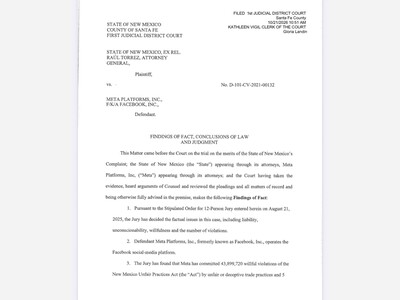
That concern becomes even more significant when viewed alongside the ongoing litigation that produced Judge Cindy M. Mercer's ruling requiring Party officers to comply with the Uniform State Rules.
The Court's message was simple: The Rules matter.
Yet SCC members are now watching deadlines announced with certainty suddenly disappear.
That naturally raises questions.
Who requested these changes?
Who approved these changes?
What authority was relied upon to make them?
Were all candidates consulted?
Were all SCC members given equal notice?
Most importantly, who benefits?
There is another question that deserves immediate attention.
Who is paying for the proxies?
Proxy voting is a legitimate part of Party governance. There is nothing improper about proxy voting itself.
But proxy operations do not happen by magic.
Mailings cost money. Travel costs money. Organizing hundreds of SCC members across New Mexico costs money.
If large-scale proxy collection efforts are underway, SCC members deserve to know who is financing those efforts.
Are Chair candidates paying for them?
Are donors paying for them?
Are consultants paying for them?
Are outside organizations paying for them?
And perhaps most importantly, who is keeping track?
Will expenditures associated with proxy operations be reported?
Will SCC members be informed who financed those efforts?
Will there be transparency regarding the resources being devoted to influencing the outcome of this election?
Or will members simply be expected to accept the results without knowing who funded the machinery behind them?
The timing of these changes also raises an unavoidable political question.
Do these last-minute changes advantage one candidate more than others?
Amy Barela is the former Chair. Amy Barela has access to an established statewide network developed during her tenure. Amy Barela has spent months communicating with SCC members in her capacity as Chair and as a candidate.
If deadlines are removed and proxy collection becomes easier, does that disproportionately benefit the candidate who already possesses the broadest existing organizational infrastructure?
That is not an accusation.
It is a legitimate question.
It is exactly the type of question that SCC members should be asking before votes are cast.
Transparency should not be viewed as an attack. Transparency protects everyone.
If the changes are fair, leadership should welcome scrutiny.
If proxy operations are being conducted properly, there should be no objection to disclosing who is funding them.
If no candidate receives a disproportionate advantage, leadership should have no difficulty explaining why.
The Republican Party of New Mexico has already endured months of litigation, controversy, and division.
The last thing the Party needs is an election clouded by questions about changing procedures, proxy operations, and unequal advantages.
What SCC members need is certainty. What SCC members need is transparency. What SCC members need is confidence that the Rules are not being adjusted in real time to produce a preferred outcome.
The election on June 20 is about more than selecting a Chairman.
It is about determining whether Republicans can trust the process itself.
Because once members begin to believe that the goal posts move depending upon who benefits, confidence in the institution begins to disappear.
And no political party can long survive after its members lose confidence in the fairness of its own elections.