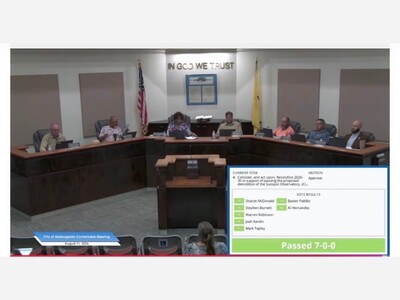
The City Manager Search Controversy dominated much of the undercurrents at the January 27, 2026, Alamogordo City Commission regular meeting, even as no formal action was taken in open session
The issue surfaced dramatically when Commissioner Josh Rardin addressed recent reporting from 2nd Life Media Alamogordo Town News, specifically two articles detailing the prolonged national search, the withdrawal of the two remaining external finalists (Dana Schoening and Jerry Flannery), and allegations that local “insiders”—including Rardin and Commissioner Stephen Burnett—were quietly championing the return of former City Manager Robert Stockwell despite his controversial 1997 termination (5-1 vote amid conflicts and a $124,000 settlement), failed 2016 rehiring attempt (4-3 vote rejection over lingering concerns), and subsequent turbulent exit from California City, CA, in 2019.
Rardin accused an unnamed party of leaking confidential details from a prior executive closed session on “limited personnel matters,” claiming that sensitive comments intended only for closed-door discussion had reached the public. He directed the city clerk to agenda the city manager topic for yet another executive session for the end of the meeting on the 27th.
The city attorney interjected with a pointed reminder: executive sessions under New Mexico’s Open Meetings Act (10-15-1(H)(2) NMSA) must remain strictly confined to the disclosed purpose—here, limited personnel matters specific to the city manager —and any deviation into broader discussion or unrelated tangents requires returning to open, public session.
This caution appeared to acknowledge potential prior oversteps, raising questions about compliance in earlier meetings.
The articles in question (published January 21–24, 2026) framed the search as mired in politics: despite Dr. Stephanie J. Hernandez’s superior performance ratings (even when allegedly scored lower by Rardin, Burnett), finalist withdrawals due to “less political gamesmanship” elsewhere, and her proven track record of stabilizing a $80–95 million budget, securing grants, implementing performance-based budgeting, fixing liabilities, and fostering military partnerships (including the Military Altus Award), a faction led by Rardin successfully extended the search rather than advance her appointment.
No recommendation for Hernandez appeared on the January 27 public agenda, prolonging uncertainty after a decade of seven managers or acting managers and amid calls for continuity.
At 2nd Life Media, the reporting’s sources were confirmed as multiple and independent—including associates and business interests tied to Rardin and Burnett circles, public records requests, and connections within the application process—not from any seated commissioner directly nor Mayor Sharon McDonald nor Commissioner Warren Robinson. Neither Rardin nor Burnett responded to prior requests for comment on the allegations by those closely affiliated with them for validation or their rebuttal. Their silence was the answer, and the outcry and deflection at Tuesday nights meeting speaks volumes.
The frustration expressed by Rardin over public knowledge of these details was interpreted by critics as resistance to transparency itself, especially ironic given that the purported “leak” stemmed from within his own inner circle.
This exchange highlighted deeper tensions: a clash between demands for open, merit-driven governance (echoed in passionate public comments urging Hernandez’s permanent appointment on grounds of ethics, qualifications, and results) and apparent efforts to maintain influence over the process by insiders with a hidden agenda.
As the meeting adjourned into another executive closed session on the city manager, the controversy underscored Alamogordo’s crossroads moment.
With voter-mandated transparency reforms from Mayor McDonald’s election hanging in the balance, prolonged delays risk further eroding trust, stalling infrastructure and economic progress, and perpetuating the costly revolving door that has plagued city leadership the last decade. Going back to a past city manager risks budget deficits like before.
The path forward remains clear: prioritize proven, unifying leadership over factional maneuvering. Dr. Hernandez’s record offers stability and forward momentum at a time when Alamogordo can least afford more disruption. Residents deserve a process that is fully transparent, with more open meetings, less closed executive sessions, and meetings compliant with state transparency law, and focused on the community’s best interests—not insider agendas.
The time for political games is over; the future of Alamogordo demands accountability, continuity, and courage to choose progress over the past. Without this transparency its time for state ethics investigations and possible discussions of organized recall efforts.

 67° and Cloudy