92° and Clear
Image



ALAMOGORDO, N.M. — A two track news ecosystem — a legacy daily that preserves the official record and a digital watchdog that uses public-records tools to accelerate accountability —is remaking how politics works in the small city of Alamogordo. That dynamic is already reshaping a highturnover citymanager search that remains ongoing and far more public than any before it, played a role in a historic mayoral upset, and turned a routine commission appointment for District 5 into a public contest. The result is a new political calculus for officials, candidates, and residents alike.
The Players and the New Rules
El Rito Media’s Alamogordo Daily News remains the paper of record: measured, institutional, and relied on by older readers coverage, official statements, and the formal timeline of some local news. Yet the legacy paper has largely overlooked the broader outcomes and consequences of the new media environment — including the surge in public engagement, record voter turnout, and unprecedented pre-appointment transparency driven by its digital counterpart. It has not acknowledged the impact of 2nd Life Media Alamogordo Town News on local dialogue and civic mobilization
Some observers now speculate that the recent departure of the Alamogordo Daily News publisher may represent a quiet, if indirect, recognition of these shifting realities with the established paper feeling the pressure.
2nd Life Media’s AlamogordoTownNews.org and streaming KALHRadio.org with additional podcasts on YouTube operate as a digitalfirst watchdog: filing IPRA publicrecords requests, publishing résumés and application materials, interviewing candidates, and pushing followups that spread rapidly through local Facebook groups, multiple social media platforms, X and neighborhood chats. That combination produces both a stable civic archive and a fast lane for public pressure. 2nd Life also produces timely community news specific to new businesses and highlights positive outcome stories via it’s ongoing and well followed #AlamogordoProud Series.
City Manager Search in the Spotlight
Alamogordo’s latest attempt to hire a permanent city manager — its third major effort in recent years — has become the clearest example of how the new media order changes public engagement and is impacting the process.
For the first time in city history, applicant résumés and application materials were made public before any offer was extended. 2nd Life Media AlamogordoTownNews.org used IPRA requests to obtain candidate files, posted résumés online, and reached out to applicants before the city’s formal interviews were completed a sequence that has forced public scrutiny and significant attention and engagement into into a process that had previously been largely behind a veil of secrecy.
The search advanced to closed session interviews in early February 2026 with four finalists: Acting City Manager Dr. Stephanie Hernandez (local family ties, Ph.D., 27 months in assistant/acting roles), David A. Vela (ICMACM, long tenure in Sweetwater, Texas, brief Odessa stint), Theogene (Theo) Melancon (ICMACM Dickerson Texas), and Kelcey Young. Kelcey Young has since withdrawn after accepting another position. 2nd Life Media published candidate backgrounds, submitted standardized questions, and posted responses, giving residents insight that past searches never provided to the public. A new level of transparency.
The search has become so fraught because Alamogordo has endured a decade of extraordinary instability in the city managers office.
A Common Denominator
Since Commissioner Josh Rardin (District 4, now Mayor Pro Tem) who refers to himself as the “senior commissioner” first entered office, the city has cycled through at least seven individuals in the top administrative role — many serving a year or less.
Critics and local reporting describe this as far beyond normal turnover, pointing to a pattern of short tenures, quiet departures, and, in some cases, early payouts or settlements when managers resisted what residents and former staff have called “good ole boy” networks and political interference in daily operations.
Public records and information provided to AlamogordoTownNews.org on file from a variety of sources provides evidence that complaints have surfaced repeatedly for a number of years. Those complaints have led to formal complaints, external legal investigations into alleged interference in city operations, and findings of substantiated issues. All costing taxpayers hundreds of thousands of dollars. Allegations leading to investigations by third party legal organizations include possible conflicts involving business dealings, these allegations have circulated within City Hall and continue to do so tied to Rardin and Burnett. One set of public allegations against Commissioner Stephen Burnett (District 2) includes claims that he demanded preferential treatment for a relative’s business ventures, intervened in property billings, and more - records show a third party legal firm was hired to investigate these claims, at Alamogordo taxpayer expense.
Commissioner Burnett has also drawn scrutiny for championing a $1.9 million Local Economic Development Act (LEDA) funding package in October 2025 for a business proposal tied to his sister-in-law, despite city staff recommending only approximately $460,000. He has continued to support her in a subsequent LEDA application. Speculation within local circles and inner-circle accounts further suggests that Burnett has pushed city involvement in legal and foreclosure matters involving the former cookie factory building (now associated with Ultra Health cannabis operations), potentially to position the property for benefit to additional family or connected parties.
Documentation also reveals a clear double standard in the enforcement of commissioner residency requirements. In one case, a commissioner who moved out of his district for claimed “home repairs” and lived with his brother was allowed to retain his seat after receiving a nod of approval from city leadership aligned with the establishment network. In a similar situation, another commissioner was forced to resign after failing to consistently “play the game” long associated with Commissioners Rardin and Burnett’s networks.
Commissioners Rardin and Burnett, along with a former commissioner, have been embroiled in multiple investigations and complaints alleging the use of influence against city employees, city inspectors, and directors. One such matter involved allegations of sexual harassment
Two recent city managers departed prior to the end of their terms, with settlements costing taxpayers hundreds of thousands, agreed to behind closed doors under the shield of “executive session”and paid in part following investigations related to these three prior mentioned commissioners’ actions and or network associations. Documents secured under “whistleblower protections” substantiate these facts.
Commissioner Rardin and Commissioner Burnett have often been aligned on key votes and personnel matters. Local coverage has described their networks as a recurring factor in candidate withdrawals, leaks from executive sessions, and bias claims that derailed earlier rounds of the search leading to other investigations and a potential of litigation and legal advisories
External finalists in the current cycle (including some from the prior 2025 effort) withdrew, citing perceived political gamesmanship and interference. Rardin has publicly accused others of leaking confidential details, but a formal media letter to the city attorney traced alleged leaks to sources tied to the Rardin and Burnett circles of influence and insiders tied to them rather than the mayor or other commissioners.
Commissioners Baxter Pattillo (District 1) and Warren Robinson (District 3) are expected to exercise independent judgment, at least that is the hope of the public.
The District 5 commissioner appointment (see below) will be another test of whether the commission breaks from past patterns or reinforces them.
By publishing résumés and candidate responses before interviews, 2nd Life Media front-loaded and exposed to the public political risk. Candidates now face public vetting a first for Alamogordo, commissioners now face immediate constituent scrutiny over selection criteria and process. The outlet’s coverage has produced higher attendance at public meetings, more citizen email and contact, more pointed public comments at commission meetings, and a, more contentious vetting process — outcomes the legacy paper has ignored. The search remains unresolved as of midFebruary 2026.
Case Study 2: A Mayoral Upset and a Grassroots Surge
The 2025 mayoral contest showed how the hybrid media environment can reshape electoral dynamics. Underdog Sharon McDonald emerged from a field of five and won in an offyear municipal election that produced the largest voter turnout Alamogordo has seen for such a cycle (more than 4,300 ballots). Her campaign featured the largest grassroots ground effort in the city’s history and translated digital engagement and a technology driven ground game into votes.
2nd Life Media’s frequent candidate profiles, issue-focused reporting, public led forums and rapid reaction pieces helped elevate infrastructure, public safety, and transparency as central campaign themes. The outlet’s coverage drove younger, digitally engaged voters to forums and polls, while the legacy paper provided the steady reporting older voters relied on for context and official results. McDonald’s victory marked a historic milestone: she became the first Black mayor in New Mexico elected by popular vote — only the third woman to hold the office in the city’s history.
Case Study 3: Commission Replacement and Unprecedented Transparency
When McDonald’s elevation to mayor created a vacancy on the commission, the replacement process for the District 5 seat became another test of the new media order. 2nd Life Media used IPRA requests to secure the names of applicants (now four: Vesta Sherri Edmonds, Shelly Dowhanick-Baron, Azar Rangel Hernandez — the previous District 5 commissioner defeated by McDonald in 2020 — and former Commissioner Al Hernandez, who is associated with the earlier political era frequently described as the original “good ol’ boy” network closely connected to Rardin and Burnett). The outlet sent each candidate a standardized set of questions and is publishing their responses this weekend upon receipt by those participating.
In a first for Alamogordo, Mayor Sharon McDonald is cohosting a public Meet and greet and Candidate Forum with 2nd Life Media on February 19, 2026, at Dudley School (6 p.m., live streamed). The event invites residents to meet the candidates and provide input before the commission’s February 24 appointment vote. That level of preappointment disclosure and community vetting is unprecedented in the city and has already raised expectations for larger turnout and more informed public comment. McDonald’s quest for more community engagement and more transparency is visible in the commission replacement process.
Officials’ New Calculus
Officials now plan communications and personnel moves with two audiences in mind. They court the legacy paper when they want measured exposure. They brace for the digital watchdog when controversy is possible, because social-media amplification can turn a single story into a mobilizing issue overnight. That dual reality is changing behavior: commissioners to prepare for meetings with an eye to social-media fallout, and political actors now must increasingly factor rapid public reaction into their decisions.
Long term Consequences for Governance
• Faster agenda setting: Issues move from incident to public pressure in days rather than weeks, compressing the news cycle and shortening the window for deliberation.
• Recruitment: City Manager searches become more transparent but; candidates unaccustomed to media engagement may be surprised they are under a public evaluation process similar to what one might find in a large urban center.
• Polarization and mobilization: Early public vetting strengthens accountability but can also politicize policy debates before officials have had time to build consensus or do their own research.
• Civic empowerment: Residents gain earlier access to information and new tools to hold officials accountable, increasing participation and oversight — and increasing pressure on commissioners and staff and this helps build a stronger democracy and more educated community with more citizen buy in.
What to Watch Next
• Whether the commission can complete the city manager search with this round of applicants and finally make an ethic decision or whether the public vetting process will bring about a higher level of community engaged candidate is to be determined.
• How the newly elected mayor’s administration navigates a commission that has been publicly tested and how that dynamic affects policy priorities and staffing stability going forward.
• The February 24 District 5 appointment vote and whether it signals a break from or continuation of past governance patterns and good ole boy insider driven candidates or rather the commission actually embraces citizen engagement and listens will be a telling sign of the next 2 years of governance. And it will also define how more aggressive investigative journalism will have to become.
• Whether other small cities adopt similar transparency tactics and the echo system of new independent media continues to grow amongst the floundering of traditional media and will it be a determinate in the 2026 elections and citizen engagement beyond?
Conclusion:
Alamogordo’s hybrid media ecosystem — a legacy paper that preserves the record and a nimble digital watchdog that accelerates accountability — has already altered the city’s political incentives and processes. The stillongoing citymanager search, a historic mayoral upset, and an unprecedented preappointment forum for a commission seat show how transparency tools and independent localmedia amplification can deepen civic engagement while complicating the influence of establishment networks.
For small cities across America, Alamogordo is becoming a case study in the abuse of power but is showing the results of making municipal politics more public, faster in response to an engaged population inspired into action with knowledge provided by an independent media echo-system.
Stay tuned for upcoming developments in the search for a city manager and the district 5 commissioner. The story of Alamogordo is ever evolving and constantly changing.
Sources
• 2nd Life Media / AlamogordoTownNews.org series on the citymanager search (February 2026 interviews, candidate Q&As, résumé postings, decadeofturnover analysis, leak allegations, bias claims, and commissioner influence investigations).
• 2nd Life Media coverage of the 2025 mayoral election, Sharon McDonald’s victory, and record turnout.
• 2nd Life Media reporting on the District 5 vacancy, applicant questions, the February 19 public forum, and LEDA funding controversies (including the October 2025 $1.9 million proposal linked to Commissioner Burnett’s sister-in-law).
• Alamogordo Daily News and Citizen Portal AI coverage of commission meetings, the mayoral transition, and executive session confidentiality discussions.
• City of Alamogordo public notices, meeting records, IPRA responses (via CivicClerk and official postings), and LEDA funding evaluations.
• Public complaints, investigative records, and documentation referenced in local reporting regarding past commissioner actions, residency enforcement, citymanager departures, settlements, Ultra Health property matters, and related documented allegations.
This article synthesizes observed patterns, public records activity, and municipal outcomes in Alamogordo as of February 12, 2026.

i was astonished to read that elected city officials may have used their office as leverage to secure property/business advantages! shocked - shocked, i tell you! boss tweed is rolling in his grave!

The light of la luz is the most awesome way to explain something New Mexico style!


Sunny, with a high of 104 and low of 77 degrees. Sunny for the morning, clear overnight.






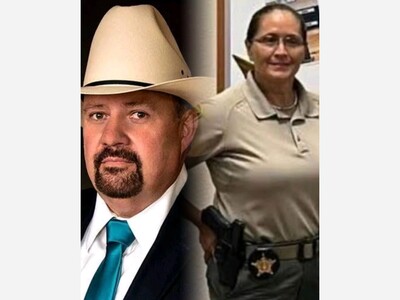
Congrats to SHERIFF YAZZA!
Thanks for being on top of this, in light of all the other problems at the County: namely the state auditors findings and Project Jupiter. Both are indicative to me that a new County Manager won't resolve the long-term tightly woven ball of problems this county has, including the Commissioners themselves. I've got