
 77° and Overcast
Image




In a closely watched move during the 2026 legislative session, the New Mexico House Consumer and Public Affairs Committee voted 4-2 along party lines Thursday to advance House Bill 9, the Immigrant Safety Act. The legislation, sponsored by Democratic Representatives Eleanor Chávez, Angelica Rubio, Andrea Romero, Marianna Anaya, and Senator Joseph Cervantes, seeks to prohibit public bodies statewide—including counties, sheriff’s departments, and other government entities—from entering into, renewing, or maintaining agreements that facilitate the detention of individuals solely for federal civil immigration violations.
The bill would require termination of any existing such agreements at the earliest permissible date under contract terms, bar the sale, lease, or transfer of public property for immigration detention purposes, and prohibit conflicting local policies or ordinances. It includes safeguards preserving law enforcement’s authority for routine detentions and investigative stops under state law, and enforcement would come via civil actions by the Attorney General or district attorneys, limited to injunctive or declaratory relief without monetary damages.
Supporters, including immigrant rights advocates who rallied at the Capitol, describe the measure as a moral stand against profiting from federal immigration enforcement amid reports of aggressive deportations and family separations. Critics, particularly from rural counties hosting facilities, warn of devastating economic consequences in already challenged areas.
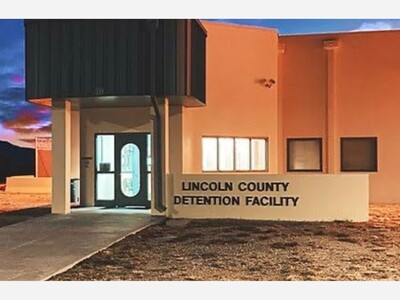
New Mexico currently hosts three major ICE detention operations: the Cibola County Correctional Center and Torrance County Detention Facility (both owned and operated by private contractor CoreCivic under intergovernmental agreements) and the Otero County Processing Center (OCPC) in Chaparral, owned by Otero County and operated by Management & Training Corporation (MTC).
The Legislative Finance Committee fiscal impact report, updated January 22, estimates at least $545,000 in annual recurring state General Fund revenue losses (from reduced gross receipts and income taxes) starting in FY27, based primarily on modeling submitted by Cibola County. That county projected losing around 180 jobs, a $16 million annual payroll reduction, and a $20.4 million contraction in local economic activity if its agreement ends—though analysts noted the actual hit might be smaller given ICE’s variable use of only 100–250 beds there. Comparable detailed projections were not provided for Torrance or Otero counties, leaving broader statewide effects indeterminate and dependent on whether ICE shifts to direct private contracts.
Otero County Faces Unique and Potentially Severe Exposure
The OCPC stands apart as the only county-owned facility among the three, making it directly subject to the bill’s prohibitions on public bodies maintaining such agreements. The center, located in Chaparral near the Texas and Mexico borders, has a contractual capacity of up to 1,089 beds and has frequently operated near or above that level. Reports from mid-2025 described it as “bursting at the seams” with over 1,100 detainees during a congressional visit, while recent averages hovered around 850 individuals, making it one of New Mexico’s busiest ICE sites and a major detention hub in the state (part of roughly 1,500 total ICE detainees across the three facilities as of mid-2025).
Otero County holds an Intergovernmental Service Agreement (IGSA) with ICE, under which the county receives revenue for housing detainees (historically around $96–$97 per detainee-day in older contract terms, though rates may have evolved). County officials have historically supported contract extensions to protect jobs and revenue, including retroactive agreements during lapses (e.g., extensions into 2025–2026).
Economically, the OCPC contributes modestly to the county’s overall budget—recent figures show roughly $457,730 in one fiscal year (about 3% of total revenues), with cumulative revenue from the facility since FY2018 totaling under $1.3 million (compared to higher amounts from the nearby Otero County Prison Facility, also MTC-operated). Still, opponents—including Otero County Attorney R.B. Nichols, who testified virtually against the bill—argue termination would deliver “drastic economic consequences,” potentially costing hundreds of jobs tied to facility operations, security, support services, and related economic activity in the sparse rural area.
Rep. John Block (R-Alamogordo) emphasized during committee debate that closure of the Otero facility could prove economically devastating to his district, with estimates of up to 300 jobs at risk and millions in lost revenue. County officials have also cited tens of millions in outstanding bond debt (around $45.2 million through 2028 in some analyses) tied to the facility’s construction and operations, arguing it creates a barrier to closure—though advocates and experts counter that reserves, refinancing, or other mechanisms could manage obligations without relying on the ICE contract.
Unlike the CoreCivic-owned facilities in Cibola and Torrance counties—which could potentially continue via direct federal contracts with ICE, bypassing the local government prohibition—the county-owned OCPC would face direct prohibition on renewing or maintaining its IGSA, likely forcing a wind-down absent federal workaround.
The bill creates no new direct state expenditures, with agencies like the Department of Public Safety and Attorney General’s Office reporting minimal operational impacts, though discretionary enforcement or legal challenges (potentially on preemption or intergovernmental immunity grounds) could generate indeterminate costs.
HB9 now advances to the House Judiciary Committee for further review. If it progresses through the chambers and is signed into law (effective 90 days after session adjournment, likely mid-2026), it could mark a significant shift in New Mexico’s posture toward federal immigration detention—prioritizing non-cooperation amid national enforcement debates, while raising sharp questions about economic fallout in rural host communities like Otero County.
AlamogordoTownNews.org will continue monitoring developments as the session unfolds. For the full fiscal impact report and bill text, visit nmlegis.gov. The Otero County Commission must brace for the economic impact a contract cancellation and or possible closure could have on the county budget and potential job loss as an economic hit to the region.

Why?

Man-oh-man. You wrote, "The attorney only checked the paperwork." *** do you want? The trial at Nuremberg? Doubting every little thing you can pick on reveals your paranoia. Stephanie is OUT for a legal reason. The smoky mayor feeding you garbage is clickbait.
Nice comment. I believe your sheet and hood are ready to be picked up at the kkkleaners.

Overcast, with a high of 85 and low of 68 degrees. Overcast in the morning, light rain shower in the afternoon and evening, overcast overnight.

once again; complete transparency should be expected with any entity that enjoys status as a natural monopoly.
Absolutely

another opportunity to watch the voting block...






well stated, sir.
Thank you for the transparency this town deserves. Your due diligence is much appreciated. 🌿

this meeting will be the opportunity to see if the 4 vote majority on the city commission will stand or fold - i'm inclined to think they will stick together, and if that is the case, their control over the city's business will be established.

Another disgruntled employee pandering to the government to save whatever failed in real life? Public employees are totally brainwashed into thinking that every problem has to be, and can be, solved by the government. Only they know. Why can't this guy raise the money and buy it to do what his vision is?
Imo, Mr. Dooling’s suggestions seem like a great way to preserve the observatory. If we stand by and watch it be demolished ($10m demo cost), where would the contaminated materials go?
Source of Revenue? For who? Some non-profit that gets government grants to pay for incompetent managers? They can't keep a liquor store open in Cloudcroft. Now, maybe they can make it an RV park.