81° and Partly Cloudy
Image
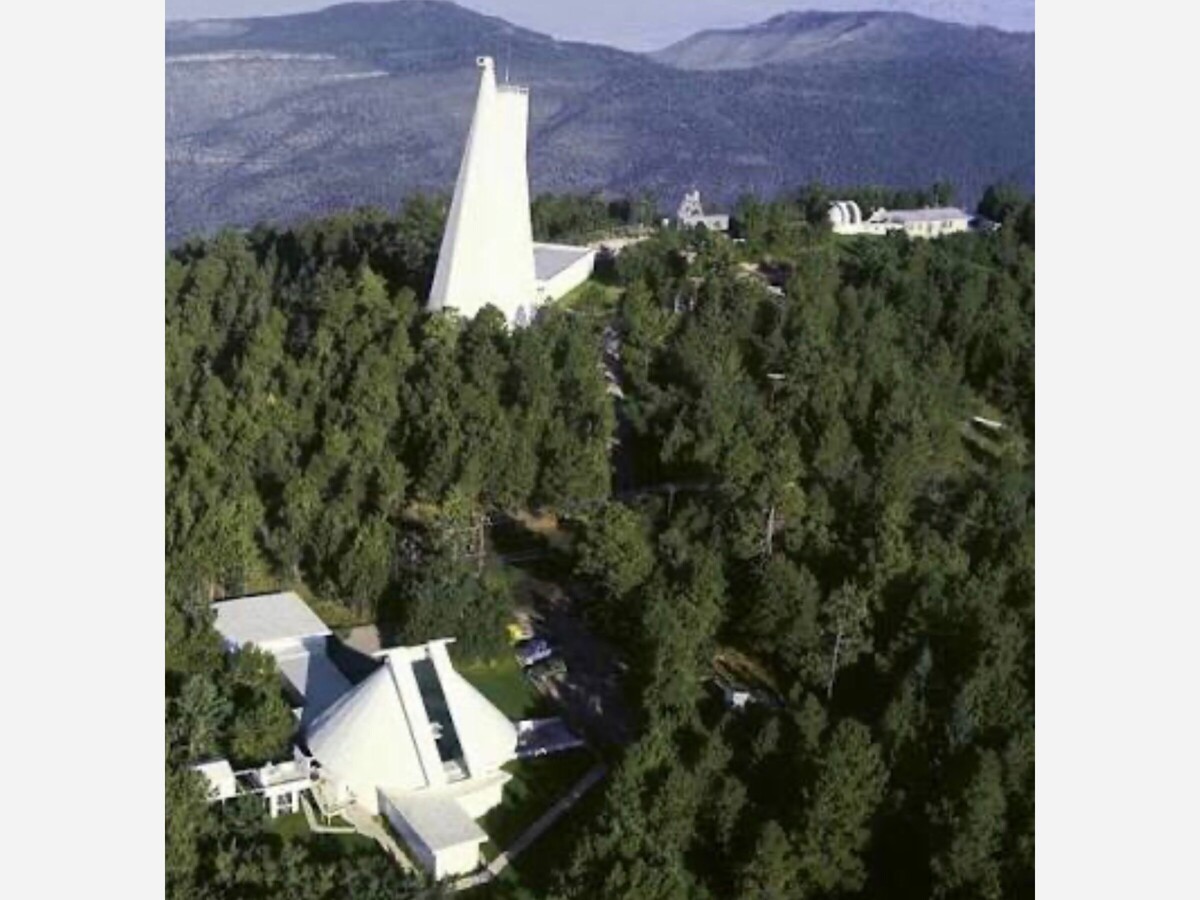



Sunspot, New Mexico – The Sunspot Solar Observatory, home to the renowned Richard B. Dunn Solar Telescope (DST), has been closed to the public indefinitely after staff discovered liquid mercury on a platform inside the telescope on January 5, 2026. Officials from New Mexico State University (NMSU), which operates the facility, emphasized that the closure is a precautionary measure to ensure safety while remediation efforts are underway.
According to announcements posted on the observatory’s official social media accounts and website, two NMSU staff members observed the liquid mercury during routine operations. Immediate safety protocols were activated to protect on-site personnel. The closure affects the Dunn Solar Telescope, the Visitor Center, surrounding observatory grounds, nearby hiking trails, and all public access areas.
“There is no immediate concern for public or environmental safety, and the proper authorities have been notified,” the statement read. The observatory stressed that the measure is in place “for the foreseeable future” to allow for appropriate cleanup and repairs.
The incident draws attention due to the telescope’s unique design, which historically incorporates a large pool of liquid mercury—approximately 11 tons (around 120 gallons)—as part of its mercury-float bearing system. This innovative feature, implemented when the telescope was constructed in the late 1960s, allows the massive 250-ton rotating optical chamber and observing platform to turn smoothly and stably with minimal friction. The bearing supports the telescope’s precision alignment for solar observations. While the exact source of the spilled mercury has not been detailed publicly, the presence of such a quantity in the facility’s structure underscores the need for careful handling and remediation to prevent health or environmental risks associated with mercury exposure.
The Sunspot Solar Observatory, located at approximately 9,200 feet in the Sacramento Mountains, has a rich history dating back to the post-World War II era. Construction began in the late 1940s under the U.S. Air Force, initially known as the Sacramento Peak Observatory. It became a key site for solar research, with the Vacuum Tower Telescope—later renamed the Richard B. Dunn Solar Telescope in 1998 to honor its designer—completed in 1969. The DST remains one of the world’s premier ground-based solar observatories, featuring a vacuum light path to eliminate atmospheric distortion and enable high-resolution imaging of the Sun.
The facility transitioned over the years, with the National Solar Observatory operating it until 2017, after which NMSU took on management. It serves both scientific research and public education through its Visitor Center and tours.
This is not the first time the observatory has made headlines for an unexpected closure. In September 2018, the site was abruptly shut down for 11 days amid a law enforcement investigation, sparking widespread speculation and conspiracy theories online. Authorities later clarified that the closure stemmed from a criminal matter unrelated to the facility’s operations or solar phenomena.
No timeline for reopening has been provided, and visitors are advised to check the official website or social media for updates.
Citations/Sources:
• Official announcements from Sunspot Solar Observatory on X (formerly Twitter), Instagram, and Facebook (January 2026 posts).
• Sunspot Solar Observatory official website (sunspot.nmsu.edu), including calendar and visitor pages detailing the January 5 incident.
• Historical details on the Dunn Solar Telescope’s mercury-float bearing from observatory documentation and Wikipedia.
• Background on 2018 closure from NPR, VICE, and EarthSky reports (September 2018).
• Additional context from local coverage and history AlamogordoTownNews.org



One correction is needed in the “New America” story: Ron deSantis is the governor of Florida, Greg Abbott is the Texas governor.

Sunny, with a high of 94 and low of 71 degrees. Sunny during the morning, overcast in the afternoon and evening,

To improve Alamogordo, let's revert to the founding principles - only landowners should vote. Carpetbaggers like this ******* should go back to the plantation in Mississippi.
Wow! You can tell this dude’s mouth was open while he was being born. Just think about it for a moment…
Naw. He's right. We're the ones with skin in the game. Boonies ain't right with the world. They've proven it.



Regarding Let’s Grow Alamo. Shouldn't a professional consultant with expertise in this area tell us what will work? Trolling for the public to be "brutally honest" will produce a report filled with excuses, not good ideas, because if anyone here had one, they'd be doing it already, and they aren't.
Seems like the city continues to have projects that go into cost overruns pretty consistently. Maybe watch out for the cost overruns on the Natatorium and see who profits…
If the City hired a qualified construction company, THEY should have bid on the appropriate materials for the job. In this change order, it seems they either didn’t know that the mammoth fire trucks would require a thick concrete pad, or they lowballed their bid, only to come back with this change order.


Another unqualified XX-firebrand wearing an empty suit that's all hat and no cattle. This blog's mountebank has no shortage of self-appointed experts who love to rabble-rouse. The reality is, she could run, but knows that, due to her narcissism, she couldn't get the voters to act on her short-term clickbait.
I seem to remember reading a quote about those that don’t want to change the system, just that they want to be in charge.