
 63° and Light rain shower
Image
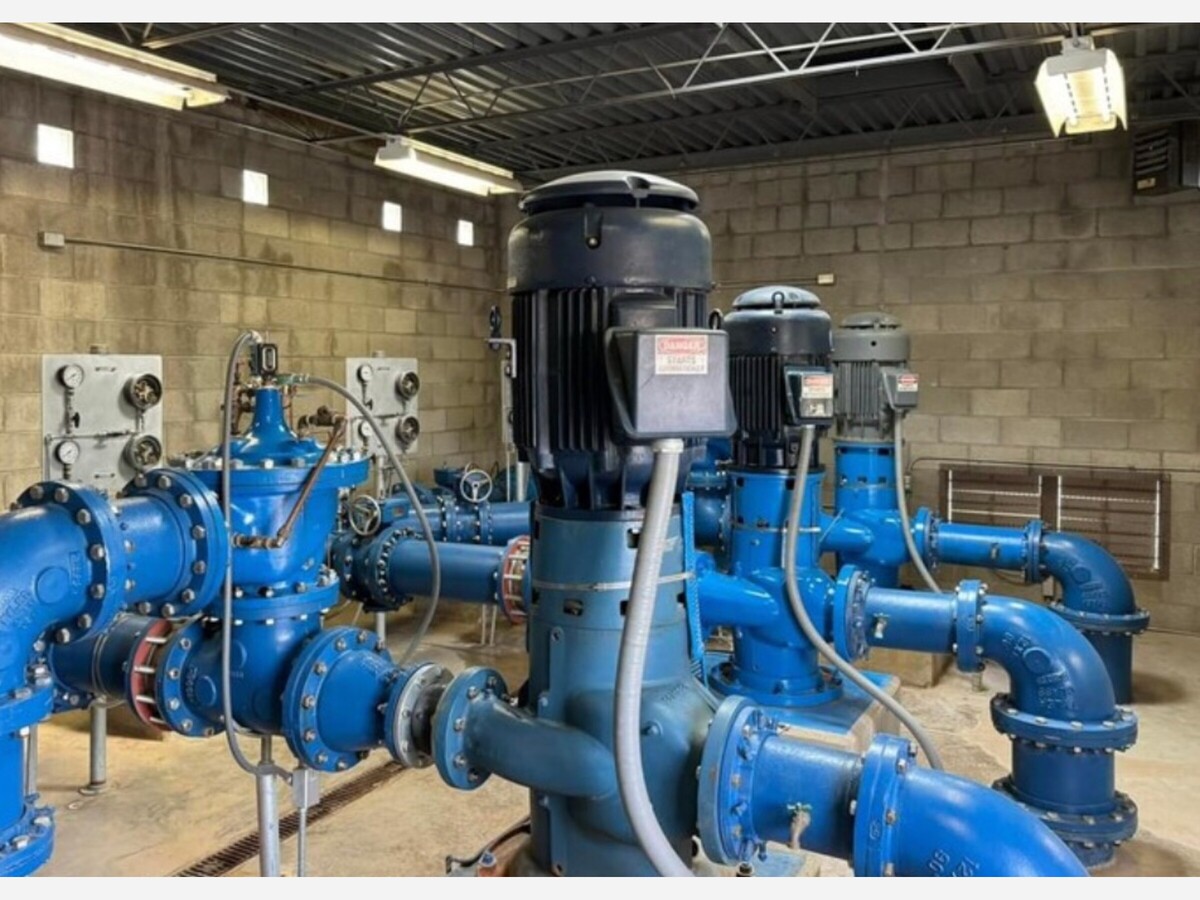
Desalination in Depth, Part 2: Costs, Capacity, and Why Alamogordo’s Plant Designated a Supplemental Resource - AlamogordoTownNews.org



Alamogordo, NM – January 1, 2026
In the second part of our series on Alamogordo’s brackish water desalination facility, we explore the economics of reverse osmosis (RO) production, its intended role, and potential consumer cost implications as well as a question on taste and quality.
Let's debunk the myths and state the facts..
Alamogordo Municipal Desalination RO Plant was designed as a "peaking facility."
The Alamogordo Municipal 1 million gallons per day (MGD) plant was designed exclusively as a peaking facility—never as a primary water source—to supplement high-quality surface water during peak demand, such as hot summers.
Acting City Manager Dr. Stephanie J. Hernandez, Ph.D., notes that earlier siting decisions created challenges current leadership must address. “The facility was built in a location that is not financially feasible for producing water outside peak needs,” she said, adding that a site north of Tularosa would have been preferable.
Today, completing the 16-mile transmission pipeline from the Snake Tank well field is essential to activate this drought-resistant backup.
Under Mayor Susan Paynes tenure the city secured a $12 million Water Trust Board loan for the next five-mile segment, currently in design with right-of-way clearing and Department of Transportation coordination underway. Construction is anticipated to go to bid this summer and construction to begin in the third quarter of 2026 with the cooperation of the NMDOT.
Once pipeline-equipped and with additional wells online, the Alamogordo Municipal Desalination Plant's 1 MGD capacity would cover approximately 18–20% of Alamogordo’s average daily demand (estimated at 5.1–5.3 Million Gallon Daily for the city’s ~31,000–32,000 residents at 165 gallons per capita daily).
Desalination Reverse Osmosis vs. Traditional Water Production Costs
Brackish RO production is significantly more expensive due to energy, chemicals, membranes, and pumping—especially in Alamogordo’s remote setup.
• Surface water: <$1 per 1,000 gallons
• Fresh groundwater: $0.50–$2
• Brackish RO: $2.00 to $3.00+ (Alamogordo likely higher end)
Current blended retail rate (water + sewer) for typical 6,000 gallons/month: ~$71 (~$11.83 per 1,000 gallons).
Concise Water Bill Impacts for 6,000 Gallons/Month
Currently (mostly surface water): the vost to consumers is around $71
Some have suggested Alamogordo should rely solely on the RO (Reverse Osmosis) Desalination process. But the numbers tell another story. At present cost of operations a household using 6,000 gallons a month would see even higher water bills.
• If 50% RO-blended: Alamogordo rate payers would pay $85–$125 (+20–75%)
• If 100% RO-sourced (unrealistic): Alamogordo rate payors would pay $140–$180+ (+100–150%)
These ranges reflect proportional rate adjustments for higher production costs, with sewer and infrastructure included.
Another argument that has recently been by those not familiar with the Alamogordo Longterm Water Plan is that Desalination RO Water tastes better and is of better quality thus Alamogordo should migrate most water production to Desalination RO processing.
Facts verses myths...
No, reverse osmosis (RO) desalinated water from brackish wells does not inherently taste better or qualify as higher quality for drinking than conventionally processed (standard) drinking water—it’s often the opposite in terms of taste, though it can be superior in purity.
Purity and Quality
RO desalination of brackish groundwater (typically 1,000–10,000 mg/L TDS) produces extremely pure water by removing 95–99% of dissolved salts, minerals, contaminants (e.g., bacteria, viruses, organics, heavy metals), and impurities. This results in very low TDS (often <50–500 mg/L after treatment), making it safer and “higher quality” in terms of contaminant removal compared to standard municipal treatment (coagulation, filtration, disinfection) of surface water, which typically leaves 150–500 mg/L TDS and some residual disinfectants like chlorine. Brackish RO water meets or exceeds drinking water standards and is described as “high-quality” or “extremely high quality” in many contexts, especially for starting from a saline source.
Taste
RO water often tastes flat, bland, or slightly acidic/metallic because it strips out beneficial minerals (calcium, magnesium) that give natural “mouthfeel” and flavor to tap water. Many people find it less appealing than standard tap water, which retains minerals for a crisper or more balanced taste. Post-treatment (remineralization with lime, calcite, or additives) is common in desalination plants to improve taste, stability (prevent corrosion), and add essential minerals—making it more comparable to conventional water. Without remineralization, some describe pure RO water as “strange” or “wrong,” while others prefer its clean neutrality (e.g., no chlorine aftertaste).
Where we stand today...
The plant remains inactive pending pipeline completion—a $12 million phase begins construction in 2026—with minimal holding costs (annual utilities + debt service).
Full activation as a peaking facility will eventually enhance resilience for residents and Holloman Air Force Base without displacing affordable primary sources.
Join the discussion and learn more on project planning and city finances at upcoming “Voices of Alamogordo” forums this Tuesday Jan 6th at 6 pm at Otero Arts, 1118 Indiana Ave Alamogordo New Mexico
To review the city fact sheet on desalination see below : https://docs.google.com/document/d/1i-gmOSh1Sr-rXwHerVqs4tgOR9UAABBJ/edit?usp=drivesdk&ouid=101754664831811042751&rtpof=true&sd=true
Join us on Saturday for part 3 in our series.
In Part 3 of the desalination series, readers can expect a comprehensive wrap-up focusing on Alamogordo’s 40-Year Water Development Plan (2015–2055, with ongoing updates), which serves as the strategic blueprint for the city’s water security amid drought, growth, and reliance on resilient sources. The article highlights the plan’s three core pillars—aggressive conservation (already reducing per-capita use from 260 to 165 gallons daily), major infrastructure investments funded by recent rate hikes (including the upcoming $12 million Walker Road project), and the advancement of brackish desalination through the Alamogordo Regional Water Supply Project and its Snake Tank RO facility. It details key milestones, current compliance with state mandates, and the anticipated 2026 pipeline progress toward eventually activating the 1 MGD peaking plant to supply 18–20% of demand via affordable blending. The piece also addresses challenges facing incoming Mayor Sharon McDonald and the newly sworn in commission, such as balancing rising costs and affordability, completing multi-decade infrastructure needs, and bridging long-term supply gaps, while urging community engagement to sustain progress and avoid future crises. Stay tuned....
Sources:
Key facts in the series are corroborated by publicly available local, state and federal government, and university data and journalist notes as sources:
Project Background and Snake Tank Well Field: Application in 2000, EIS in 2004, BLM Record of Decision in 2012; 1 MGD brackish RO plant as a peaking facility.
City of Alamogordo Utilities Administration page (mentions one brackish water reverse osmosis treatment facility): https://ci.alamogordo.nm.us/828/Utilities-Administration
Historical overview of Alamogordo Regional Water Supply Project (New Mexico’s first large-scale municipal desalination): https://www.amtaorg.com/alamogordo-regional-water-supply-new-mexicos-first-largescale-municipal-desalination-project
Brackish Groundwater National Desalination Research Facility (co-located/context): https://www.usbr.gov/research/bgndrf/
Pipeline and Infrastructure Challenges: Incomplete 16-mile (approx.) transmission pipeline from Snake Tank; current limited to ~1 mile; phased construction with $12M funding for next segment.
2nd Life Media article summarizing similar details (August 2025): https://2ndlifemediaalamogordo.town.news/g/alamogordo-nm/n/333581/2nd-life-media-reports-alamogordos-40-year-water-plan-plan-sustainability
40-Year Water Development Plan (2015–2055): Conservation success (260 to 165 gpcd); desalination as supplemental; ongoing updates. (Updated 2025)
Official city water resource planning page (links to prior plans, including 2015–2055 references): https://ci.alamogordo.nm.us/858/Water-Resource-Planning
Detailed 2nd Life Media report on the plan: https://2ndlifemediaalamogordo.town.news/g/alamogordo-nm/n/333581/2nd-life-media-reports-alamogordos-40-year-water-plan-plan-sustainability
Leadership Quotes and Status: Acting City Manager Dr. Stephanie J. Hernandez, Ph.D. (siting issues, pipeline priority); transitions involving Mayors Susan Payne and Sharon McDonald.
Official staff directory confirming Dr. Hernandez as Acting City Manager: https://ci.alamogordo.nm.us/directory.aspx?EID=180
2nd Life Media coverage of city management transitions: https://2ndlifemediaalamogordo.town.news/g/alamogordo-nm/n/336067/shadows-turnover-alamogordos-decade-dysfunction-and-rise-acting-city
Costs and Capacity: RO more expensive; blending for affordability; debt/service details align with fact sheet.
General brackish desalination economics corroborated in research facility contexts.
Desalination Plant Fact Sheet” (provided as a shared Google Doc link in the articles: https://docs.google.com/document/d/1i-gmOSh1Sr-rXwHerVqs4tgOR9UAABBJ/edit?usp=drivesdk&ouid=101754664831811042751&rtpof=true&sd=true). This fact sheet details the project’s history, current status, costs, debt, and future pipeline plans.
The series is published under Chris Edwards’ byline via 2nd Life Media platforms (e.g., https://2ndlifemediaalamogordo.town.news/), a local Alamogordo news outlet.
Wikipedia on Reverse Osmosis (general process, remineralization needs): https://en.wikipedia.org/wiki/Reverse_osmosis
• ScienceDirect: Remineralization of desalinated water (methods, environmental impact): https://www.sciencedirect.com/science/article/abs/pii/S0011916420313709
• Texas Commission on Environmental Quality (TCEQ): Desalination for Public Water Systems (brackish RO standards): https://www.tceq.texas.gov/drinkingwater/technical_guidance/desalination-for-pwss
• OAS: Desalination by Reverse Osmosis (post-treatment stabilization): https://www.oas.org/dsd/publications/unit/oea59e/ch20.htm
• IntechOpen: Remineralization and Stabilization of Desalinated Water: https://www.intechopen.com/chapters/78990
• Veolia: Desalination post-treatment (remineralization for consumption): https://www.veolia.com/en/solutions/seawater-desalination
• Guidance on TDS for taste optimization (ScienceDirect): https://www.sciencedirect.com/science/article/abs/pii/S0011916417323056
• Reddit discussions on RO taste (user experiences, flat vs. tap): https://www.reddit.com/r/water/comments/19cugv3/does_reverse_osmosis_really_make_water_taste/ and https://www.quora.com/How-good-is-reverse-osmosis-water-How-does-it-taste-different-from-tap-water
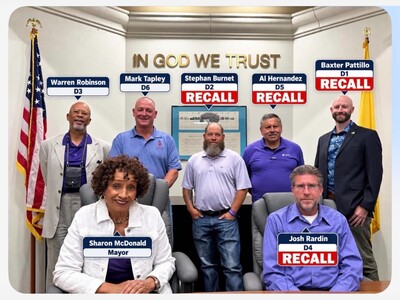

this is what the japanese call kabuki theater - a stylized presentation where every part of the performance already known by the audience, but acted out with the greatest skill the actors can bring to bear.
It's the world we live in. Corrupt to the bone and lemmings ready to walk off a cliff for their elected "gods".
Call me a dumocrat or snowflake just don't call me a republican.


Patchy rain nearby, with a high of 79 and low of 65 degrees. Patchy rain nearby in the morning, clear overnight.



A couple of things you need to learn: #1) Low barriers to entry. In strategic analysis, the lower the barrier to entering a market, the less profit. This is the case with your blog. You can write anything you think and profess its relevance. But there's no profit to be made. Just bee-ess.
And yet you read it and had to comment Obviously we did our job.

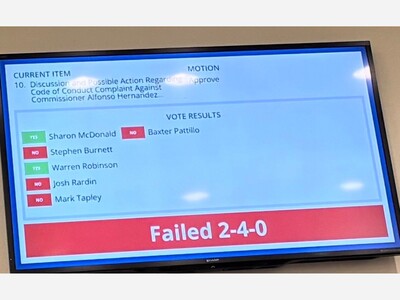
One more time, ATN gets it wrong. Now they have to find someone else besides Kim Night Owl Pampers to impeach the four commissioners ELECTED to run our city. Clearly, a landslide is coming, and the two rogue actors will be out.
and they'll be goosestepping right along - shades of ceausescu...
Valid point. However, dipsqueeze there probably cant figure out who that was and what you meant. He’s still trying to figure out why hot dogs arent made out of dog.




when jails and prisons are farmed out to operators who are in that business to turn a profit, it should come as no surprise when decisions are made that favor their profit over their legal requirements.
I am a firm believer that if the government takes away your rights and freedom, they should be responsible to incarcerate.