Image
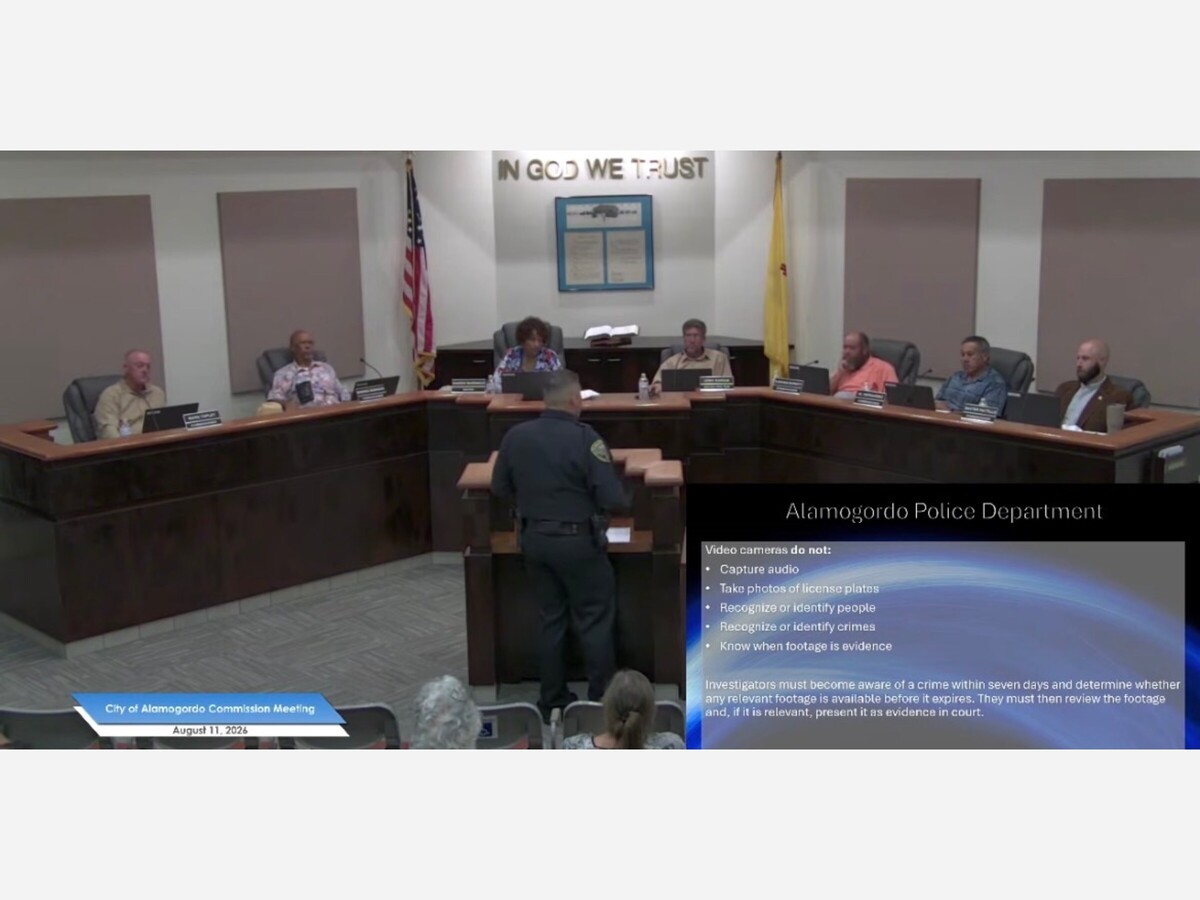



Two-Year Flock Agreement Brings Advanced Surveillance Technology to Alamogordo
The Alamogordo Police Department has quietly expanded its technological capabilities with the implementation of Flock, an automated license plate reader (LPR) system designed to accelerate criminal investigations and locate suspect vehicles. The $500,000, two-year agreement—initially approved by the city commission in 2024—marks a significant shift in how local law enforcement conducts surveillance, even as it sparks ongoing debate about civil liberties and government overreach.
How It Works
Unlike the continuous tracking systems depicted in crime dramas, Flock operates through a network of fixed cameras positioned at key locations throughout the city. The system captures license plate images and vehicle descriptions of vehicles passing designated points, creating what officials describe as “discrete, timestamped data points” rather than real-time tracking.
“The system acts as a virtual fixed-position officer monitoring key locations 24/7,” according to an internal department overview, helping investigators pinpoint vehicle presence and movement without exhaustive manual surveillance.
Video footage is retained for seven days; license plate data persists for thirty days unless saved as evidence for active investigations. Importantly, the system does not directly provide personal information about vehicle owners—investigators must cross-reference results with other law enforcement databases such as the National Crime Information Center (NCIC) to obtain ownership details.
Results on the Frontline
The APD credits Flock with tangible investigative successes. The system helped improve hit-and-run investigation rates by 76%, according to department statistics. In one case, Flock allowed officers to quickly clear a stolen vehicle report by confirming it had been legally repossessed. In other instances, the system enabled police to locate vehicles matching suspect descriptions within 30 minutes, assisting in the resolution of assault, attempted kidnapping, and shooting cases.
“These stories illustrate how LPR can transform vague leads into actionable intelligence,” the department noted.
Access Controls and Accountability
Department officials emphasize strict safeguards against misuse. Access requires account creation through an administrator; all searches are logged and audited monthly. Internal and software-driven audits are intended to deter unauthorized use—a critical concern given nationwide reports of LPR system abuse by law enforcement agencies.
“Accountability and privacy safeguards are embedded in operational policy,” the overview states, though whether these protections prove sufficient remains contested.
A Patchwork of Surveillance
The Flock system integrates with city-owned cameras and selectively accesses private business cameras—such as those at Lowe’s and Home Depot—when permission is granted. This creates an expanding surveillance network across the city, though many business and private cameras remain beyond official reach, leaving significant gaps in coverage.
Community Concerns Persist
While acknowledging the crime-fighting advantages, some Alamagordo residents have raised concerns about potential mass surveillance, the erosion of civil liberties, and what they view as insufficient public input in the decision-making process.
“Community concerns about surveillance and personal liberty infringement were acknowledged during the approval process,” the department’s summary admits, pointing to broader tensions between public safety and privacy rights that civil liberties advocates argue remain unresolved.
The system’s approval without a community-wide vote has intensified questions about transparency in municipal surveillance decisions, particularly as more California cities adopt similar technologies.
Looking Forward
The Alamogordo Police Department’s LPR implementation reflects a national trend toward automated surveillance tools in law enforcement. As the two-year agreement progresses, the city faces an ongoing challenge: balancing the demonstrable investigative benefits of the technology against legitimate privacy concerns and the need for meaningful community oversight.
Whether Alamogordo will extend the program, expand it, or reconsider its approach remains to be seen—a decision that will likely hinge on the outcome of continued community dialogue and the results of independent audits examining how the system is actually used in practice over the next two years.

this is a classic example of a two-edged sword - the potential for both positive and negative results is very apparent. i have watched the rise and fall in the use of redlight cameras in texas - where the "friendly drivers" aren't nearly as careful as those hereabouts. many promises of improvements in public safety...but the actual results tended to be negative. ultimately public pressure ended their use.
I am very happy that we are keeping them. Let's see how things go.


Sunny, with a high of 83 and low of 68 degrees. Sunny in the morning, patchy rain nearby in the afternoon, overcast overnight.


glad there is fine weather for these events, and pleased to see this feather in ruidoso's cap.