44° and Clear

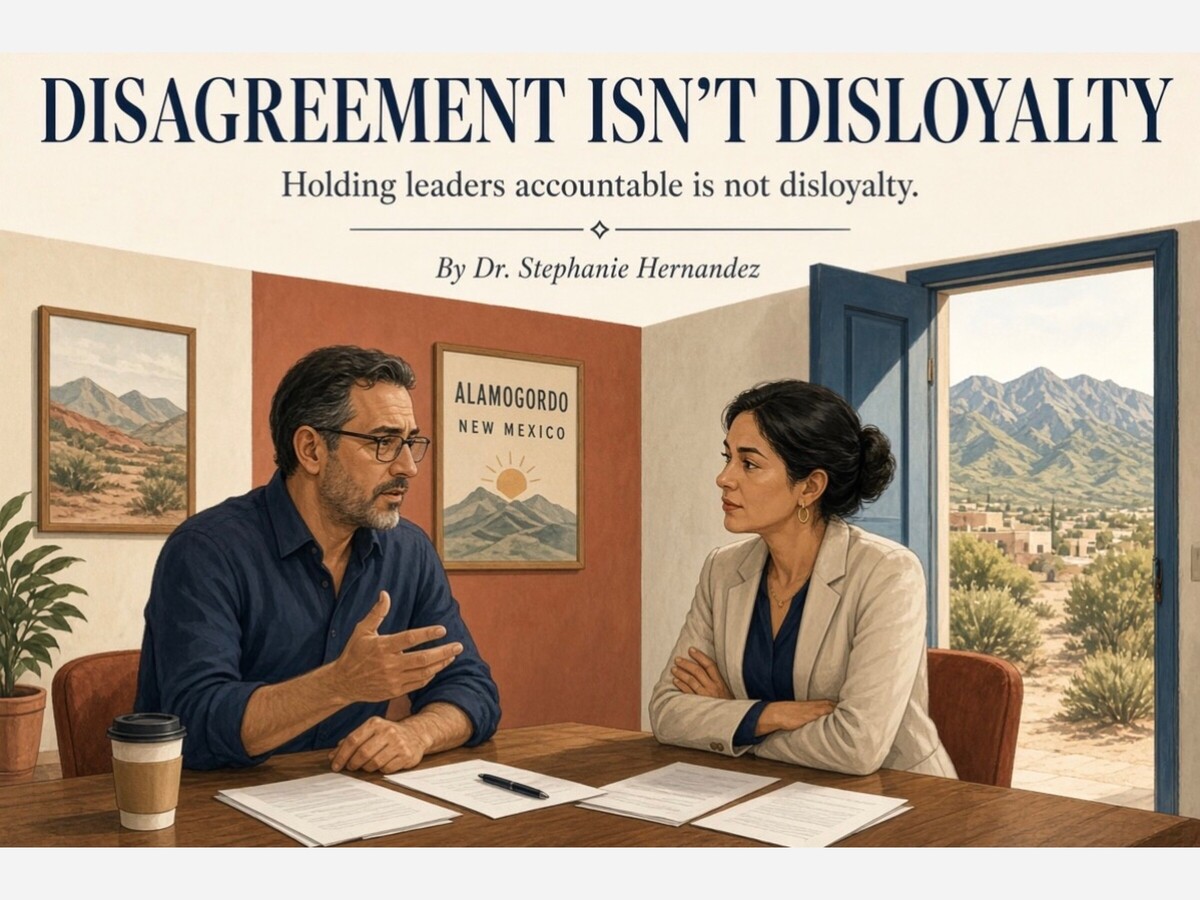
Disagreement Isn’t Disloyalty


Guest Editorial
By Dr. Stephanie Hernandez
Now that the election is over, I find myself reflecting on the part of politics I dislike most: how quickly disagreement becomes permission to tear people down.
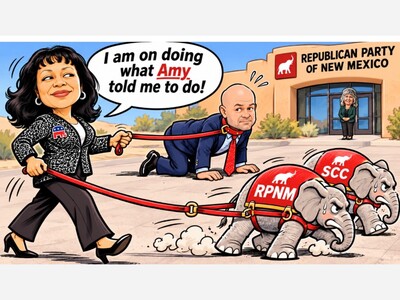
During a social media exchange, I said I hated politics. The former chair of the Republican Party of New Mexico responded that it was a good thing because I wasn’t good at it. I believe that was intended as an insult, but it wasn’t. If being good at politics means insulting people who think for themselves, I can live with that assessment.
That exchange reflects a larger problem: treating shared party affiliation as an obligation to fall in line. Shared principles should leave room to question behavior and should never require surrendering independent judgment.
My upbringing and faith taught me to treat people with respect and let my work speak for itself. Public service taught me that accountability sometimes requires difficult conversations. We can question decisions and challenge conduct without resorting to degrading behavior.
Principles and political identity
Anyone who knows my fiscal conservatism won’t be surprised that I’m a Republican. I support the Second Amendment, lower taxes, a strong military, personal responsibility, and accountable government. I can hold those convictions and still cringe at something my own party says or does.
I registered Republican in 1995, at eighteen, the first in my family to do so. I came from hardworking, blue-collar Democrats who valued earning their way and taking care of their families, and I remain proud of that heritage. But I believed in a strong military and fiscal responsibility at a time when the Clinton administration was shrinking the military and civilian defense workforce after the Cold War. I couldn’t get behind that direction. Choosing a different party did not mean rejecting the values my family taught me.
Years later, I met my husband while he was working on my cousin’s campaign as a Democrat. Our conversations helped him recognize that his conservative beliefs, military background, and Christian faith aligned more closely with the Republican Party. Political affiliation should develop through thought and conversation.
My friends and family hold views across the political spectrum. I don’t vote a straight ticket. A party label gets a candidate my attention, not my vote. I consider candidates’ qualifications and look for common ground, even with people I don’t fully agree with.
A friendship forged through leadership
Although my husband was deeply involved in politics throughout our marriage, I largely stayed away from any involvement. When I was city manager, former Mayor Susan Payne helped me recognize that my lack of knowledge about Alamogordo’s political history was affecting my ability to do my job. Like it or not, a city manager must understand the political environment well enough to navigate it while serving the community.
Susan and I were not close before 2023. We were still getting to know each other when tragedy brought us together as mayor and city manager after one of our officers was killed in the line of duty.
Over five difficult days, we found our rhythm. We both spent time with the family and supported our officers while carrying out different primary responsibilities. As mayor and a mother, Susan provided a comforting public presence. As city manager, I coordinated resources, supported our staff, and kept city operations moving. Our roles overlapped, and we trusted each other to recognize where we were needed.
That experience became the foundation of our friendship, and other challenges that year strengthened it. She helped me understand the history behind political relationships I had underestimated, and I came to appreciate why simply doing good work did not make me immune to politics. Our friendship never meant we agreed on everything. It meant we had learned to trust each other through difficult work.
When disagreement becomes disloyalty
As our friendship grew, I believe some Republican leaders and supporters treated our association, and our willingness to question leadership, as disloyalty. Susan and others who spoke against what they believed was wrong faced criticism that, from my perspective, was often harsher than anything I experienced.
This election cycle, I became more involved and openly supported candidates. Beyond my own experience, I saw disputes here in Otero County raised similar questions about party loyalty and accountability. The state party chair also served as a county commissioner. When she drew a Republican primary challenger, a dispute arose over party rules requiring her to vacate the chairmanship. She remained in that position until a judge ordered her to vacate the chairmanship in May. Asking whether party rules apply equally to everyone is a legitimate question of accountability.
The statewide response showed how quickly that argument turned personal. A state senator defended the chair and portrayed Republican critics as more concerned with displaying their power than winning elections. Yet person he was defending, had publicly criticized others for less, casting them as a minority blocking progress. Defending one faction while questioning the motives of another does little to build unity. The same standards should apply to everyone, regardless of whose side they’re on.
There were calls for unity, but the public exchanges told a different story. In May, a Republican candidate questioned the senator’s honesty or understanding of the rules. In October, a candidate for Republican Party chair announced he was leaving the GOP to register as an independent, while making clear he was not abandoning his conservative values. His decision raises a question: how many people will keep their convictions but walk away from their parties?
It doesn’t have to be that way. Researchers who study groups describe dissent as one of the “normal and healthy aspects of group life.” A party willing to examine itself has room to improve. But will the parties reflect on their own conduct, or are they more comfortable letting people walk away than making room for disagreement?
After researching independent voters extensively for a client, I understand the appeal of political independence and the frustration with being expected to defend a party. Disappointment with politics should make us more deliberate with our votes. It should not persuade us to surrender them.
Congratulations to everyone elected to serve. The campaign is over, but the responsibility to earn the public’s trust continues. That includes listening to people who voted differently, respecting disagreement, and working with others for the good of the community.
As citizens, our responsibility continues, too. We should stay informed, participate, and hold those we support to the same standards as those we oppose.
Holding leaders accountable should never be mistaken for disloyalty and blind loyalty should never be expected.
Dr. Stephanie Hernandez is a Republican and former Alamogordo city manager, serving 31 months combined tenure.