59° and Patchy rain nearby
Image




TULAROSA, N.M. — The Tularosa Board of Trustees heard more than an hour of testimony Monday on a proposed 190-foot cell tower at 44 Sunset Road, and then put off its decision. Most of the testimony came from residents who oppose the project. The board will vote at a special meeting that has not been scheduled yet.
"I don't like to make this like quick decision," the mayor said at the end of the Oct. 19 special meeting. "I want to look at everything, look it over, take considerations in before we make that quick decision." The trustees agreed.
The village attorney, speaking by phone, told the board the item had been noticed properly and it could have acted that night. She also said the vote could not go on the board's regular meeting this Wednesday because there was not enough time to put it on the agenda.
The application
Flagship One LLC is asking for a special use permit, case 2026 SUP 002, to build a wireless tower on a parcel of about 15 acres behind a home. The applicant's representative, Sean Milks, said the parcel needed its own address for the tower. The hearing was quasi-judicial, which means trustees were reviewing the record built by the Planning and Zoning Commission. That commission adopted findings of fact on Sept. 8.
Shannon Naysenzer of Planning and Zoning told the board the commission does not recommend approval or denial of special use permits. It does recommend 12 conditions that Flagship One would have to meet before getting a building permit. They include:
Flagship One has also agreed to reserve a spot on the tower, at 150 feet or lower, for village and emergency equipment at nominal cost.
Milks joined by phone after about 15 minutes of audio problems. He said the company now proposes a monopole instead of a three-legged lattice tower. A monopole is 70% to 75% smaller in diameter and costs more to build, he said. He also said it is designed to fold onto itself in sections instead of falling over, and that it will not carry a light.
"I know we upset people from time to time," Milks said. "We're trying to do a happy medium, which is another reason I opted to offer to make the [pole] significantly smaller."
He said his company has built 46 sites in New Mexico, and 30 to 35 of them sit close to homes. He said he had never seen or heard of a tower falling in the state in his 29 years in the business.
Setbacks dispute
The sharpest exchanges were about the fall zone. Eva J. Gonzalez asked whether the tower meets the setback, the tower's height plus 10%, on all four sides of the property. Milks said it meets three. In cases like this, he said, the company submits an extra analysis from a New Mexico licensed engineer certifying that the pole and foundation are over-engineered.
"I'm telling you under oath, the pole will not fall down," Milks said.
"And I'm telling you under oath that you cannot guarantee anything like that," Gonzalez replied.
David Gonzalez, of Cortez Drive, said county assessor records put the parcel at 362 feet wide. By his math, a 190-foot tower plus 10 feet on each side would need 400. He also said the application includes drawings dated August 2018 that refer to Raglan, New Mexico. He listed five different tower heights in the paperwork, up to 203 feet, and said the federal antenna registration still describes a lattice tower. "Why are we even looking at this application if all this information is wrong?" he asked. The mayor ended his comments when his five minutes ran out.
Naysenzer said the main application does list Tularosa and that the permit is preliminary. The village attorney said the commission's findings clearly describe a 190-foot tower with a one-to-one fall zone. She added that trustees could make the monopole design a condition of approval.
Coverage, petition and alternatives
Eva Gonzalez cited CarrierLytics, an analytics platform that uses FCC coverage maps. It shows T-Mobile coverage at 98.6% and Verizon at 98.3% in the 88352 ZIP code. "There is no significant gap in coverage warranting the installation of another cell tower in the village," she said. She then submitted a petition with 198 signatures from Tularosa residents asking the board to deny the permit. Milks answered that capacity, not just coverage, is driving new sites, and that the carriers have signed a 30-year lease.
Several speakers suggested other sites. Frank Portillo said a landowner east of the site has a small range of hills that could hold a shorter tower out of residents' direct view, and wants to talk with the company. Milks said the project had already gone too far through surveys and reviews to start over. Kevin Ferguson asked about land the village plans to buy. The mayor said the village cannot offer land it does not own yet.
Billy Hobson questioned whether a personal relationship with the property owner influenced where the tower would go. Milks said the site was chosen from a search area set by a radio-frequency engineer.
Other residents talked about Tularosa's place on the National Register of Historic Places, their mountain views and home values. "We don't have high rises. We don't have skyscrapers. We don't need a cell phone tower here," said Denise Ottaviano, whose mother lives on Cortez Drive. Juan A. Osorio raised health concerns. Before testimony began, the mayor had reminded the audience that the federal Telecommunications Act of 1996 bars local governments from denying a tower over radio-frequency health concerns if it meets FCC standards.
Larry Berry asked what happens to the removal bond if the company goes bankrupt. Milks said FCC rules require the owner to take the tower down if no carrier broadcasts from it for six straight months. He said the bond is paid up front and stays tied to the tower.
Village staff said they sent 49 certified notices to nearby property owners, reaching farther than the required distance. Six were not picked up.



an impressive guide, that shows the balance needed to be fair to all.

Overcast, with a high of 82 and low of 63 degrees. Overcast in the morning,
the problems facing the republican party of new mexico pale in comparison with those of their national party - as the old saying - Meaning: Problems in an organization or society start at the top, with its leaders.
The fish rots from the head down
True. A prime example of this was the DNC failures in the 2020 election.
I have voted Republican in the past, but not this time. Our church group knows a few people who have tried to run or get involved and the old school fools won't let anyone they don't know get in at all. You can't solve any problem with the same people who created it. That's why we have terrible doctors here.



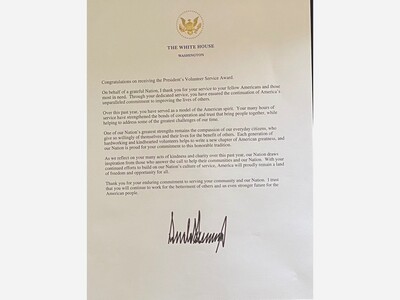

when public utilities are taken private the ultimate goal is to generate profits for their investors - come on, ray charles could see that.
If they are truly public utilities, why do they charge?
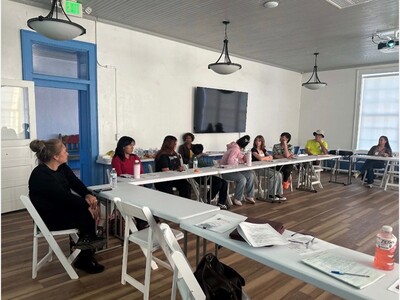
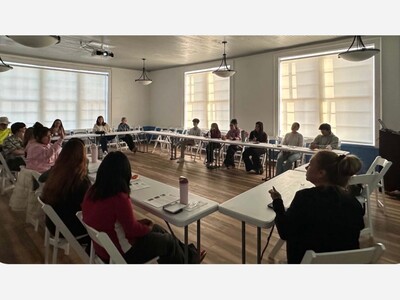
there is our future, kudos to both the students and the organizers.
Sounds overblown by the reporting of this party. On base we have something like this, but it's training leaders. Pic is a few kids with some volunteers who act to shape their opinions. If the schools were good enough the kids would learns this in a classroom.
Glad to hear that the base has a youth group. Now kids in Alamo, with no way to join that group, can also have a group where they can openly discuss their concerns, experiences, and work together to present solutions.
and, no, a PhD didn’t come up with this program. A very smart, educated woman suggested it.